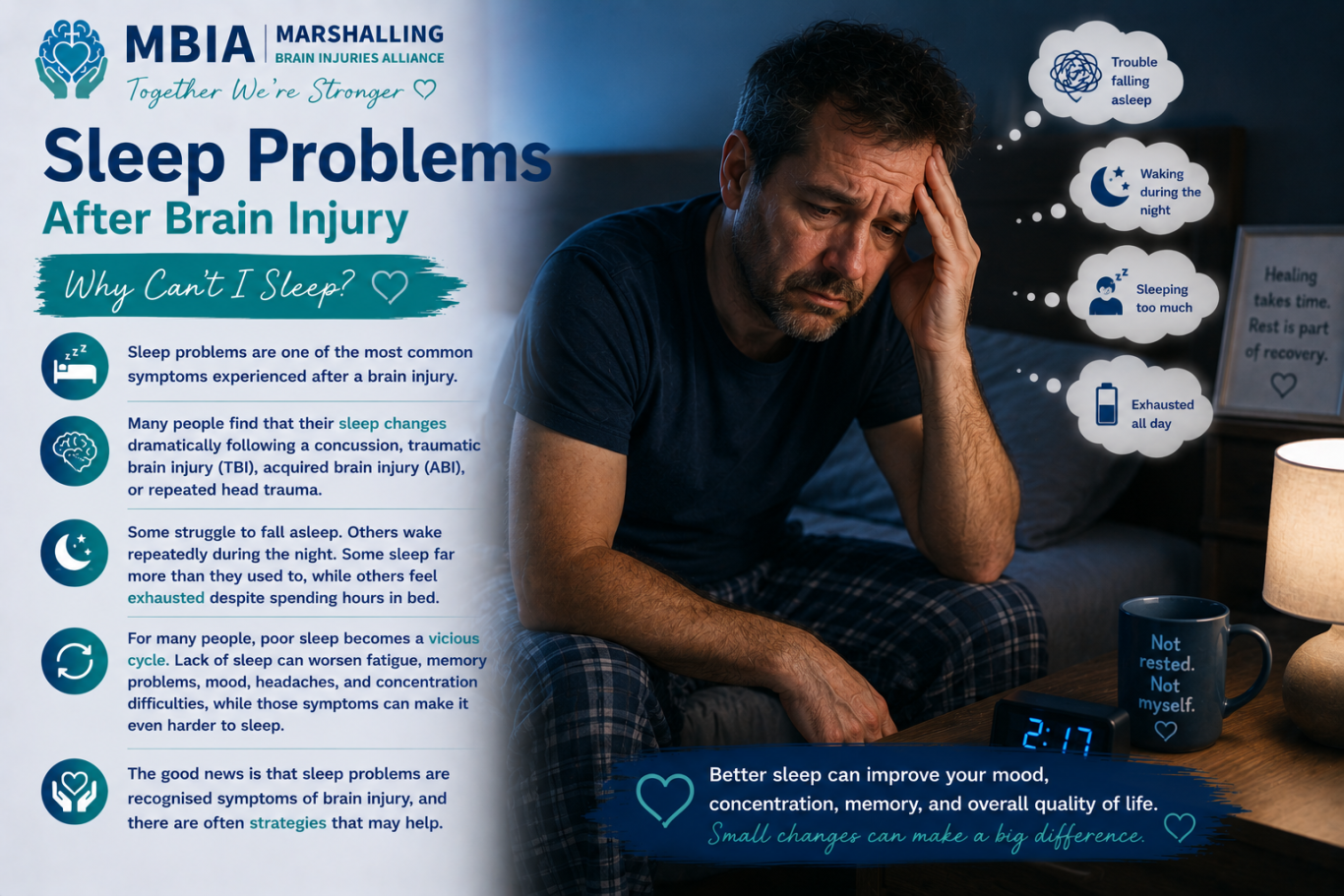
Why Is Sleep So Important?
Sleep is not simply a period of rest.
While we sleep, the brain is actively working to:
- Process memories
- Repair cells
- Regulate hormones
- Consolidate learning
- Remove waste products
- Support emotional regulation
Poor sleep can affect almost every aspect of brain function.
Why Poor Sleep Makes Other Symptoms Worse
Sleep problems rarely exist in isolation.
Poor sleep can worsen:
- Fatigue
- Memory problems
- Brain fog
- Mood swings
- Anxiety
- Depression
- Headaches
- Irritability
- Concentration difficulties
Many people notice improvements in other symptoms when sleep improves.
Why Are Sleep Problems Common After Brain Injury?
Researchers believe several factors may contribute.
Changes Within the Brain
Areas of the brain involved in regulating sleep can be affected by injury.
This may disrupt normal sleep-wake cycles and make it harder to maintain healthy sleep patterns.
Fatigue and Sleep Are Different
Many people feel exhausted all day but still struggle to sleep.
Fatigue is a lack of energy.
Sleep is a biological process.
Having one does not automatically fix the other.
Pain and Headaches
Ongoing headaches, migraines, neck pain, and physical discomfort can make it difficult to fall or stay asleep.
Stress and Anxiety
Many people experience increased anxiety, worry, depression, or emotional distress following a brain injury.
These can all interfere with sleep.
Medication Effects
Some medications may affect sleep quality, cause vivid dreams, increase daytime sleepiness, or make falling asleep more difficult.
Common Sleep Problems After Brain Injury
Sleep difficulties can take many forms.
Insomnia
Insomnia refers to difficulty:
- Falling asleep
- Staying asleep
- Returning to sleep after waking
Many people describe feeling tired but unable to switch their brain off.
Excessive Sleepiness
Some individuals find themselves sleeping much more than before their injury.
This can include:
- Long overnight sleep
- Frequent daytime naps
- Constant tiredness
- Fragmented Sleep
Sleep may become broken with frequent awakenings throughout the night.
Even if total sleep time appears adequate, sleep quality may be poor.
Sleep-Wake Cycle Changes
Some people find they naturally fall asleep and wake much later than before.
Others may wake extremely early.
Vivid Dreams and Nightmares
Many individuals report:
- Intense dreams
- Frequent nightmares
- More realistic dreams than before
These can contribute to poor sleep quality and daytime fatigue.
REM Sleep Behaviour Disorder (RBD)
During normal REM (Rapid Eye Movement) sleep, the body is usually temporarily paralysed to prevent us acting out dreams.
In REM Sleep Behaviour Disorder, this paralysis is reduced or absent.
People may:
- Talk during dreams
- Shout
- Punch
- Kick
- Fall out of bed
- Act out dream content
This can be frightening for both the individual and their partner.
Anyone experiencing these symptoms should discuss them with a healthcare professional.
Acting Out Dreams
Even without a formal diagnosis of REM Sleep Behaviour Disorder, some people notice:
- Increased movement during sleep
- Talking in their sleep
- Sudden movements linked to dreams
These symptoms can occur for various reasons and are worth discussing with a doctor if they are new or worsening.
Sleep Apnoea
Sleep apnoea is surprisingly common among people living with brain injury.
Sleep apnoea occurs when breathing repeatedly stops or becomes restricted during sleep.
Common signs include:
- Loud snoring
- Pauses in breathing
- Gasping during sleep
- Morning headaches
- Excessive daytime fatigue
- Poor concentration
- Memory problems
Many people are unaware they have sleep apnoea until a partner notices symptoms.
Because untreated sleep apnoea can significantly worsen fatigue, cognition, and overall health, it is important to seek medical advice if you suspect it may be present.
Tips for Managing Sleep Problems
There is no single solution that works for everyone, but many people find the following strategies helpful.
1. Keep a Consistent Sleep Schedule
Try to:
- Go to bed at a similar time each night
- Wake up at a similar time each morning
Regular routines help regulate the body's internal clock.
2. Create a Sleep-Friendly Environment
Your bedroom should ideally be:
- Dark
- Quiet
- Comfortable
- Cool
Some people find blackout curtains, eye masks, or white noise helpful.
3. Reduce Screen Time Before Bed
Phones, tablets, and televisions can stimulate the brain and make it harder to fall asleep.
Consider reducing screen use for at least an hour before bedtime.
4. Limit Caffeine
Caffeine can remain in the body for many hours.
Many people benefit from avoiding caffeine later in the day.
5. Be Careful With Alcohol
Although alcohol may initially make you feel sleepy, it often disrupts sleep quality and can worsen sleep disorders.
6. Manage Stress
Relaxation techniques may help some people, including:
- Deep breathing
- Meditation
- Gentle stretching
- Reading
- Listening to calming music
7. Get Daylight Exposure
Natural daylight helps regulate the body's sleep-wake cycle.
Even a short walk outdoors may be beneficial.
8. Stay Physically Active
Regular exercise may help improve sleep quality, although intense exercise close to bedtime may not suit everyone.
9. Talk to Your Doctor
Persistent sleep problems should not be ignored.
Medical assessment may identify:
- Sleep apnoea
- Medication issues
- Insomnia
- REM sleep disorders
- Other treatable conditions
Speak with a healthcare professional if you experience:
- Persistent insomnia
- Severe daytime sleepiness
- Acting out dreams
- Suspected sleep apnoea
- Loud snoring and breathing pauses
- Frequent nightmares
- Significant worsening of symptoms
Many sleep disorders can be assessed and treated.
When Should You Seek Medical Advice?
Key Takeaways
- Sleep problems are extremely common after brain injury.
- Sleep affects memory, mood, fatigue, concentration, and overall brain health.
- Common issues include insomnia, fragmented sleep, excessive sleepiness, vivid dreams, REM sleep disorders, and sleep apnoea.
- Sleep difficulties can significantly worsen other symptoms.
- Healthy sleep habits may improve sleep quality and overall wellbeing.
- Persistent sleep problems should be discussed with a healthcare professional.
Continue Exploring
Together We're Stronger