How Does Memory Work?
Memory is not stored in one single part of the brain.
Instead, several areas work together to:
- Take in information
- Process it
- Store it
- Retrieve it later
When these systems work well, we can remember conversations, appointments, skills, experiences, and important information.
When parts of these networks are disrupted by injury, memory problems can occur.
Memory Problems Can Be Invisible
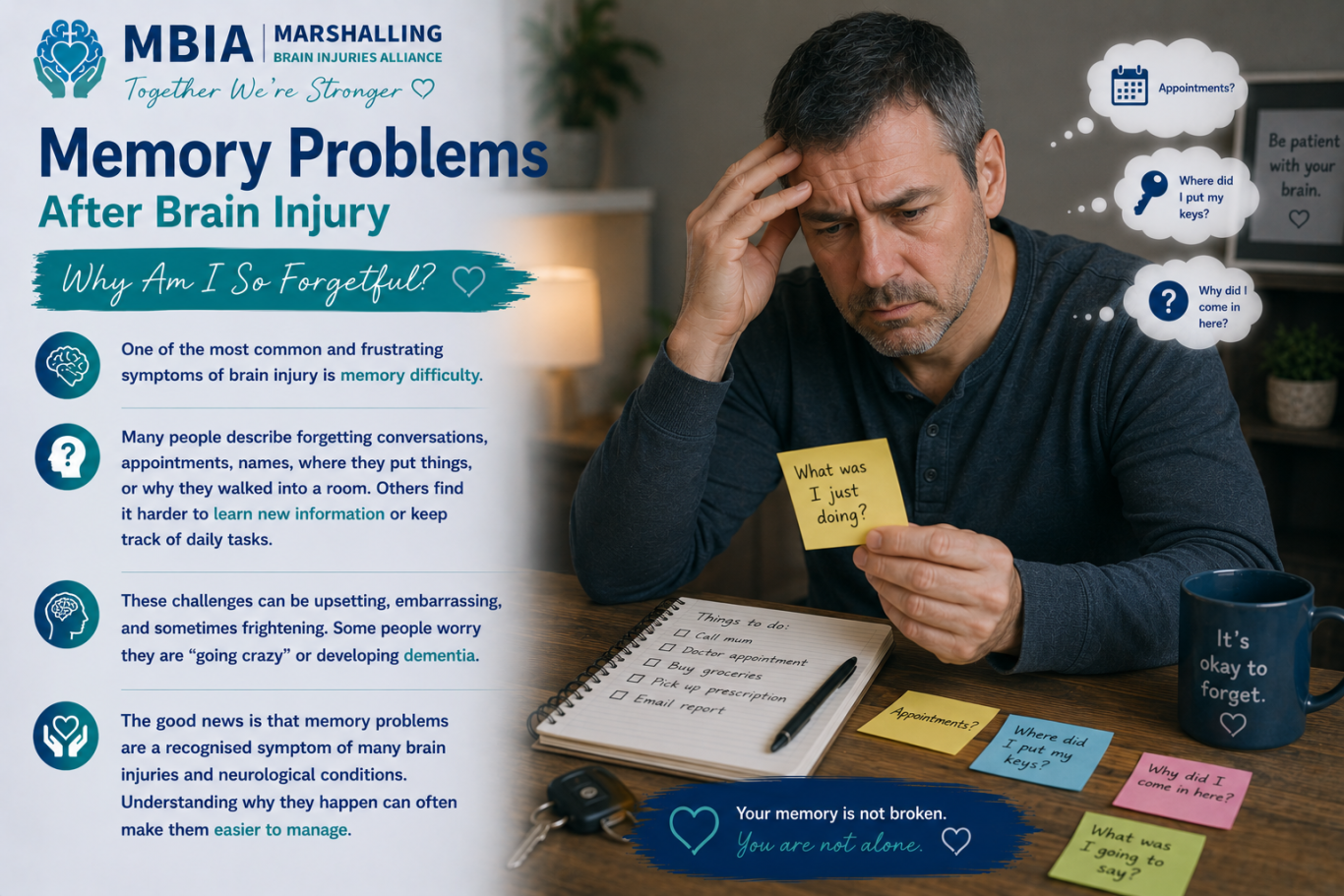
One of the challenges of memory difficulties is that they are often invisible to others.
Friends, family members, and colleagues may assume someone is:
- Not listening
- Not paying attention
- Being careless
- Not interested
In reality, the person may be working incredibly hard just to keep track of everyday information.
Why Can Brain Injury Affect Memory?
There are several reasons memory may be affected following a brain injury.
Damage to Brain Networks
Injuries can affect areas of the brain involved in memory, learning, attention, and information processing.
Memory problems may occur if the brain struggles to effectively store or retrieve information.
Attention Problems
Sometimes the problem isn't memory itself.
If your brain is distracted, overwhelmed, or struggling to focus, information may never be properly stored in the first place.
Many people think they have a memory problem when they actually have an attention problem.
If information never gets in, it cannot be remembered later.
Fatigue
Brain injury fatigue can significantly affect memory.
When the brain is exhausted, concentration, processing speed, and memory often become worse.
This is why many people notice their memory deteriorates later in the day.
Stress and Anxiety
Stress can affect the brain's ability to process and retrieve information.
Many people notice that memory problems become worse during periods of:
- Stress
- Anxiety
- Poor sleep
- Emotional overwhelm
Sleep Problems
Sleep is essential for memory formation.
During sleep, the brain processes information and consolidates memories.
Poor sleep can make memory difficulties significantly worse.
Common Memory Problems After Brain Injury
People may experience:
Forgetting Conversations
You may have no recollection of a discussion that happened earlier in the day.
Forgetting Appointments
Medical appointments, meetings, and social plans may be missed.
Misplacing Items
Keys, wallets, phones, glasses, and paperwork are commonly misplaced.
Forgetting Names
You may recognise someone but struggle to remember their name.
Losing Your Train of Thought
You may start a conversation or task and suddenly forget what you were doing.
Difficulty Learning New Information
Retaining new information can feel harder than it did before the injury.
Repeating Questions
Some people find themselves asking the same question multiple times because they do not remember the previous answer.
Practical Tips for Managing Memory Problems
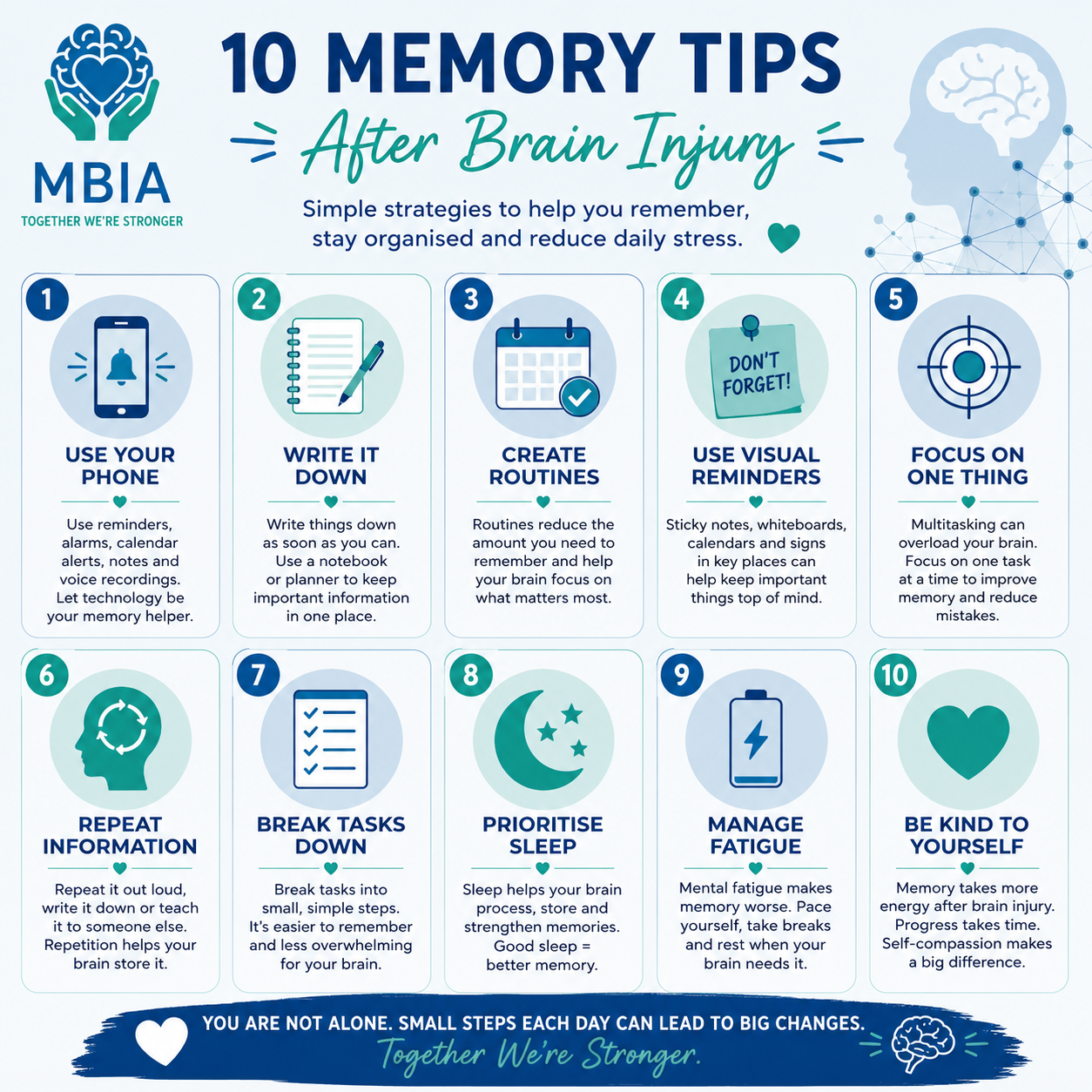
Memory problems can be frustrating, but many people find that simple strategies help reduce their impact.
Use Your Phone
Modern smartphones can be excellent memory aids.
Use:
- Calendar reminders
- Alarms
- Notes
- To-do lists
- Voice recordings
Your phone can become an external memory system.
Write Things Down
Keep a notebook, planner, or diary.
Recording information immediately can prevent it being forgotten
later.
Create Routines
The brain likes routine.
Keeping regular habits can reduce the amount of information
your brain needs to remember.
- Examples include:
- Taking medication at the same time each day
- Keeping keys in the same place
- Following a regular daily schedule
Use Visual Reminders
Sticky notes, whiteboards, calendars, and visual cues can be helpful.
Place reminders where you are most likely to see them.
Focus on One Thing at a Time
Multitasking increases the likelihood of forgetting information.
Try to:
- Reduce distractions
- Slow down
- Focus on one task at a time
Repeat Information
Repeating important information out loud or writing it down can help strengthen memory pathways.
Break Tasks Into Small Steps
Large tasks can quickly become overwhelming.
Breaking activities into smaller steps can make them easier to remember and complete.
Prioritise Sleep
Good sleep is one of the most effective ways to support memory.
Sleep helps the brain organise and store information.
Manage Fatigue
When fatigue increases, memory often worsens.
Pacing activities and taking breaks can help conserve mental energy.
Be Kind to Yourself
Memory difficulties are not a sign of laziness, lack of intelligence, or lack of effort.
Your brain may simply be working differently than it did before.
Self-compassion is important.
When Should I Seek Further Help?
Speak with a healthcare professional if memory problems are:
- New
- Worsening
- Affecting daily life
- Causing significant concern
Assessment can help identify potential causes and appropriate support.
Can Memory Improve?
Many people see improvements over time.
Recovery may occur through:
- Healing
- Neuroplasticity
- Rehabilitation
- Better symptom management
- Lifestyle changes
- Learning new coping strategies
For others, memory difficulties may remain but become easier to manage with the right support and techniques.
Key Takeaways
- Memory difficulties are a common symptom of brain injury.
- Problems may be caused by changes in memory networks, attention, fatigue, stress, or sleep.
- Memory challenges can affect daily life but are often invisible to others.
- Tools such as reminders, routines, notebooks, and calendars can help.
- Managing sleep, fatigue, and stress may improve memory function.
- Many people continue to adapt and improve over time.
Continue Exploring
Together We're Stronger