Why Does Grief Happen After Brain Injury?
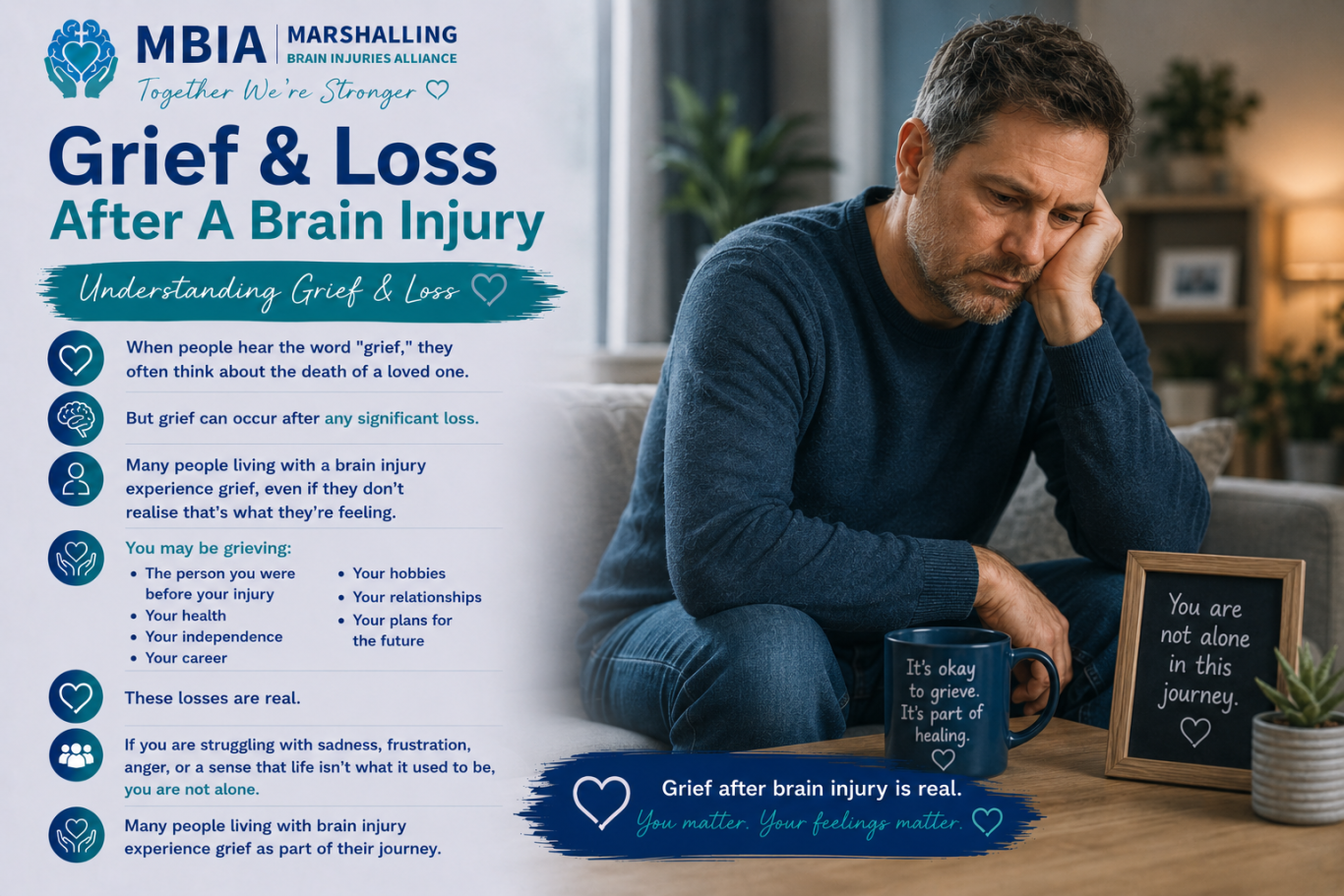
A brain injury can change many aspects of life.
You may have lost things that once felt central to who you were.
Perhaps you can no longer:
- Work in the same role
- Play sport
- Drive
- Socialise in the same way
- Manage tasks independently
- Participate in activities you once loved
Even when changes happen gradually, they can still create a deep sense of loss.
Grieving the Person You Used to Be
One of the hardest losses to talk about is the feeling that you've lost part of yourself.
Many people say:
- "I don't feel like the same person anymore."
- "I miss the old me."
- "I wish I could go back to how things were."
These feelings are incredibly common.
Brain injury can affect:
- Energy levels
- Memory
- Confidence
- Personality
- Emotions
- Relationships
It's natural to miss the version of yourself that existed before those challenges appeared.
Grieving Lost Independence
For many people, one of the biggest adjustments is needing help.
You may find yourself relying on others for:
- Transport
- Finances
- Appointments
- Daily tasks
- Emotional support
This can be difficult to accept, particularly if you were previously independent and self-reliant.
Grieving Your Future
Sometimes grief isn't just about the past.
It's about the future you expected to have.
You may be grieving:
- Career goals
- Sporting ambitions
- Retirement plans
- Travel plans
- Family plans
- Personal goals
It can be painful when life no longer follows the path you imagined.
Grief Can Show Up in Different Ways
Grief doesn't always look like sadness.
Sometimes it appears as:
Anger
Feeling angry about what has happened.
Frustration
Struggling with symptoms and limitations.
Anxiety
Worrying about the future.
Withdrawal
Avoiding people or situations.
Sadness
Feeling low, tearful, or hopeless.
Numbness
Feeling disconnected from emotions altogether.
Jealousy
Comparing yourself to others who appear healthy.
Guilt
Feeling guilty for struggling or needing support.
There Is No Right Way to Grieve
Many people worry they should be "over it" by now.
The truth is:
There is no timeline for grief.
Some days you may feel positive and hopeful.
Other days you may feel angry, sad, or overwhelmed.
Both experiences can exist at the same time.
Healing is rarely a straight line.
You Can Feel Grateful and Grieve at the Same Time
Many people feel guilty for grieving.
They tell themselves:
- "Others have it worse."
- "I should be grateful."
- "At least I survived."
You can be grateful to be alive and still grieve what you've lost.
Those feelings are not contradictory.
Both can be true.
Tips for Managing Grief After Brain Injury
Grief cannot be fixed overnight, but there are ways to support yourself through it.
1. Acknowledge What You've Lost
Many people try to push grief away.
Giving yourself permission to recognise your losses can be an important step.
It's okay to admit that some things have changed.
2. Talk About It
Grief often feels lighter when shared.
Consider talking to:
- Family members
- Friends
- Support groups
- Counsellors
- Therapists
You don't have to carry everything alone.
3. Stop Comparing Yourself
Comparing yourself to:
- Your old self
- Other people
- Other survivors
often increases suffering.
Your journey is unique.
4. Focus on What You Can Control
Brain injury often creates uncertainty.
Focusing on small, achievable goals can help restore a sense of purpose and progress.
5. Celebrate Small Wins
Recovery is often measured in small steps.
Acknowledge progress, no matter how small it may seem.
6. Stay Connected
Isolation often makes grief feel heavier.
Even small amounts of connection can help.
This may include:
- Family
- Friends
- Peer support groups
- Online communities
7. Allow Yourself to Rest
Grief is exhausting.
Emotional recovery requires energy.
Be kind to yourself on difficult days.
8. Create a New Version of Life
This doesn't mean forgetting what you've lost.
It means slowly building a life around who you are today.
Many people eventually discover:
- New hobbies
- New goals
- New friendships
- New sources of meaning
Life may look different, but it can still hold purpose and joy.
Continue Exploring
Some people worry that accepting their situation means giving up.
It doesn't.
Acceptance simply means recognising reality so you can move forward.
Many people find that over time they develop:
- Greater resilience
- Deeper empathy
- Stronger relationships
- New perspectives on life
- Growth does not erase grief.
Sometimes they exist together.
A Message of Hope
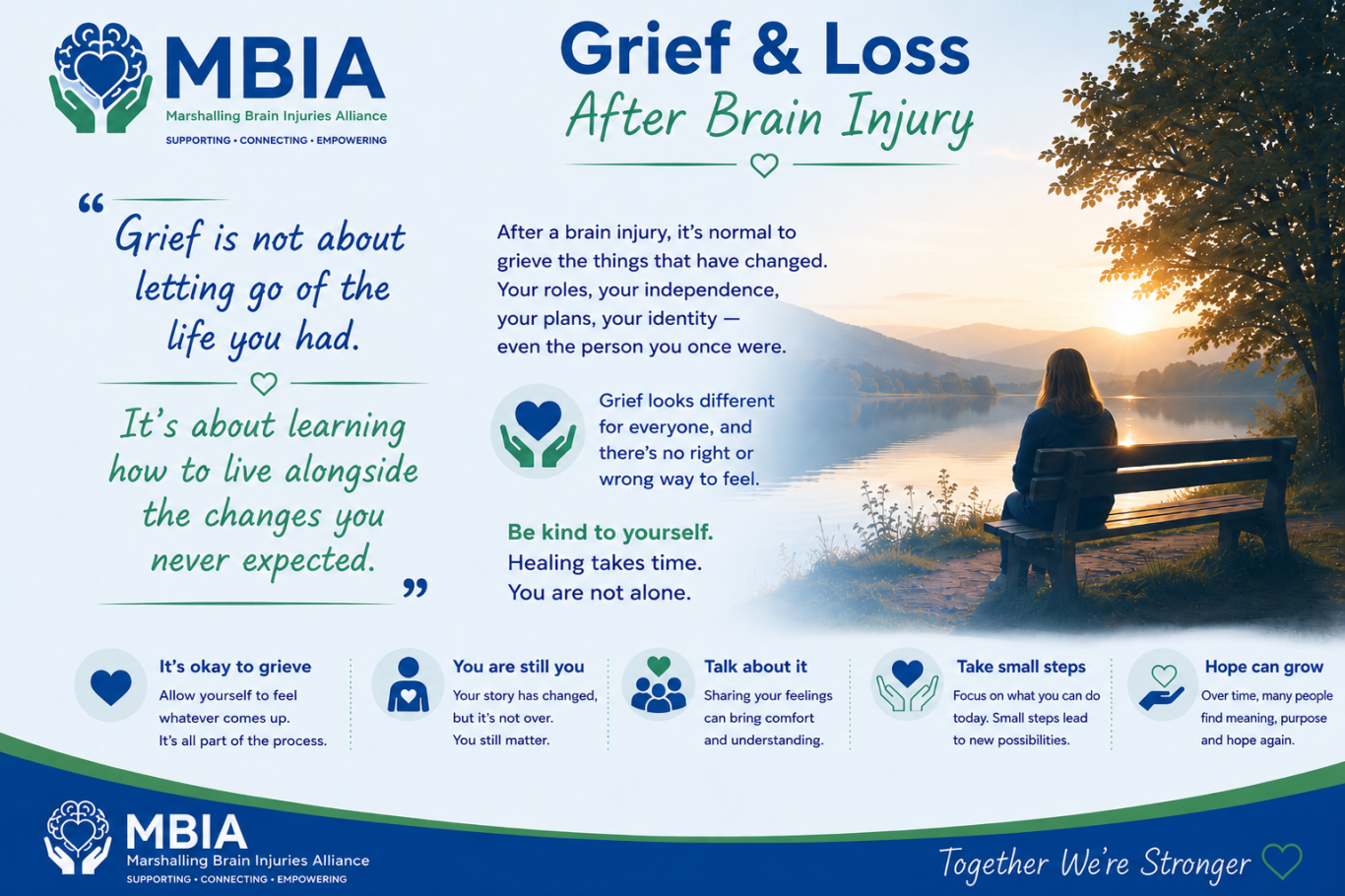
If you are grieving, there is nothing wrong with you.
You are responding to real losses and significant life changes.
The goal is not to forget what has been lost.
The goal is to learn how to carry those losses while continuing to build a meaningful life.
That takes time.
It takes patience.
And it takes compassion towards yourself.
You are still here.
Your story is not over.
Key Takeaways
- Grief is a common but often overlooked part of living with a brain injury.
- You may grieve lost abilities, independence, relationships, identity, or future plans.
- Grief can appear as sadness, anger, anxiety, frustration, withdrawal, or numbness.
- There is no right way or timeline for grieving.
- You can feel grateful and grieve at the same time.
- Connection, support, self-compassion, and finding new meaning can help.
- Life may look different, but it can still be fulfilling and meaningful.
Continue Exploring
Together We're Stronger