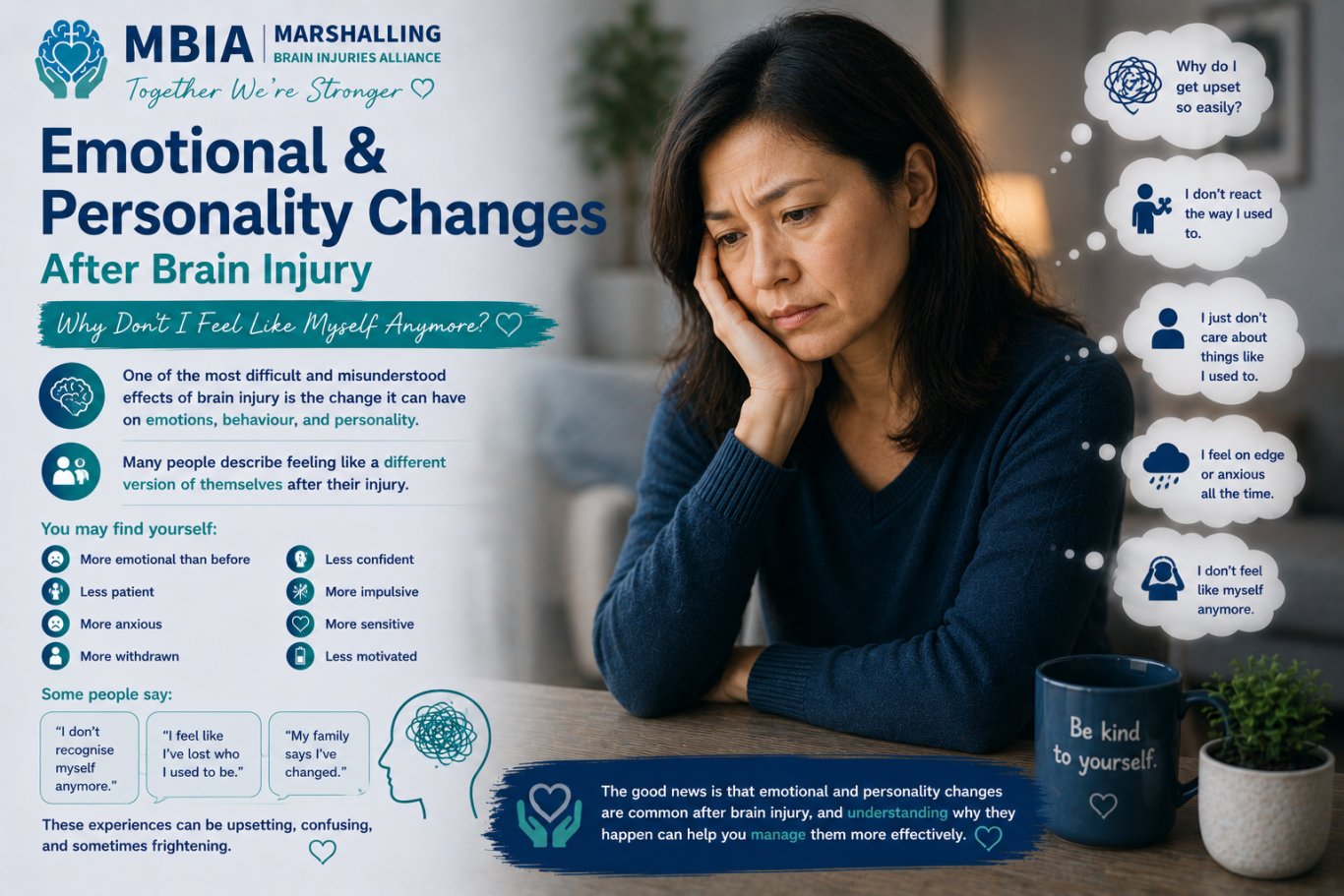
Can Brain Injury Change Personality?
In some cases, yes.
A brain injury can affect how we:
- Think
- Feel
- React
- Communicate
- Manage emotions
However, it is important to remember that your core values, character, and identity do not disappear.
Many of the changes people notice are linked to symptoms of the injury rather than a complete change in who they are.
Often, people are still the same person underneath, but the injury has changed how their brain processes emotions and responds to the world around them.
Why Does It Happen?
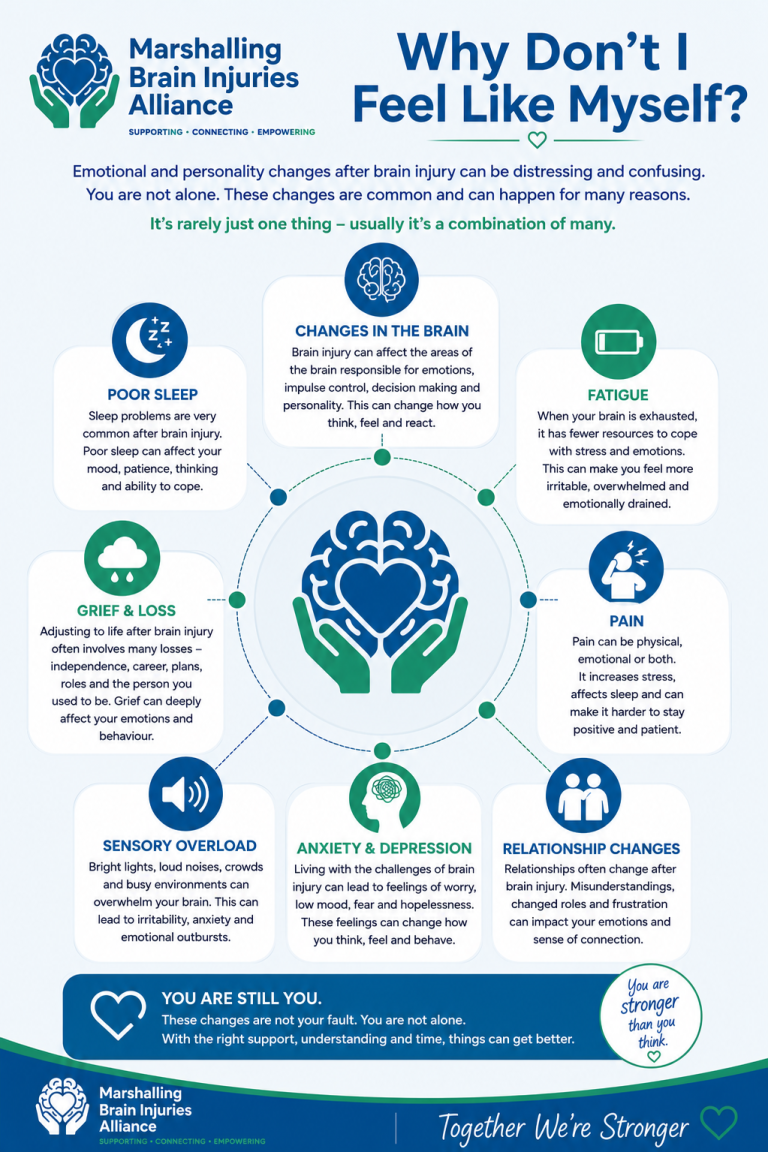
There is rarely one single cause.
Emotional and personality changes often result from a combination of neurological, psychological, and social factors.
Changes Within The Brain
Different areas of the brain help regulate:
- Emotions
- Impulse control
- Decision making
- Social behaviour
- Self-awareness
When these areas are affected, emotional regulation can become more difficult.
You may experience emotions more intensely or find it harder to control how you react.
Fatigue
Fatigue is one of the biggest contributors to emotional difficulties.
When the brain is exhausted, it has fewer resources available for:
- Patience
- Self-control
- Coping with stress
- Managing emotions
Many people notice they become more emotional later in the day when fatigue increases.
Living With Constant Symptoms
Imagine dealing every day with:
- Fatigue
- Pain
- Headaches
- Memory problems
- Sensory overload
- Sleep difficulties
It is understandable that these challenges can affect mood and emotional wellbeing.
Grief and Loss
Many people are grieving after a brain injury.
You may be grieving:
- Your old life
- Your career
- Your independence
- Your hobbies
- Future plans
- The person you used to be
Grief often affects emotions in ways people don't expect.
Anxiety and Depression
Mental health difficulties are common after brain injury.
Some people experience:
- Anxiety
- Depression
- Panic attacks
- Low confidence
- Feelings of hopelessness
These symptoms can affect how you see yourself and interact with others.
Why Family Members May Notice Changes First
Often, the people closest to us notice changes before we do.
They may comment that you seem:
- Different
- More emotional
- More withdrawn
- Less patient
- Less social
Hearing this can be difficult, but it doesn't mean you've become a different person.
It often reflects the challenges your brain is working through.
Common Emotional Changes
Everyone's experience is different, but common changes include:
Irritability
Many people notice they become frustrated more easily.
Small problems may feel much bigger than they used to.
Anger
You may have a shorter fuse or react more strongly than before.
Anxiety
Worrying about symptoms, finances, work, relationships, or the future can create ongoing anxiety.
Low Mood
Periods of sadness, hopelessness, or emotional numbness can occur.
Emotional Sensitivity
Some people become more sensitive to criticism, conflict, or emotional situations.
Mood Swings
Emotions may change rapidly and sometimes feel unpredictable.
Reduced Motivation
Activities you once enjoyed may no longer feel appealing.
This does not necessarily mean you are lazy or don't care.
Withdrawal
Many people begin avoiding social situations because they feel overwhelmed, exhausted, or misunderstood.
Emotional Lability
Some people experience sudden emotional reactions that feel difficult to control.
This may include:
- Crying unexpectedly
- Laughing unexpectedly
- Strong emotional responses that seem out of proportion
This is sometimes called emotional lability or emotional dysregulation.
There is no quick fix, but many people find these strategies helpful.
1. Recognise That Emotional Changes Are Real
Many people blame themselves for emotional difficulties.
Understanding that these changes may be linked to the injury can reduce guilt and self-criticism.
2. Learn Your Triggers
Notice situations that tend to increase emotional reactions.
Common triggers include:
- Fatigue
- Stress
- Pain
- Noise
- Busy environments
- Conflict
- Lack of sleep
Patterns often emerge over time.
3. Prioritise Sleep
Poor sleep often worsens:
- Anxiety
- Irritability
- Low mood
- Emotional regulation
Improving sleep may improve emotional wellbeing.
4. Manage Fatigue
When fatigue increases, emotional control often decreases.
Pacing activities and taking breaks can help protect emotional energy.
5. Stay Connected
Isolation often makes emotional symptoms worse.
Even small amounts of social connection can be helpful.
This might include:
- Family
- Friends
- Support groups
- Online communities
6. Be Honest About How You're Feeling
Many people try to hide their struggles.
Talking openly can reduce pressure and help others understand what you're experiencing.
7. Stay Physically Active
Exercise may help support:
- Mood
- Stress management
- Sleep
- Overall wellbeing
You don't have to do intense workouts.
Even gentle movement can help.
8. Practice Self-Compassion
Recovery is difficult.
Try speaking to yourself the way you would speak to a friend facing the same challenges.
You deserve kindness too.
9. Seek Professional Support
You do not need to struggle alone.
Support may come from:
- Your GP
- Counsellors
- Psychologists
- Mental health services
- Peer support groups
Asking for help is a sign of strength, not weakness.
Tips for Managing Emotional Changes
You Are Still You
One of the biggest fears many people have after a brain injury is that they have permanently lost themselves.
The reality is often more complicated.
Your brain may be working differently.
Your emotions may feel different.
Your life may have changed.
But that does not mean your identity has disappeared.
Many people gradually rediscover who they are, adapt to their new circumstances, and build a meaningful life despite the challenges they face.
A Message of Hope
Emotional and personality changes can be one of the hardest parts of living with a brain injury.
They can affect confidence, relationships, and self-esteem.
But they do not define you.
With understanding, support, self-awareness, and time, many people learn to manage these changes and regain a sense of control over their lives.
Progress may be slow, but it is possible.
Key Takeaways
- Emotional and personality changes are common after brain injury.
- They may be caused by changes within the brain, fatigue, stress, grief, and mental health difficulties.
- Common symptoms include irritability, anxiety, low mood, emotional sensitivity, and mood swings.
- Recognising triggers and managing fatigue can help.
- Sleep, exercise, support, and self-compassion are important tools.
- Emotional changes do not mean you have lost who you are.
- Recovery and adaptation are possible.
Continue Exploring
Together We're Stronger