Is Anger Normal After Brain Injury?
Yes.
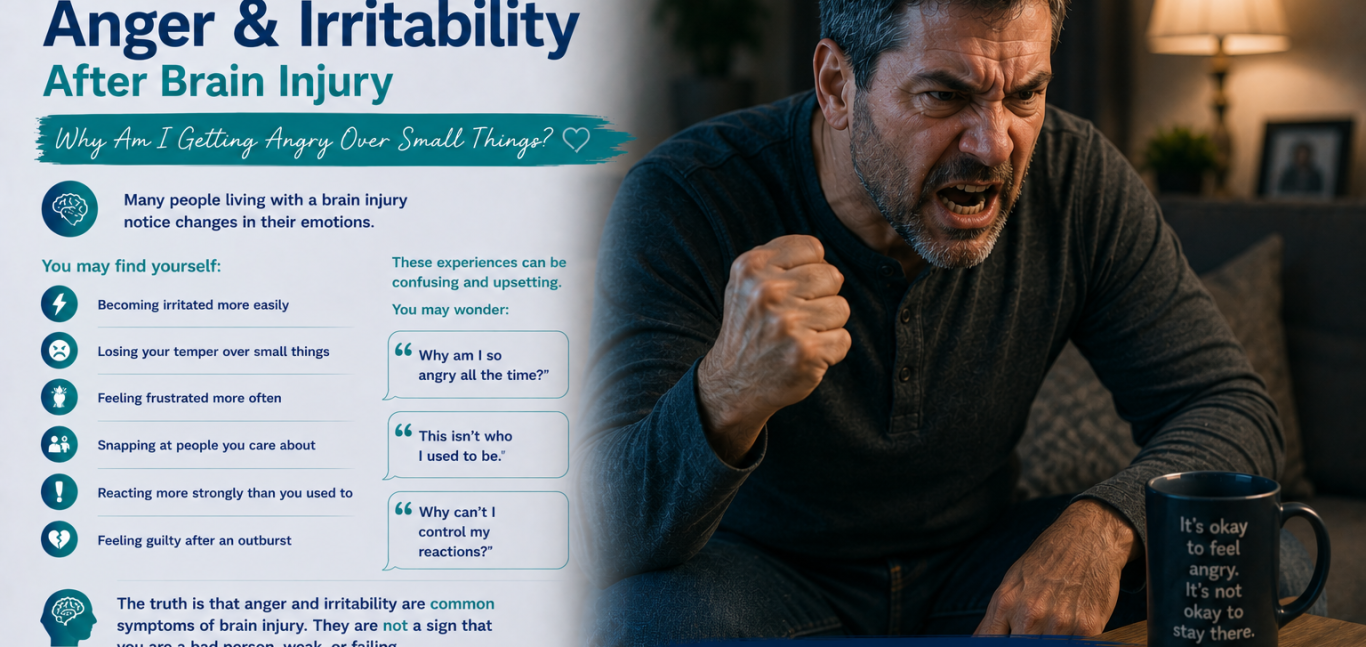
Many people experience increased anger, frustration, irritability,
or emotional outbursts after a brain injury.
This can happen following:
- Concussion
- Traumatic Brain Injury (TBI)
- Acquired Brain Injury (ABI)
- Stroke
- Repeated head trauma
- CTE and other neurological conditions
For some people, anger becomes one of the most difficult
symptoms to manage.
Why Does Brain Injury Affect Anger?
There are several reasons.
Changes in the Brain
Certain areas of the brain help us:
- Regulate emotions
- Control impulses
- Manage frustration
- Think before reacting
If these areas are affected by injury, emotions can become harder
to manage.
You may still feel the same emotions as before, but the brain's
"braking system" may not work as effectively.
This can lead to stronger emotional reactions.
Fatigue
One of the biggest triggers for irritability is fatigue.
When the brain is exhausted, it has fewer resources available to regulate emotions.
Many people notice:
- Less patience
- Lower frustration tolerance
- Increased irritability
when they are tired.
Cognitive Overload
The brain is often working harder after an injury.
Concentration, memory, decision-making, and communication may require significantly more effort.
Over time, this can create frustration and emotional exhaustion.
Sensory Overload
Busy environments can place enormous demands on the brain.
Common triggers include:
- Noise
- Crowds
- Bright lights
- Multiple conversations
- Chaos and unpredictability
Sometimes anger is actually the brain's response to being overwhelmed.
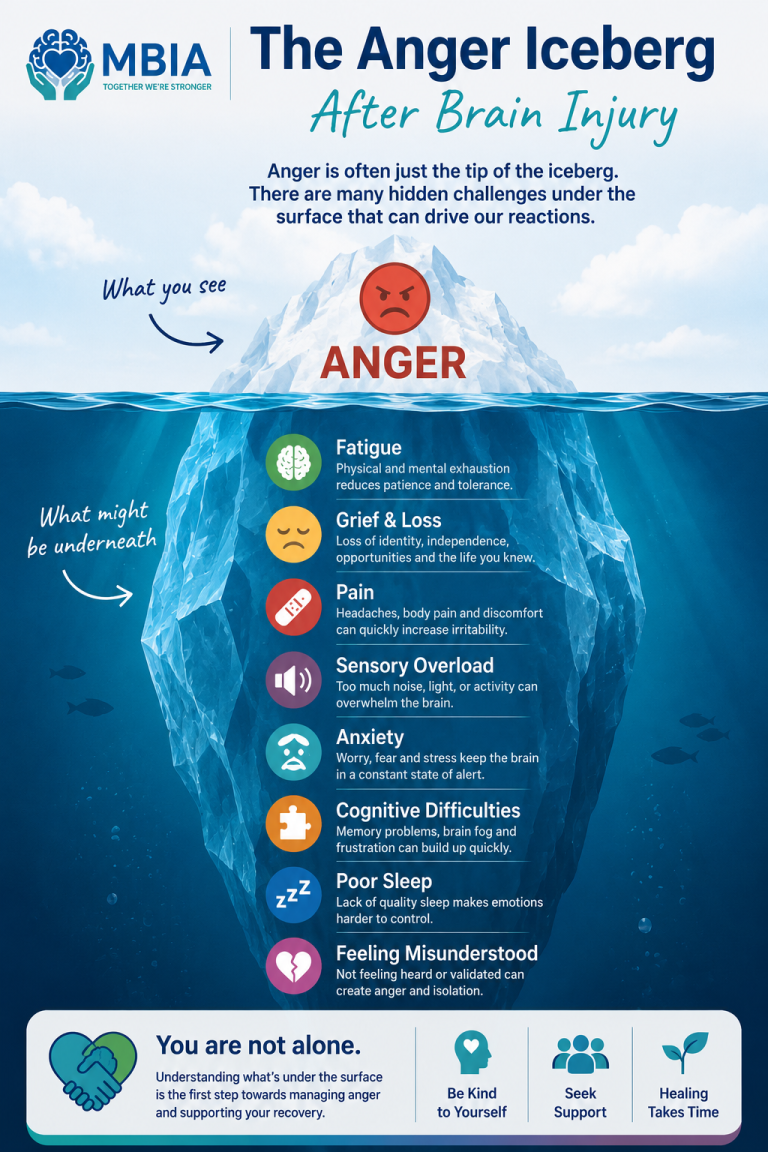
Stress, Anxiety and Depression
Emotional health and anger are closely connected.
Anxiety, depression, stress, grief, and uncertainty can all contribute to irritability.
Sometimes anger is actually a symptom of emotional distress.
Frustration With Symptoms
Many people feel angry about:
- Memory problems
- Fatigue
- Physical limitations
- Loss of independence
- Changes in relationships
- Being misunderstood
These feelings are understandable.
Living with a brain injury is often incredibly frustrating.
Common Signs of Anger & Irritability
You may notice:
- A shorter fuse than before
- Becoming frustrated quickly
- Feeling constantly on edge
- Snapping at loved ones
- Raising your voice more often
- Feeling overwhelmed by minor problems
- Increased impatience
- Difficulty letting things go
- Regretting things you've said afterwards
Many people recognise these changes but struggle to stop them in the moment.
Tips for Managing Anger & Irritability
Managing anger does not mean suppressing emotions.
It means recognising them and responding in a healthier way.
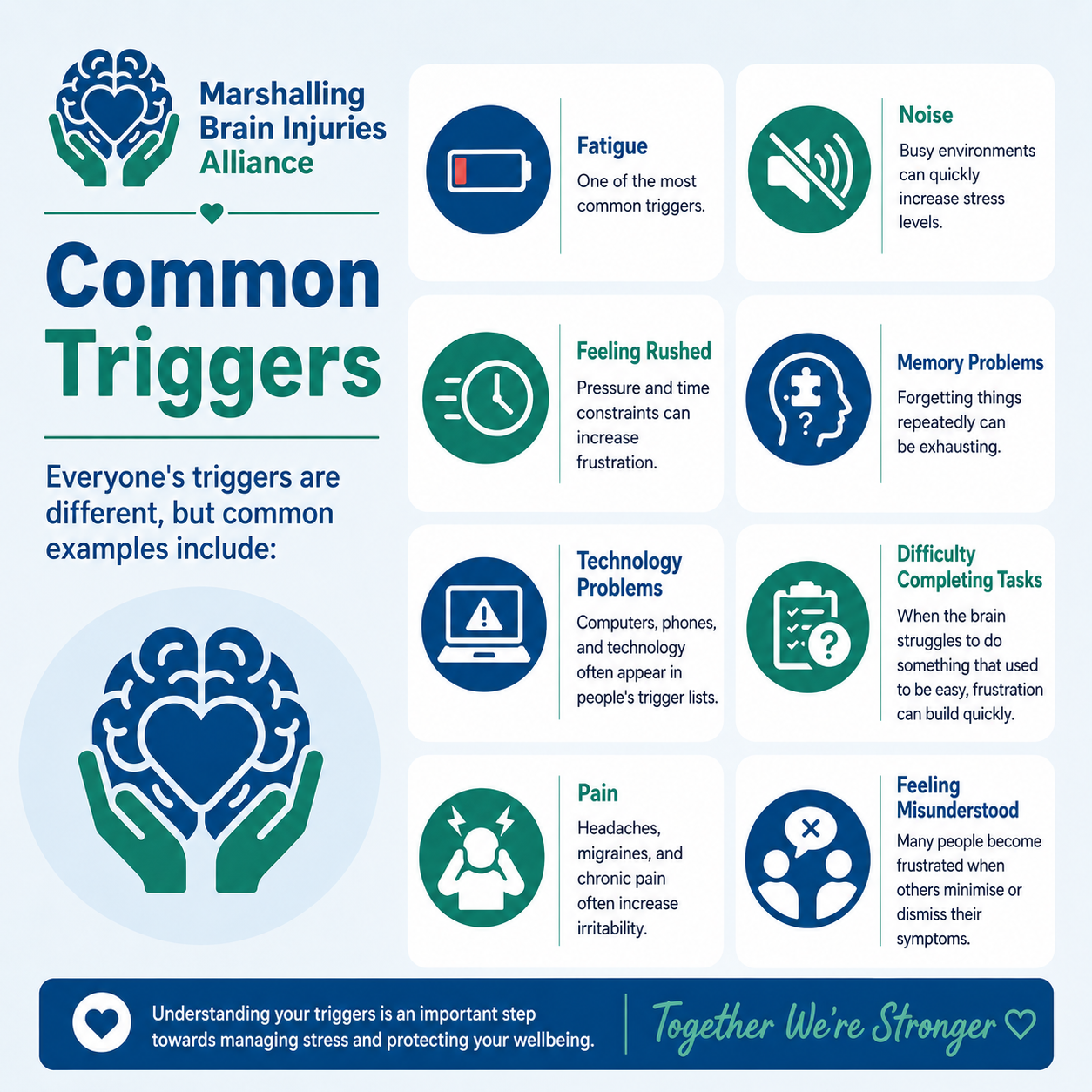
1. Learn Your Triggers
Keep a simple diary for a few weeks.
Notice:
- What happened?
- How were you feeling?
- Were you tired?
- Were you in pain?
- Was the environment noisy?
- Patterns often emerge.
2. Address Fatigue
Fatigue and anger are closely linked.
Many people notice their temper improves when they:
- Pace activities
- Take breaks
- Protect their sleep
- Reduce overload
3. Take a Break Early
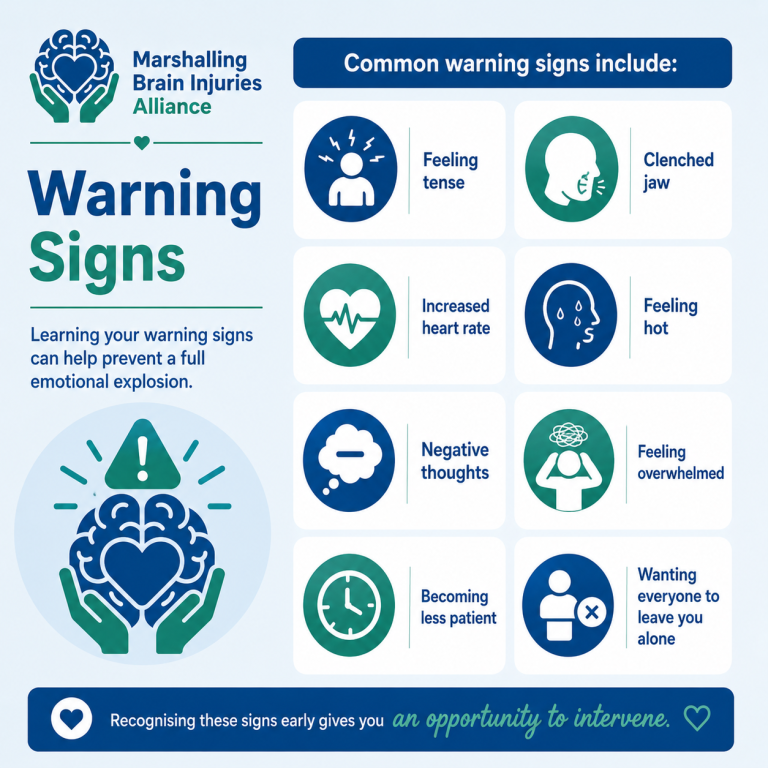
Don't wait until you are overwhelmed.
If possible:
- Leave the room
- Take a walk
- Find a quiet space
- Use headphones
- Reduce stimulation
Early intervention is often easier than trying to calm down later.
4. Reduce Sensory Overload
Consider:
- Noise-cancelling headphones
- Quiet spaces
- Limiting time in busy environments
- Taking breaks during social events
5. Slow Things Down
When overwhelmed, the brain often benefits from slowing down.
Try:
- One task at a time
- Shorter conversations
- Breaking activities into smaller steps
6. Prioritise Sleep
Poor sleep often makes anger worse.
Addressing sleep problems can sometimes improve emotional regulation.
7. Stay Physically Active
Exercise may help reduce stress and improve mood.
Examples include:
- Walking
- Swimming
- Cycling
- Strength training
Choose activities that suit your abilities.
8. Talk About It
Anger often becomes more manageable when people understand what is driving it.
Talking with:
- Family
- Friends
- Support groups
- Therapists
can be incredibly helpful.
9. Don't Beat Yourself Up
Many people feel guilty after an outburst.
Remember:
- Having anger doesn't make you a bad person.
- Your brain may be dealing with challenges that other people cannot see.
- Learning to manage those challenges takes time.
When Should You Seek Additional Support?
Consider speaking with a healthcare professional if anger:
- Is affecting relationships
- Is becoming difficult to control
- Leads to aggression
- Causes significant distress
- Is affecting your quality of life
Support is available.
Key Takeaways
- Anger and irritability are common symptoms of brain injury.
- They are often linked to changes in the brain, fatigue, sensory overload, pain, stress, and frustration.
- Recognising triggers and warning signs can help prevent emotional outbursts.
- Sleep, pacing, exercise, and reducing overload may help improve emotional regulation.
- Anger does not mean you are a bad person.
- Support and understanding can make a significant difference.
Continue Exploring
Together We're Stronger