Why Can Brain Injury Affect Intimacy?
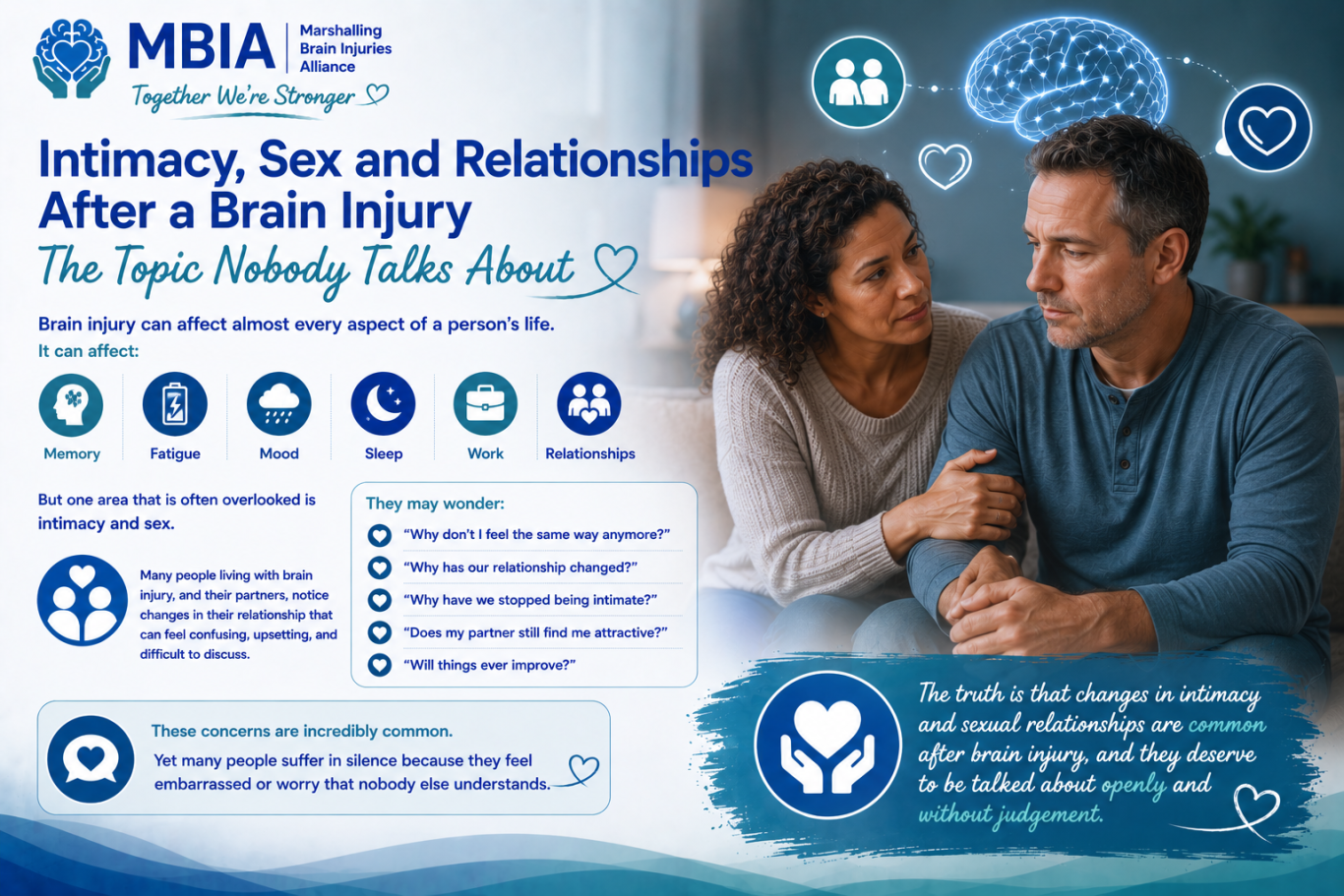
Intimacy is about far more than sex.
It involves:
- Emotional connection
- Communication
- Trust
- Physical affection
- Vulnerability
- Shared experiences
Many of the brain functions that support intimacy can be affected by injury.
This means changes in relationships are often a natural consequence of what the brain and body are experiencing.
The Impact of Fatigue
One of the biggest barriers to intimacy after brain injury is fatigue.
When someone is living with:
- Neuro fatigue
- Poor sleep
- Chronic exhaustion
they may simply have very little energy left at the end of the day.
Many couples find that by the time children are in bed, chores are completed, and daily responsibilities are managed, the injured person has nothing left in their battery.
This is not a reflection of how much they love their partner.
It is often a reflection of how hard their brain has been working all day.
Changes in Self-Identity
Many people with brain injuries struggle with changes in how they see themselves.
They may no longer feel like:
- The partner they once were
- The parent they once were
- The confident person they used to be
Some people experience:
- Loss of confidence
- Shame
- Embarrassment
- Fear of rejection
These feelings can have a significant impact on intimacy.
Emotional Changes
Brain injury can affect emotional regulation and emotional wellbeing.
Some people experience:
- Anxiety
- Depression
- Irritability
- Emotional numbness
- Reduced confidence
These changes can affect:
- Desire
- Emotional connection
- Self-esteem
- Relationship satisfaction
When someone is struggling emotionally, intimacy often becomes more difficult.
Hormonal Changes
The brain plays an important role in regulating hormones.
In some cases, brain injury may affect hormone systems that influence:
- Libido
- Sexual function
- Mood
- Energy levels
This can affect both men and women.
Anyone concerned about hormonal changes should discuss them with an appropriate healthcare professional.
Physical Symptoms Can Affect Intimacy
Brain injury symptoms themselves may create barriers.
Examples include:
- Headaches
- Dizziness
- Pain
- Fatigue
- Sensory sensitivity
- Sleep problems
When someone feels unwell, intimacy may naturally become less of a priority.
The Role of Medication
Some medications commonly prescribed after brain injury may affect:
- Libido
- Sexual function
- Energy levels
Examples may include medications used for:
- Depression
- Anxiety
- Sleep
- Pain
Anyone concerned about side effects should speak to their healthcare provider before making changes to medication.
Intimacy Is More Than Sex
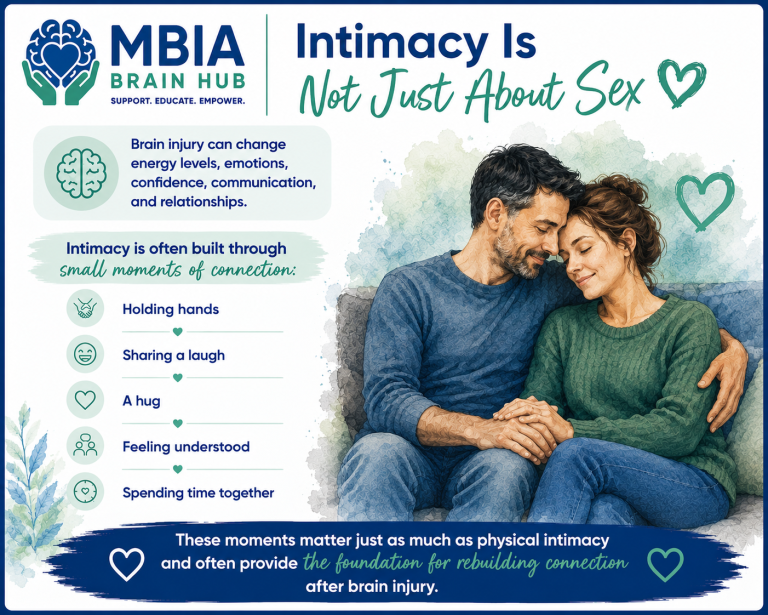
One of the most important things couples can remember is that intimacy includes many forms of connection.
Examples include:
- Holding hands
- Hugs
- Sitting together
- Shared laughter
- Meaningful conversations
- Spending quality time together
When sexual intimacy changes, maintaining emotional intimacy becomes even more important.
Why Communication Often Breaks Down
Many couples stop talking about intimacy because they are afraid of hurting each other.
One partner may think:
"They aren't interested in me anymore."
The other may think:
"I don't know how to explain what I'm feeling."
The result is often silence.
Unfortunately, silence tends to create misunderstandings.
Changes in Libido
Some people experience:
Reduced Libido
This may be related to:
- Fatigue
- Hormonal changes
- Depression
- Medication
- Stress
Others may experience:
Increased Libido
In some cases, brain injury can affect impulse control and behaviour.
Although less common, some people may notice increased sexual thoughts or behaviours.
Both experiences can create challenges within relationships.
The Impact on Partners
Partners are affected too.
Many partners report feelings such as:
- Rejection
- Loneliness
- Frustration
- Guilt
- Sadness
- Confusion
These feelings are valid.
Brain injury affects the entire relationship, not just the injured person.
When Roles Change
Many couples find that their relationship shifts over time.
A partner may become:
- Carer
- Advocate
- Appointment organiser
- Medication manager
While these roles are often necessary, they can sometimes affect how couples relate to each other.
Some people describe feeling more like a caregiver than a spouse or partner.
This can be difficult for both people.
How Couples Can Support Their Relationship
Talk Openly
Open communication is often the most important step.
Try to discuss:
- Feelings
- Concerns
- Needs
- Expectations
without blame or judgement.
Be Honest
It is okay to say:
"I'm struggling."
or
"I miss how things used to be."
These conversations can be difficult, but they are often important.
Focus on Connection
Intimacy does not have to start with sex.
Focus on:
- Spending time together
- Shared activities
- Physical affection
- Emotional connection
Small moments of connection matter.
Be Flexible
Many couples find that intimacy needs to be approached differently after brain injury.
This may involve:
- Different expectations
- Different timing
- More planning
- More communication
Flexibility often reduces pressure.
Work Around Fatigue
Many people have more energy at certain times of day.
Some couples find it helpful to prioritise connection when energy levels are higher rather than waiting until bedtime.
Remember That Both People Matter
Sometimes the focus becomes entirely centred on the injured person.
However:
- The injured person's needs matter.
- The partner's needs matter.
Healthy relationships require both people to feel heard, valued, and supported.
A Message for People Living With Brain Injury
You are not broken.
You are not a failure.
You are navigating challenges that many people never have to face.
Your value as a partner is not measured solely by your ability to maintain the relationship exactly as it was before.
Healthy relationships can adapt and evolve.
A Message for Partners
If intimacy has changed, it does not automatically mean your partner loves you less.
Many people living with brain injury feel enormous guilt about the impact symptoms have on their relationships.
Often they are struggling too.
Approaching these challenges as a team rather than opponents can make a significant difference.
Seek Professional Support
Relationship counselling or sex therapy may be helpful for some couples.
Seeking support does not mean the relationship is failing.
It means the relationship is important enough to invest in.
Key Takeaways
- Brain injury can affect intimacy, relationships, and sexual wellbeing in many different ways.
- Fatigue, emotional changes, hormonal changes, medication side effects, and physical symptoms may all play a role.
- Changes in intimacy are common and do not mean a relationship has failed.
- Intimacy includes emotional and physical connection, not just sex.
- Open communication is often one of the most important tools couples have.
- Both partners' needs matter.
- Professional support may be helpful when challenges feel overwhelming.
- Many couples find new ways to connect and maintain fulfilling relationships after brain injury.
Continue Exploring
Together We're Stronger