Why Parenting Can Be So Challenging After Brain Injury
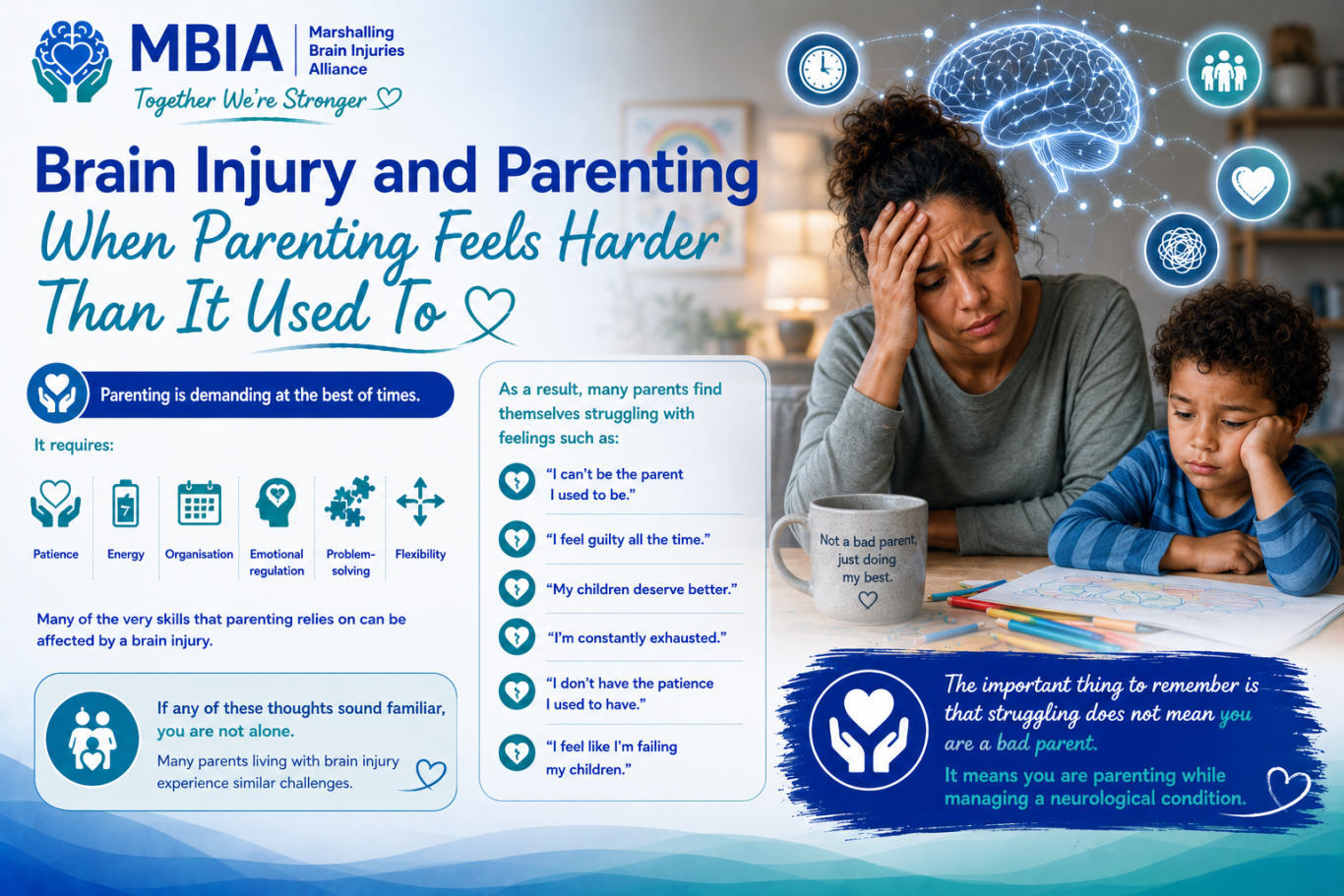
Parenting places constant demands on the brain.
Every day may involve:
- Decision-making
- Planning
- Remembering schedules
- Managing emotions
- Coping with noise
- Solving problems
- Handling unexpected situations
For an injured brain, these demands can quickly become overwhelming.
Common Challenges Parents Experience
Every family is different, but many parents report similar struggles.
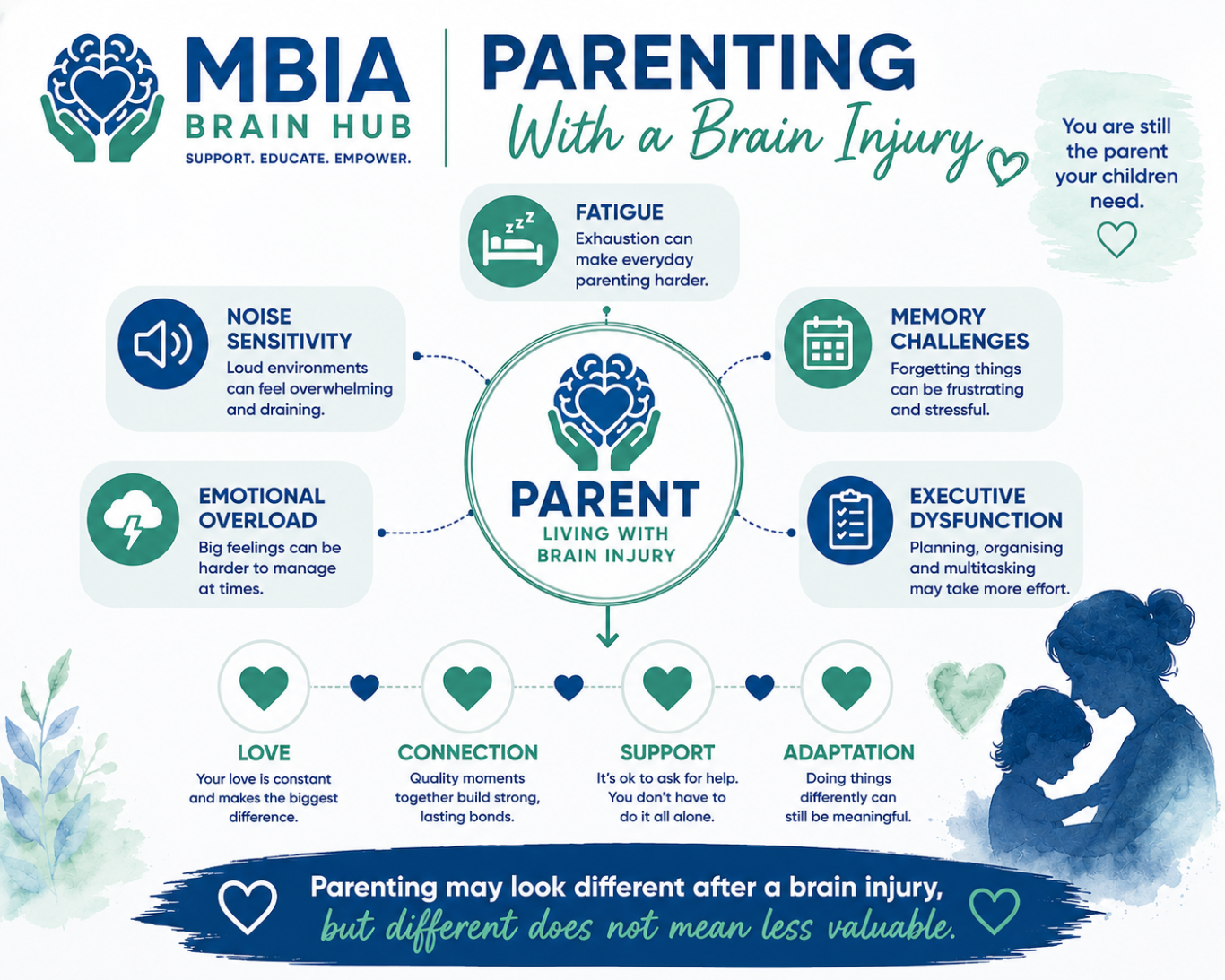
Neuro Fatigue
One of the biggest challenges is fatigue.
Children naturally require:
- Attention
- Interaction
- Supervision
- Emotional availability
When the brain is already exhausted, meeting these demands can feel impossible.
Many parents describe feeling guilty because they simply do not have the energy they once had.
Noise Sensitivity
Children can be noisy.
That is a normal part of childhood.
However, after a brain injury, many people become more sensitive to:
- Loud voices
- Repetitive sounds
- Multiple conversations
- Sudden noises
What others see as normal family noise may feel overwhelming to an injured brain.
Memory Difficulties
Parents may struggle to remember:
- School events
- Appointments
- Homework deadlines
- Instructions from teachers
- Family plans
This can create feelings of frustration and guilt.
Executive Dysfunction
Tasks such as:
- Organising school activities
- Completing forms
- Managing routines
- Planning meals
may become more difficult.
Parents often know what needs doing but struggle to organise and complete everything.
Reduced Patience
Fatigue, sensory overload, and emotional regulation difficulties can reduce patience.
Many parents notice:
- Increased irritability
- Shorter tempers
- Feeling overwhelmed more quickly
This can be particularly upsetting because it often does not reflect how they truly feel about their children.
Emotional Regulation Difficulties
The brain injury itself may affect emotional control.
Parents sometimes experience:
- Anger
- Frustration
- Tearfulness
- Emotional overwhelm
more easily than before.
Feeling Guilty
Perhaps the most common challenge of all.
Many parents feel guilty because they:
- Need more rest
- Can't do as much
- Miss activities
- Become overwhelmed
- Need help from others
These feelings are incredibly common but can be emotionally exhausting.
Children Often Notice More Than We Think
Children are often highly observant.
They may notice:
- Changes in energy
- Memory difficulties
- Mood changes
- Increased rest needs
Even when they do not fully understand what is happening.
This is why open and age-appropriate communication can be helpful.
Talking to Children About Brain Injury
Children do not need complicated medical explanations.
Simple explanations are often best.
For younger children:
"My brain got hurt, so it gets tired more quickly."
For older children:
"My brain works a little differently now, so some things take more energy than they used to."
Children are often more understanding than adults expect.
What Children Need Most
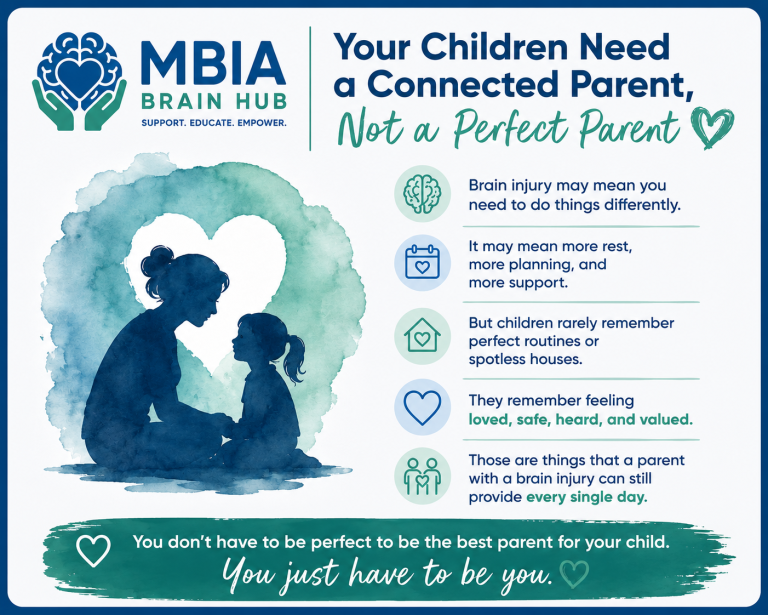
Children do not need perfect parents.
They need:
- Love
- Safety
- Connection
- Honesty
- Consistency where possible
Many parents with brain injuries continue to provide these things every day.
Practical Tips for Parenting With a Brain Injury
Prioritise What Matters Most
You do not need to do everything.
Focus on:
- Safety
- Love
- Connection
The dishes can wait.
The relationship cannot.
Simplify Where Possible
Consider:
- Shared calendars
- Written routines
- Meal planning
- Reminder apps
Reducing cognitive load can free up energy for parenting.
Pace Your Energy
Think about your brain battery.
Plan important activities when your energy is highest.
Allow recovery time afterwards.
Build Rest Into Family Life
Rest does not have to mean isolation.
Examples include:
- Reading together
- Watching a film
- Quiet games
- Listening to audiobooks
These activities allow connection while conserving energy.
Accept Help
Many parents struggle with this.
Accepting help is not failure.
It is a strategy.
Support from:
- Partners
- Family
- Friends
- Community groups
can make a significant difference.
Reduce Sensory Overload
When possible:
- Create quiet spaces
- Use noise-cancelling headphones
- Take breaks
- Reduce unnecessary stimulation
Protecting your brain helps protect your ability to parent.
Repair After Difficult Moments
Every parent loses patience sometimes.
If you become overwhelmed:
- Apologise if needed
- Explain what happened
- Reconnect afterwards
Children learn valuable lessons from repair and honesty.
What If I Feel Like I'm Failing?
Many parents with brain injuries carry enormous guilt.
It is important to remember:
Your children do not need perfection.
They need you.
Children often remember:
- Being listened to
- Feeling loved
- Spending time together
far more than they remember spotless houses or perfectly organised schedules.
For Partners and Co-Parents
If you are supporting a parent with a brain injury, remember:
Many of the challenges they face are neurological, not personal.
Understanding symptoms such as:
- Fatigue
- Brain fog
- Executive dysfunction
- Emotional regulation difficulties
can help reduce conflict and improve teamwork.
Parenting after brain injury is often a family effort.
Looking After Yourself
You cannot pour from an empty cup.
Many parents focus entirely on their children and neglect their own needs.
Try to prioritise:
- Sleep
- Rest
- Medical care
- Support networks
- Activities that recharge you
Looking after yourself is part of looking after your family.
Key Takeaways
- Parenting after brain injury can be challenging due to fatigue, memory difficulties, sensory overload, and emotional regulation changes.
- Many parents experience guilt, frustration, and self-doubt.
- Children often benefit from simple, honest explanations.
- Connection is more important than perfection.
- Practical strategies such as pacing, routines, and accepting help can make parenting easier.
- Repairing difficult moments is often more important than avoiding them entirely.
- Looking after yourself helps you look after your family.
- You can still be a loving, effective parent while living with a brain injury.
Continue Exploring
Together We're Stronger