Understanding Neuro Fatigue After Brain Injury
"I'm Not Just Tired — My Brain Feels Exhausted."
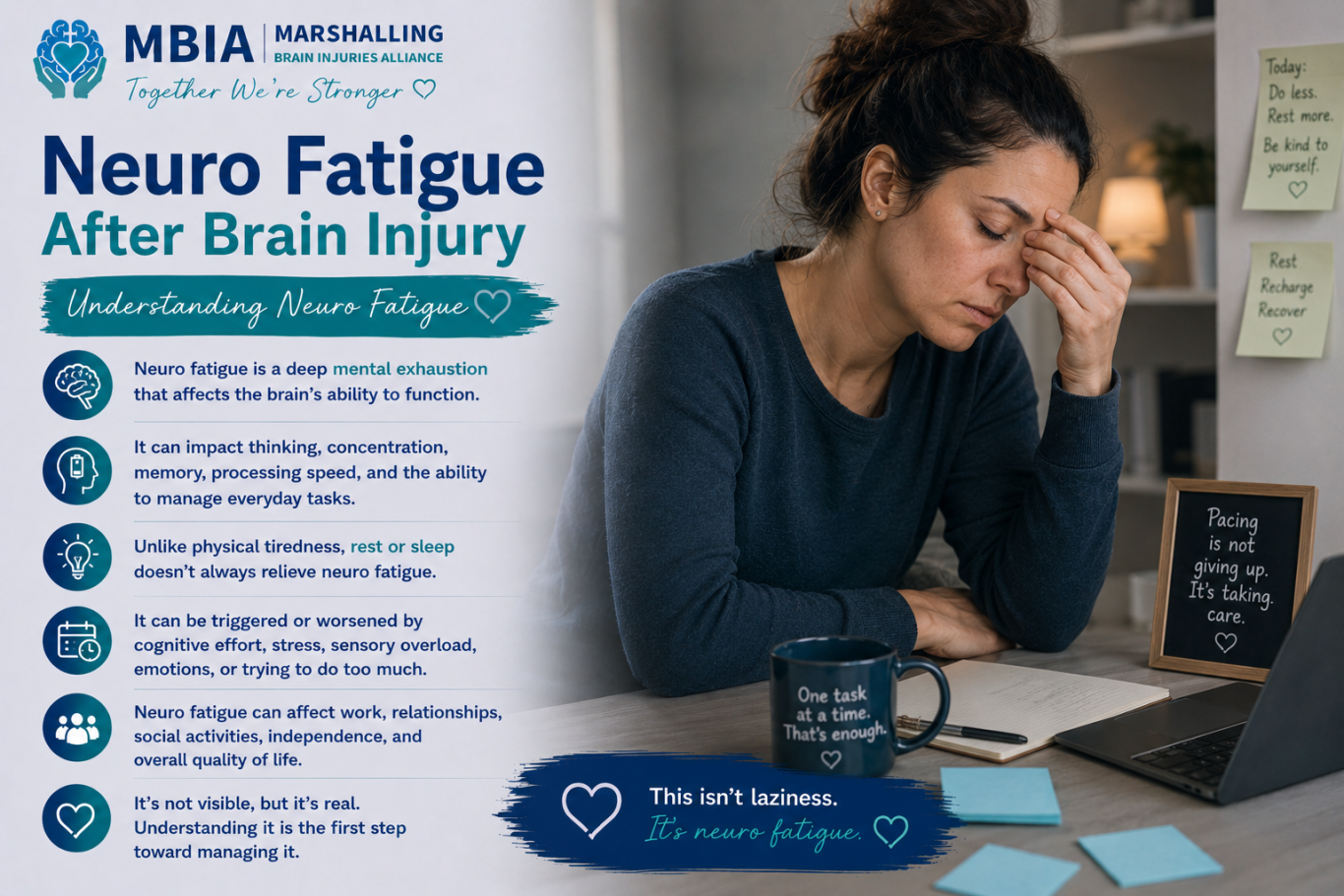
One of the most common and misunderstood symptoms of brain injury is neuro fatigue.
Many people hear the word fatigue and assume it means simply feeling tired.
But neuro fatigue is very different.
People often describe it as:
"It's like someone pulled the plug on my brain."
"I hit a wall and suddenly can't think."
"I can push through physical tiredness, but I can't push through neuro fatigue."
"My brain battery runs out much faster than it used to."
Neuro fatigue is one of the most common symptoms experienced after:
- Concussion
- Post-Concussion Syndrome (PCS)
- Traumatic Brain Injury (TBI)
- Acquired Brain Injury (ABI)
- Stroke
- Chronic Traumatic Encephalopathy (CTE)
- Other neurological conditions
Although it is often invisible to others, it can have a significant impact on daily life.
What Is Neuro Fatigue?
Neuro fatigue (sometimes called cognitive fatigue or neurological fatigue) occurs when the brain becomes mentally exhausted.
Following a brain injury, the brain often has to work much harder to complete everyday tasks.
Things that once happened automatically now require more effort.
As a result, the brain uses more energy and becomes fatigued more quickly.
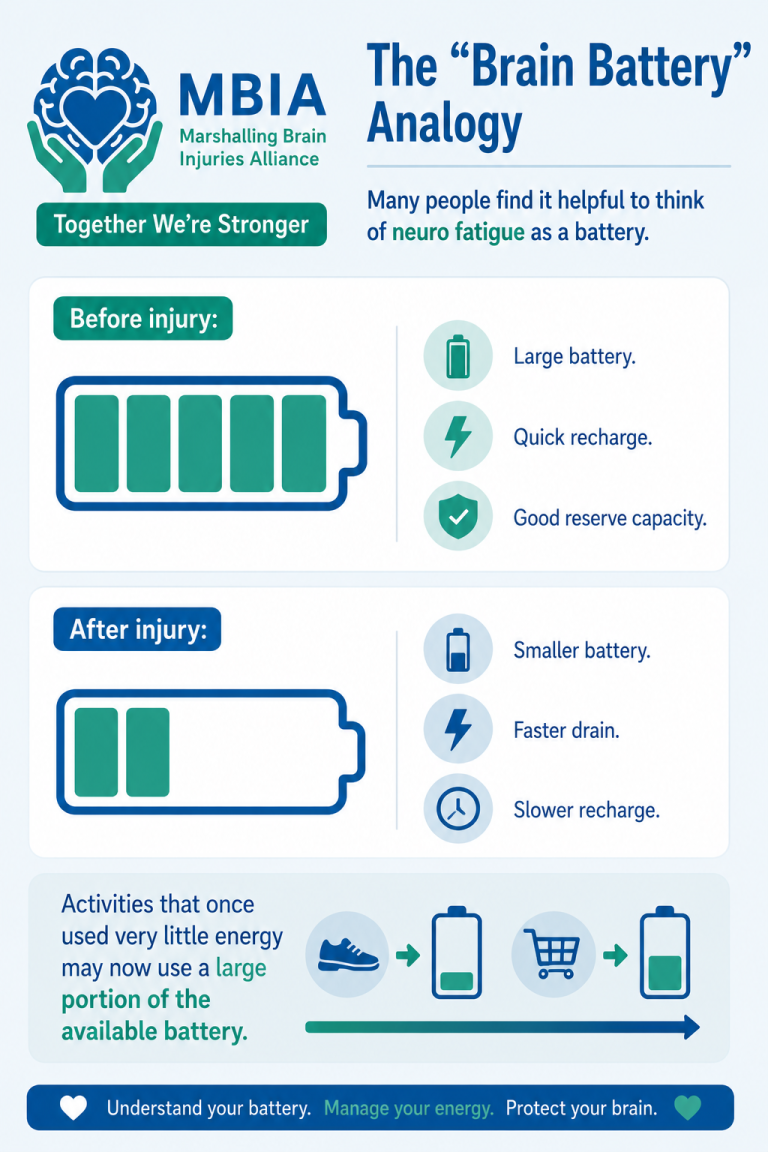
Think of it like this:
Before injury, your brain may have had a large battery that lasted all day.
After injury, the battery may be smaller, drain faster, and take longer to recharge.
Why Does Neuro Fatigue Happen?
The brain is one of the most energy-demanding organs in the body.
Although it represents only around 2% of body weight, it uses approximately 20% of the body's energy.
After a brain injury:
- Information processing may become less efficient.
- The brain may need to use alternative pathways.
- Damaged networks may require more effort to function.
- Filtering information may become harder.
All of this increases energy demands.
The result is neuro fatigue.
What Does Neuro Fatigue Feel Like?
Everyone experiences it differently.
Common symptoms include:
- Brain fog
- Slower thinking
- Difficulty concentrating
- Memory problems
- Irritability
- Headaches
- Difficulty finding words
- Increased sensitivity to noise or light
- Feeling overwhelmed
- Difficulty making decisions
- Emotional sensitivity
Many people describe a point where their brain simply stops cooperating.
Why Neuro Fatigue Is Different From Ordinary Tiredness
Most people experience ordinary tiredness.
Neuro fatigue is different.
With ordinary tiredness:
- Rest often helps quickly.
- You can sometimes push through.
- Energy returns relatively predictably.
With neuro fatigue:
- Pushing through often makes symptoms worse.
- Recovery may take hours or days.
- Mental exhaustion can occur suddenly.
- Symptoms often affect thinking as much as energy levels.
This is why people with brain injuries are often told:
"You just need to push through."
Unfortunately, this approach can sometimes make symptoms worse.
How Neuro Fatigue Affects Daily Life
Neuro fatigue can affect:
Work
Reduced productivity and concentration.
Education
Difficulty studying or learning.
Relationships
Less energy for social interaction.
Family Life
Struggling to participate in activities.
Confidence
Many people begin doubting themselves when tasks become harder.
Why Neuro Fatigue Can Be Invisible
One of the biggest challenges is that neuro fatigue is often hidden.
Someone may look:
- Healthy
- Well rested
- Physically capable
while feeling completely exhausted mentally.
This can lead to misunderstanding from:
- Family members
- Friends
- Employers
- Colleagues
Many people hear:
"But you look fine."
Unfortunately, appearance rarely reflects how much effort the brain is using.
How to Manage Neuro Fatigue
There is currently no instant cure for neuro fatigue, but many strategies can help.
Learn Your Limits
Start paying attention to:
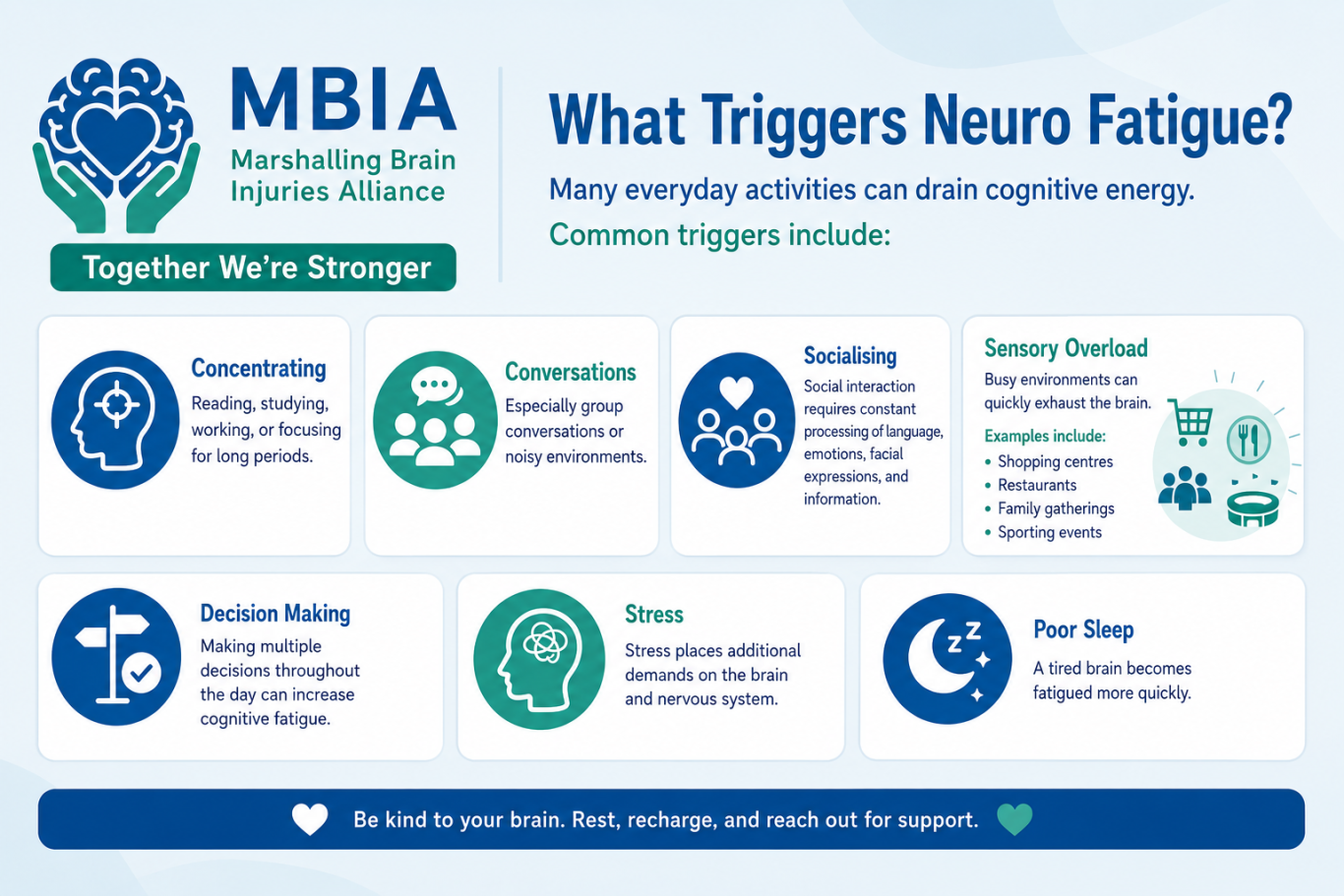
- What drains your energy
- How long activities take to recover from
- Early warning signs
Understanding your limits allows you to plan more effectively.
Pace Yourself
Pacing is one of the most important strategies for managing neuro fatigue.
Rather than waiting until exhaustion occurs:
- Take breaks regularly.
- Spread activities throughout the day.
- Alternate demanding tasks with easier ones.
Prioritise Activities
You may not have enough energy for everything.
Focus on what matters most.
Ask yourself:
"What absolutely needs doing today?"
Use Energy Wisely
Think of energy as a limited resource.
Spend it on activities that are meaningful and important to you.
Prioritise Sleep
Sleep is one of the most effective ways to support brain recovery and energy levels.
If you have ongoing sleep difficulties, seek medical advice.
Reduce Sensory Overload
Managing sensory input may help conserve cognitive energy.
Consider:
- Quiet environments
- Noise-cancelling headphones
- Sunglasses
- Planned breaks
Plan Recovery Time
Recovery should be part of the plan.
After demanding activities, schedule time to rest and recharge.
Maintain Good Nutrition and Hydration
The brain needs fuel.
Regular meals and adequate hydration can support energy levels and cognitive function.
Be Kind to Yourself
Many people become frustrated by their limitations.
Remember:
Neuro fatigue is a symptom.
It is not a character flaw.
It is not laziness.
It is not weakness.
What Family Members Should Know
Neuro fatigue is often misunderstood.
Your loved one may:
- Seem fine one moment
- Struggle the next
- Cancel plans unexpectedly
- Need frequent breaks
- Withdraw from activities
This is often because their brain has run out of energy.
They are not being difficult.
They are managing a genuine neurological symptom.
Understanding this can reduce frustration and improve support.
Will Neuro Fatigue Improve?
For many people, yes.
Improvement may occur through:
- Recovery
- Neuroplasticity
- Better sleep
- Effective pacing
- Rehabilitation
- Learning personal triggers
Progress is often gradual.
Many people continue improving months and even years after injury.
Key Takeaways
- Neuro fatigue is a common symptom after brain injury.
- It occurs because the brain often uses more energy to complete everyday tasks.
- Symptoms may include brain fog, memory problems, slower thinking, headaches, and irritability.
- Neuro fatigue is different from ordinary tiredness.
- Pushing through fatigue often makes symptoms worse.
- Pacing, sleep, managing sensory overload, and understanding triggers can help.
- Neuro fatigue is invisible but very real.
- Many people learn to manage it successfully and continue improving over time.
Continue Exploring
Together We're Stronger