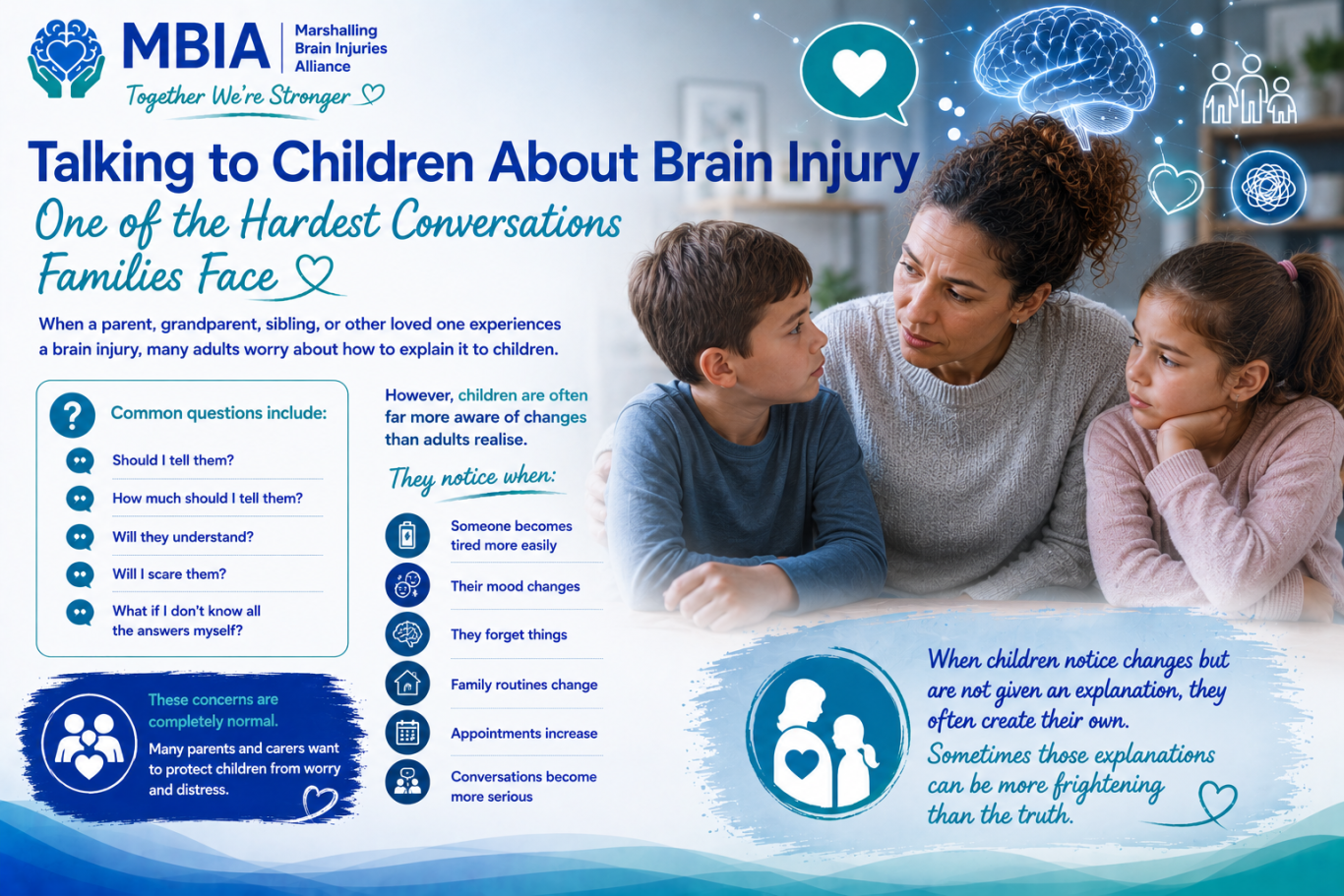
Why Talking About It Matters
Children generally cope better with difficult situations when they:
- Feel informed
- Feel included
- Feel safe
- Know they can ask questions
Open communication helps children understand that what is happening is not their fault and that they are not alone.
You Don't Need All the Answers
Many adults avoid conversations because they feel they need to explain everything perfectly.
You don't.
It is perfectly okay to say:
"I don't know the answer to that yet."
or
"We're still learning about it ourselves."
Children usually value honesty more than certainty.
Keep It Age Appropriate
The way you explain brain injury should depend on the child's age and understanding.
The goal is not to provide a medical lecture.
The goal is to help them understand what is happening in a way that feels safe and manageable.
Talking to Children Aged 8–12
Children in this age group often want more information.
You might explain:
"The brain controls things like memory, emotions, concentration, and energy. Sometimes after an injury, those things don't work as well as they used to."
You can explain symptoms such as:
- Fatigue
- Memory problems
- Mood changes
- Difficulties concentrating
in simple language they can understand.
Talking to Younger Children (Ages 3–7)
Young children need simple explanations.
Examples:
"Daddy's brain got hurt, so it gets tired more quickly now."
"Mummy's brain works a bit differently after her injury."
"Grandad sometimes forgets things because his brain isn't working the same way it used to."
Young children often focus on how changes affect them.
You may need to reassure them that:
- They are loved
- They are safe
- The injury is not their fault
Talking to Teenagers
Teenagers are often capable of understanding more detailed explanations.
They may also seek information online.
Being open and honest can help prevent misinformation and reduce anxiety.
You might discuss:
- What a brain injury is
- How it happened
- Common symptoms
- Recovery challenges
- Changes within the family
Teenagers often appreciate being treated as part of the conversation rather than being shielded from it completely.
Common Questions Children Ask
"Will They Get Better?"
This is often the first question.
Try to answer honestly.
For example:
"We're hopeful things will improve, but recovery can take time."
or
"Some things may get better, and some things may stay different."
Avoid making promises that cannot be guaranteed.
"Did I Cause This?"
Children sometimes blame themselves for things that have nothing to do with them.
Make it clear:
"No, absolutely not. Nothing you did caused this."
"Can I Catch It?"
Young children in particular may worry about this.
Reassure them:
"No, brain injuries are not contagious."
"Why Are They Angry All the Time?"
You might explain:
"The injury can make it harder for their brain to manage emotions, especially when they're tired or overwhelmed."
This helps children understand that the behaviour is related to the injury rather than something they have done wrong.
Encourage Questions
Children often revisit difficult topics multiple times.
They may ask:
- The same question repeatedly
- Questions at unexpected times
- Questions years later
This is normal.
Children process information gradually as they grow and develop.
Watch for Signs They Are Struggling
Not all children express worries directly.
Signs may include:
- Increased anxiety
- Changes in behaviour
- Sleep difficulties
- Withdrawal
- School problems
- Irritability
- Clinginess
These signs do not necessarily mean something is wrong, but they may indicate a child needs additional support.
Reassure Them They Are Still Loved
One of the biggest fears children often have is:
"Things will never be the same again."
While some things may change, children need regular reassurance that:
- They are loved
- They are important
- The family is still a family
Consistency and connection often matter more than finding the perfect words.
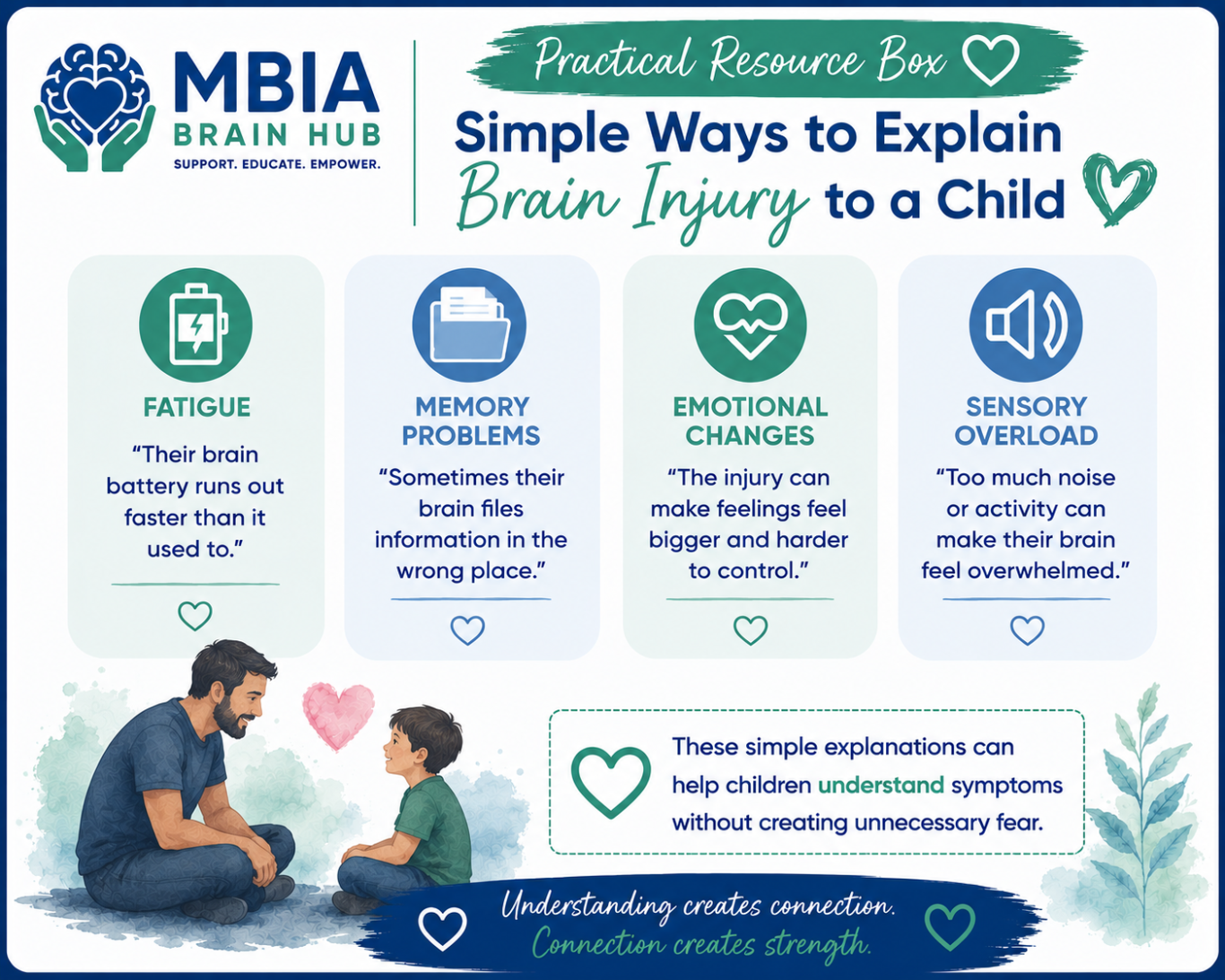
Helping Children Understand Common Symptoms
Fatigue
You could explain:
"Imagine your brain battery runs out much faster than it used to."
Many children understand this analogy very well.
Memory Problems
You might say:
"Sometimes information gets lost before it reaches the filing cabinet in their brain."
Emotional Changes
You could explain:
"The injury can make emotions feel bigger and harder to control."
Sensory Overload
You might say:
"Their brain sometimes struggles when there's too much noise, light, or activity happening at once."
It's Okay to Show Emotion
Many adults worry about crying or becoming emotional in front of children.
In reality, seeing emotions expressed in healthy ways can teach children valuable lessons.
For example:
"I'm feeling sad today, and that's okay."
helps children understand that emotions are normal and manageable.
When Professional Support May Help
Some children benefit from additional support, particularly if:
- The injury has significantly changed family life
- They are showing signs of distress
- They are struggling at school
- They have witnessed a traumatic event
Support may come from:
- School staff
- Counsellors
- Child psychologists
- Family support services
A Message for Parents and Families
You do not need to have the perfect conversation.
You do not need to say everything at once.
What matters most is creating an environment where children feel safe asking questions and sharing their feelings.
Honesty, reassurance, and age-appropriate information often go much further than trying to protect children from every difficult reality.
Key Takeaways
- Children often notice changes long before adults realise.
- Honest, age-appropriate explanations are usually more helpful than avoiding the topic.
- Children need reassurance that they are safe, loved, and not responsible.
- Questions may arise repeatedly over time.
- Different ages require different levels of information.
- Open communication helps reduce fear and misunderstanding.
- Support is available if children are struggling.
- There is no perfect conversation—only ongoing, supportive communication.
Continue Exploring
Together We're Stronger