For some individuals, changes to hormone production can contribute to symptoms that are often mistaken for:
Stress
Depression
Anxiety
Burnout
Ageing
Menopause
Understanding the connection between hormones and brain injury can help explain why some symptoms persist and why recovery can sometimes feel more complicated than expected.
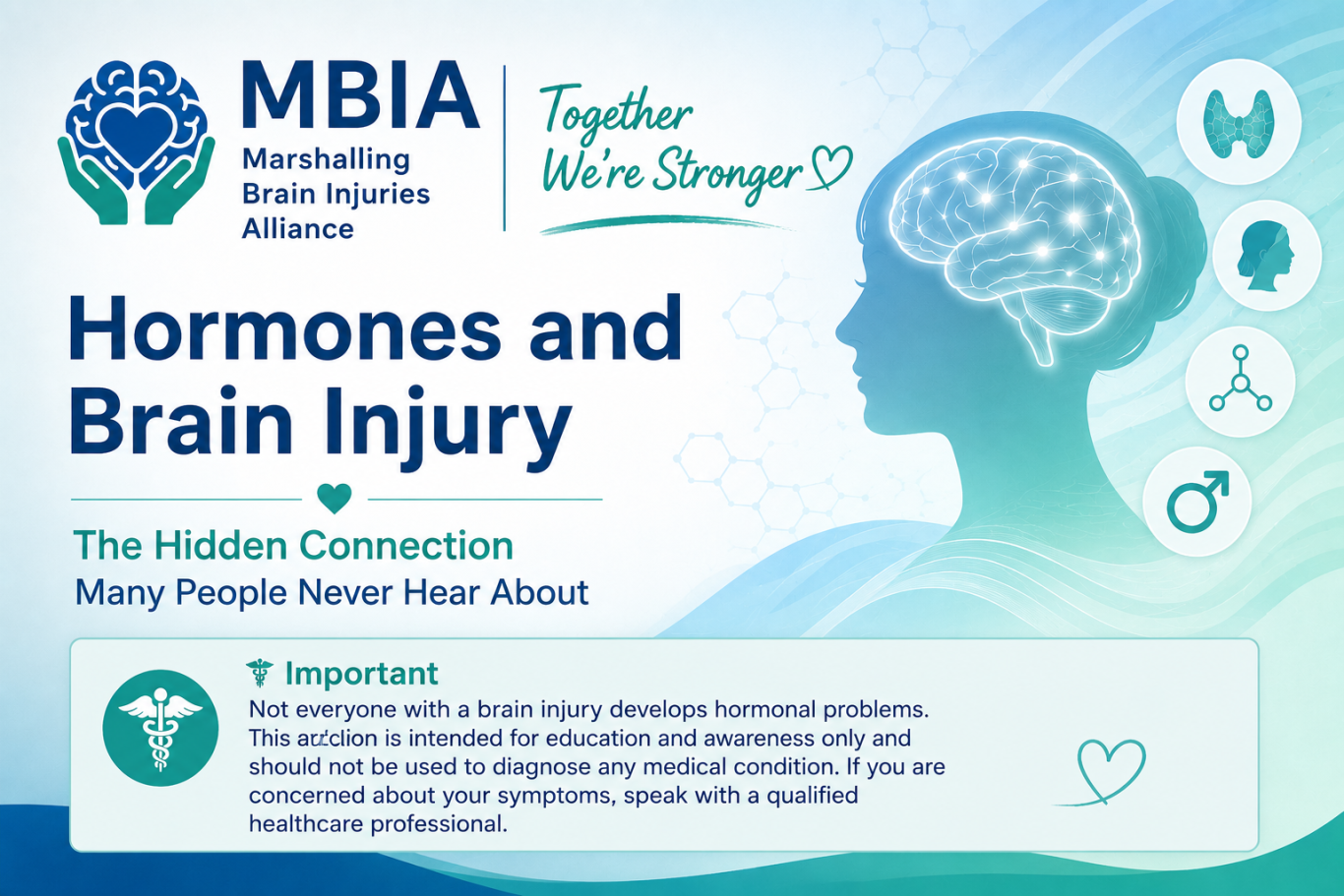
The Hidden Connection Many People Never Hear About
When people think about the effects of a brain injury, they often think about:
- Memory problems
- Fatigue
- Headaches
- Mood changes
- Sleep difficulties
What many people don't realise is that a brain injury can also affect the body's hormone system.
During a brain injury, particularly one involving:
- Concussion
- Traumatic Brain Injury (TBI)
- Repeated head impacts
- Blast exposure
- Moderate or severe brain injury
the structures involved in hormone regulation may be affected.
Research suggests that some people develop hormone deficiencies following brain injury, a condition sometimes called:
Post-Traumatic Hypopituitarism
This means the pituitary gland is no longer producing hormones normally.
What Are Hormones?
Hormones are chemical messengers produced by glands throughout the body.
They help regulate:
- Energy levels
- Sleep
- Mood
- Memory
- Concentration
- Growth and repair
- Sexual function
- Metabolism
- Stress responses
Hormones help many of the body's systems communicate and work together.
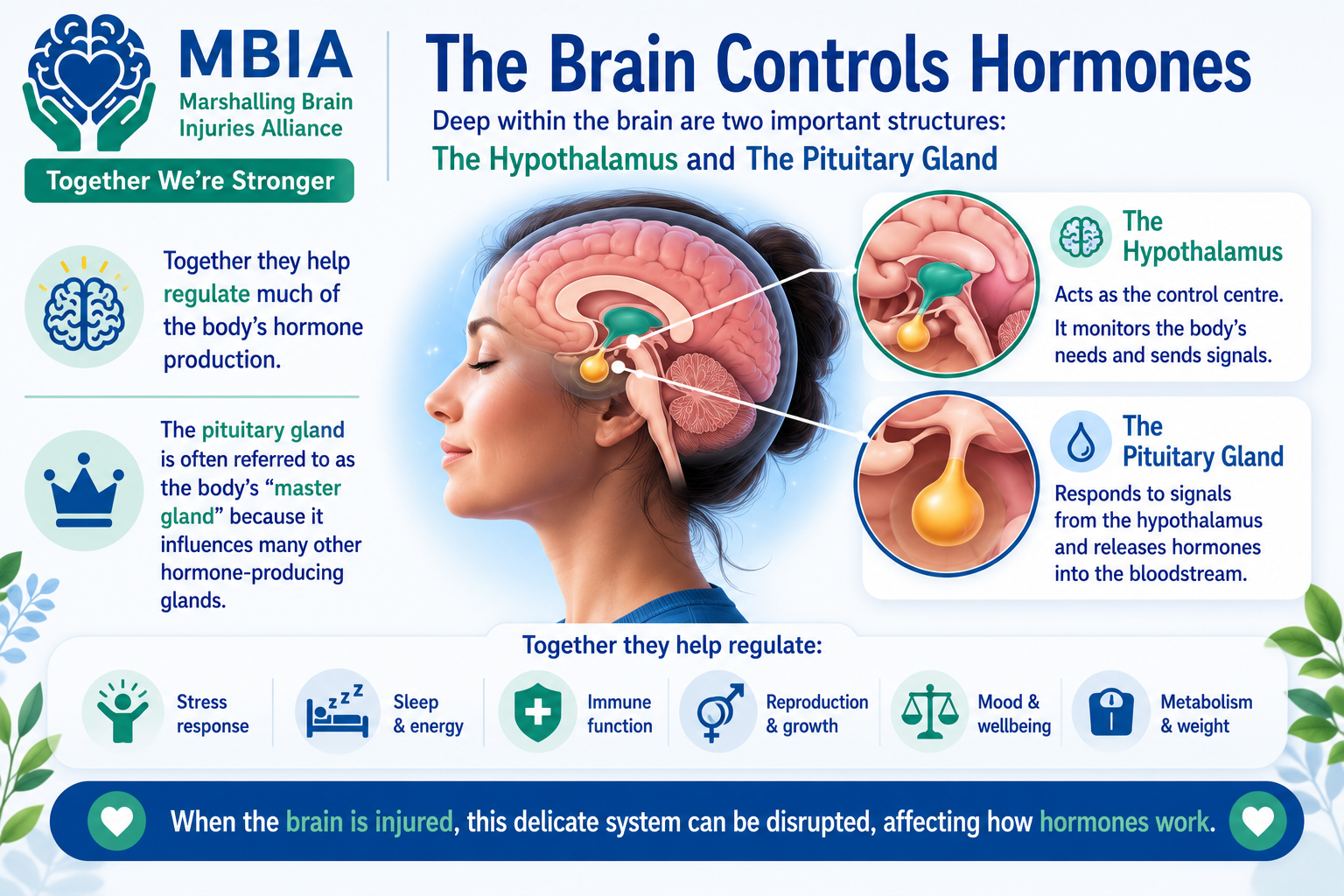
Why Can Brain Injury Affect Hormones?
Symptoms That May Be Linked to Hormonal Changes
Hormonal problems can cause symptoms that look very similar to common brain injury symptoms.
These may include:
- Fatigue
- Poor concentration
- Memory difficulties
- Brain fog
- Depression
- Anxiety
- Reduced motivation
- Sleep problems
- Weight changes
- Reduced exercise tolerance
- Reduced libido
- Mood changes
- Emotional difficulties
This overlap can make diagnosis challenging.
Is This Common
The exact numbers vary depending on:
- Severity of injury
- Type of injury
- Time since injury
Hormonal problems appear to be more common following moderate and severe brain injuries.
However, research suggests they may also occur following some mild traumatic brain injuries and repeated head impacts.
Importantly, hormonal problems often go unrecognised because the symptoms overlap with many other conditions.
Testosterone
Some men may experience lower testosterone levels following brain injury.
Symptoms can include:
- Fatigue
- Low mood
- Reduced motivation
- Reduced libido
- Reduced muscle mass
- Difficulty concentrating
Not every man with these symptoms has low testosterone, but it may be worth discussing with a healthcare professional if concerns arise.
Thyroid Hormones
The pituitary gland helps regulate thyroid function.
Thyroid problems may cause symptoms such as:
- Fatigue
- Brain fog
- Weight changes
- Low mood
- Poor concentration
- Feeling cold
These symptoms can closely resemble brain injury symptoms.
Cortisol & Stress Response
Cortisol is often called the stress hormone.
It helps the body respond to physical and emotional challenges.
Changes in cortisol regulation may contribute to:
- Fatigue
- Poor stress tolerance
- Mood changes
- Sleep difficulties
The Most Common Hormones Effected By a Brain Injury
Growth Hormone
One of the most commonly reported hormonal issues after brain injury involves growth hormone.
Despite its name, growth hormone is important throughout adulthood.
It helps regulate:
- Energy
- Muscle maintenance
- Recovery
- Brain function
- Quality of life
Possible symptoms include:
- Fatigue
- Reduced stamina
- Poor concentration
- Brain fog
- Low mood
- Reduced motivation
Oestrogen & Progesterone
Hormonal changes can also affect women following brain injury.
Some women report:
- Increased symptom severity around menstrual cycles
- Changes in cycle regularity
- Increased fatigue
- Mood changes
- Sleep difficulties
Brain injury can sometimes interact with existing hormonal changes, including:
- Perimenopause
- Menopause
- Hormonal contraceptive use
When Should Hormones Be Considered?
You may wish to discuss hormonal assessment with a healthcare professional if you experience:
- Persistent fatigue
- Brain fog
- Reduced stamina
- Significant mood changes
- Unexplained weight changes
- Sexual dysfunction
- Ongoing symptoms despite rehabilitation
particularly if symptoms developed after a brain injury.
Can Hormonal Problems Be Treated?
If a hormone deficiency is identified, treatment options may be available depending on the specific hormone involved.
Treatment varies from person to person and may involve:
- Hormone replacement therapies
- Managing contributing health conditions
- Lifestyle interventions
- Ongoing monitoring
Treatment decisions should always be made with medical guidance.
Why Hormonal Problems Are Often Missed
Hormonal symptoms are often invisible.
Many symptoms overlap with:
- Depression
- Anxiety
- PTSD
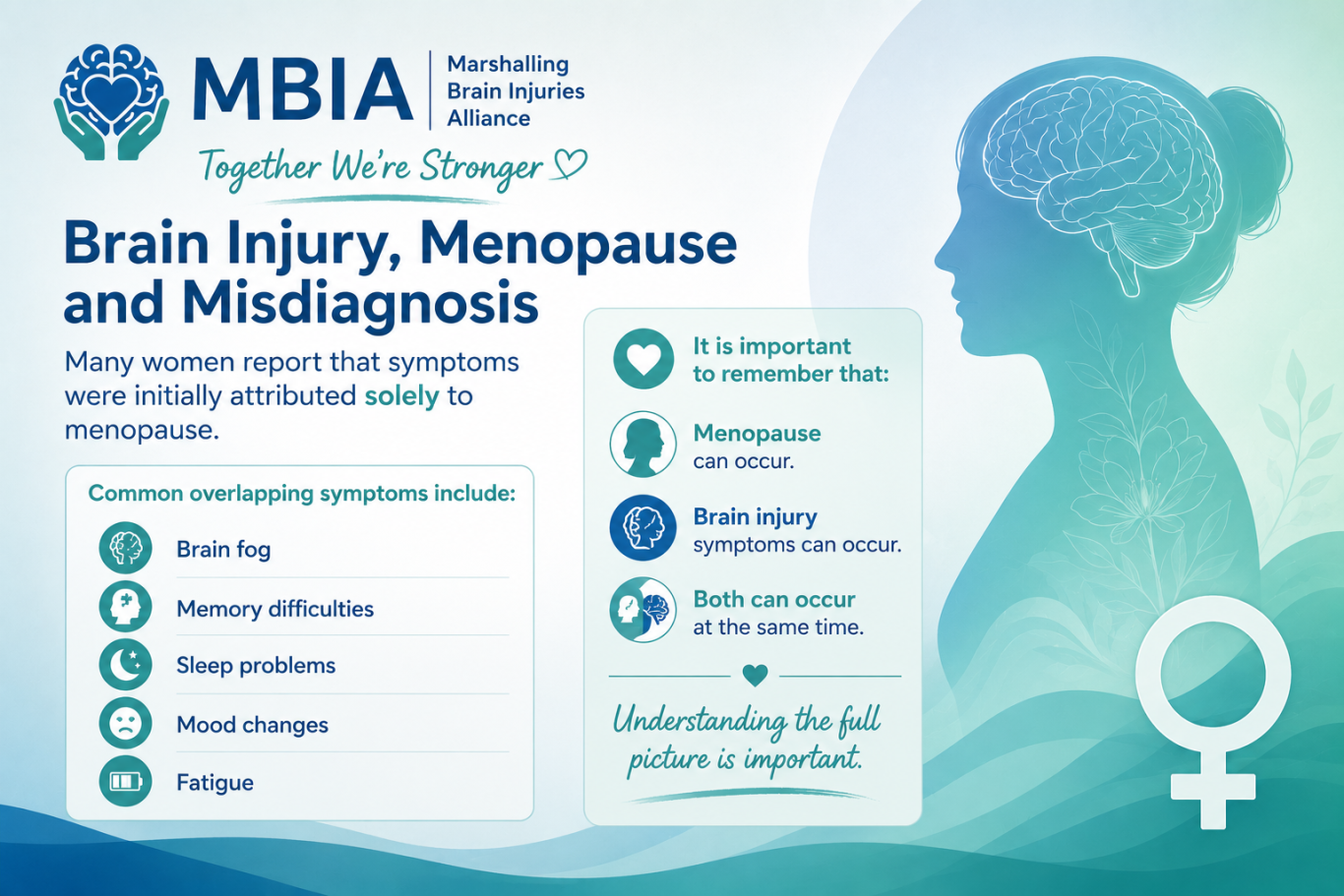
- Menopause
- Chronic fatigue
- Fibromyalgia
- Brain injury itself
As a result, hormonal issues may not always be considered.
How Are Hormonal Problems Diagnosed?
Hormonal issues cannot usually be diagnosed based on symptoms alone.
Assessment may involve:
- Medical history
- Symptom review
- Blood tests
- Specialist endocrinology assessment
Diagnosis should always be made by an appropriately qualified healthcare professional.
A Message for Patients
If you have been living with persistent symptoms following a brain injury and feel that something still isn't quite right, it is reasonable to ask questions.
Hormonal problems are not the cause of every symptom.
However, they are an important and often overlooked part of the brain injury picture.
Understanding the potential connection may help some people find answers they have been searching for.
A Message for Families
If your loved one continues to struggle with:
- Fatigue
- Mood changes
- Brain fog
- Reduced motivation
- Sleep difficulties
remember that these symptoms may have multiple contributing factors.
Brain injury recovery is complex, and hormonal changes are one piece of the puzzle that is sometimes overlooked.
Key Takeaways
- The brain plays a vital role in regulating hormones.
- Brain injuries can sometimes affect the hypothalamus and pituitary gland.
- Hormonal changes may contribute to fatigue, brain fog, mood changes, sleep difficulties, and reduced motivation.
- Symptoms often overlap with common brain injury symptoms, making diagnosis challenging.
- Hormonal issues can affect both men and women.
- Menopause, thyroid problems, and hormone deficiencies may sometimes be mistaken for worsening brain injury symptoms.
- Blood tests and specialist assessment are needed to diagnose hormonal problems.
- Not everyone with a brain injury will develop hormonal issues, but awareness is important.
Continue Exploring
Together We're Stronger