What Is Emotional Regulation?
Emotional regulation is the brain's ability to:
- Recognise emotions
- Manage emotional responses
- Stay calm under pressure
- Recover from emotional situations
- Respond appropriately to challenges
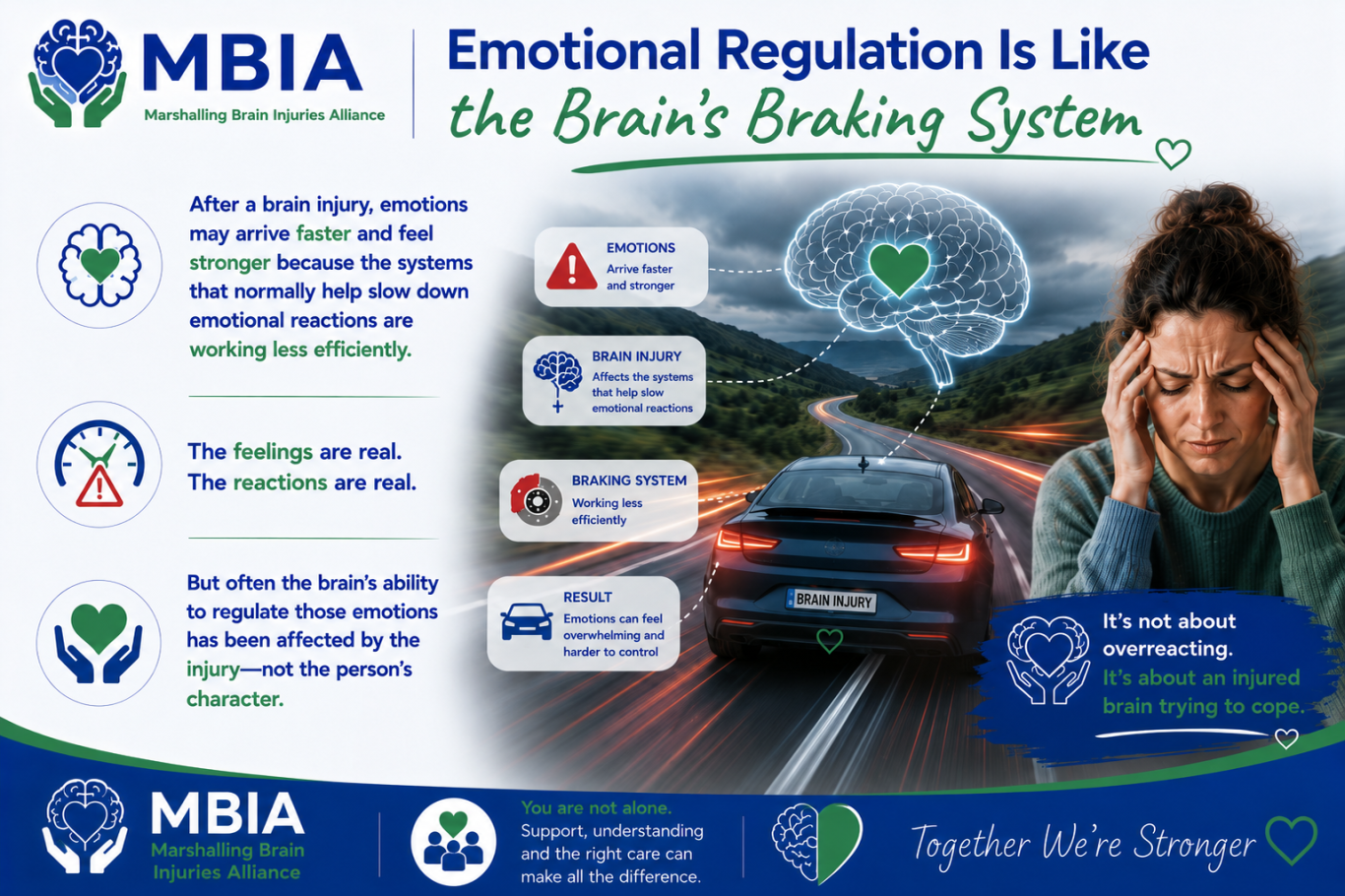
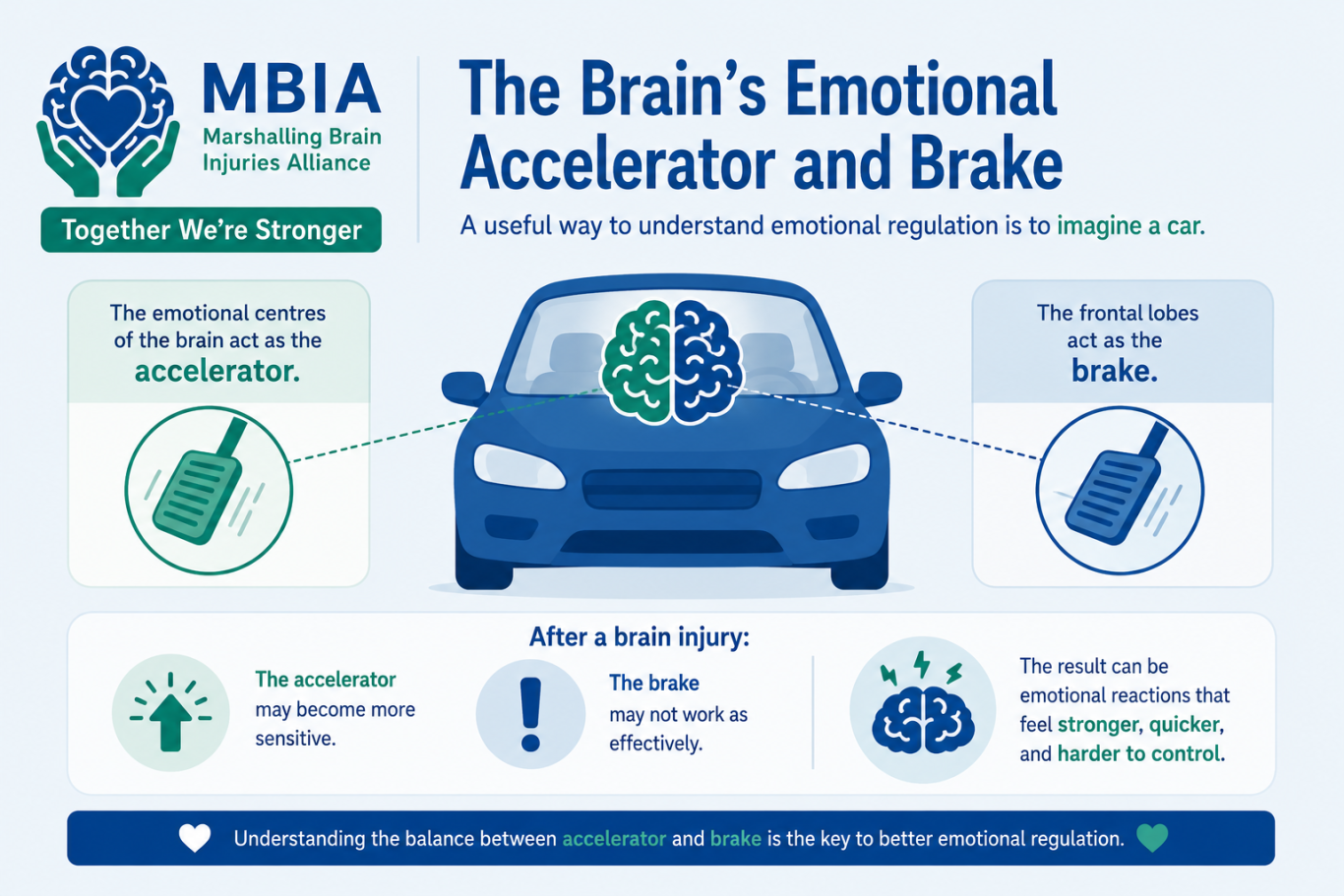
In simple terms, emotional regulation acts like the brain's emotional braking system.
It helps us control how strongly we react and how quickly we recover after emotional events.
Why Does Brain Injury Affect Emotional Regulation?
The areas of the brain responsible for emotional regulation can be affected by injury.
These include:
- Frontal lobes
- Limbic system
- Connections between emotional and thinking centres of the brain
Following an injury, these systems may not communicate as effectively as before.
As a result:
- Emotions may feel stronger
- Reactions may happen faster
- Recovery from emotional situations may take longer
This is a neurological symptom, not a character flaw.
Understanding Emotional Regulation After Brain Injury
"I Don't Feel Like Myself Anymore."
Many people living with a brain injury notice changes in their emotions.
They may find themselves:
- Becoming angry more easily
- Crying unexpectedly
- Feeling overwhelmed by small problems
- Struggling to cope with stress
- Experiencing intense emotions that seem to come out of nowhere
Some people describe it as:
"My emotions feel closer to the surface."
"I go from calm to angry in seconds."
"I cry at things that never used to affect me."
"I know my reaction is bigger than it should be, but I can't stop it."
These experiences are often linked to difficulties with emotional regulation.
Emotional regulation problems are common after concussion, traumatic brain injury (TBI), acquired brain injury (ABI), stroke, and other neurological conditions.
They can be distressing for both the individual and their loved ones, but understanding why they happen is often the first step towards managing them.
Common Emotional Regulation Difficulties
Everyone experiences emotional regulation difficulties differently.
Irritability
Many people notice they become frustrated more easily.
Things that once seemed minor may suddenly feel overwhelming.
Common triggers include:
- Fatigue
- Noise
- Stress
- Interruptions
- Memory problems
- Technology not working
- Being misunderstood
Anger
Some people describe having a much shorter fuse than before.
The anger itself is real, but the intensity of the reaction may feel disproportionate to the situation.
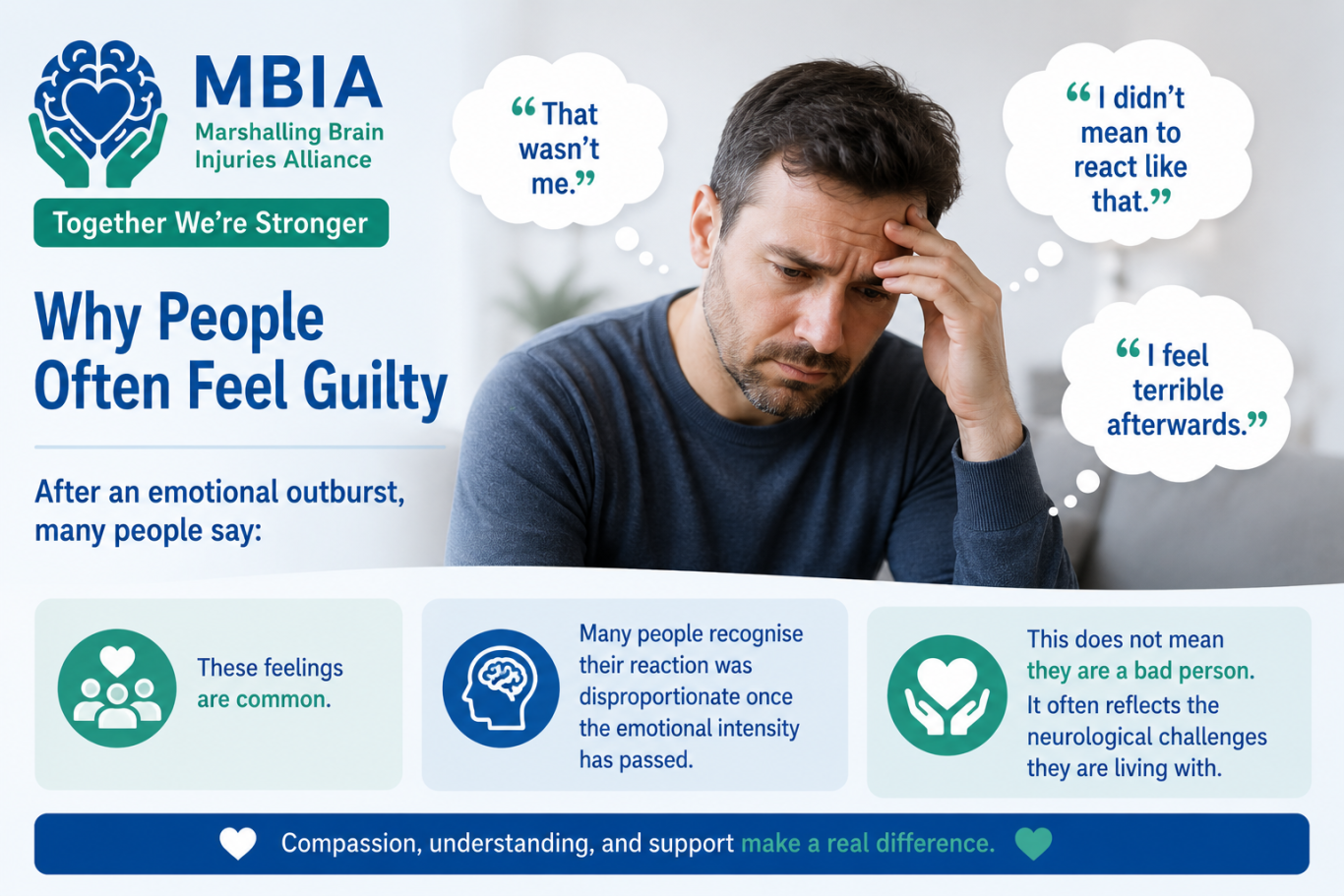
This can be particularly upsetting when the person recognises their reaction afterwards.
Emotional Lability
Sometimes referred to as emotional flooding or emotional instability.
This may involve:
- Crying unexpectedly
- Laughing unexpectedly
- Rapid changes in emotion
- Feeling unable to stop once emotions begin
These reactions are often beyond the person's control.
Anxiety
Many people become more sensitive to stress and uncertainty following a brain injury.
Situations that were previously manageable may now feel overwhelming.
Low Mood and Depression
Living with ongoing symptoms can have a significant emotional impact.
Depression may be influenced by:
- Changes within the brain
- Loss of independence
- Grief
- Isolation
- Chronic symptoms
Feeling Emotionally Overwhelmed
Many people describe a reduced ability to cope with multiple demands at once.
When too much is happening, emotions can become difficult to manage.
Why Emotional Reactions Often Seem Worse When Tired
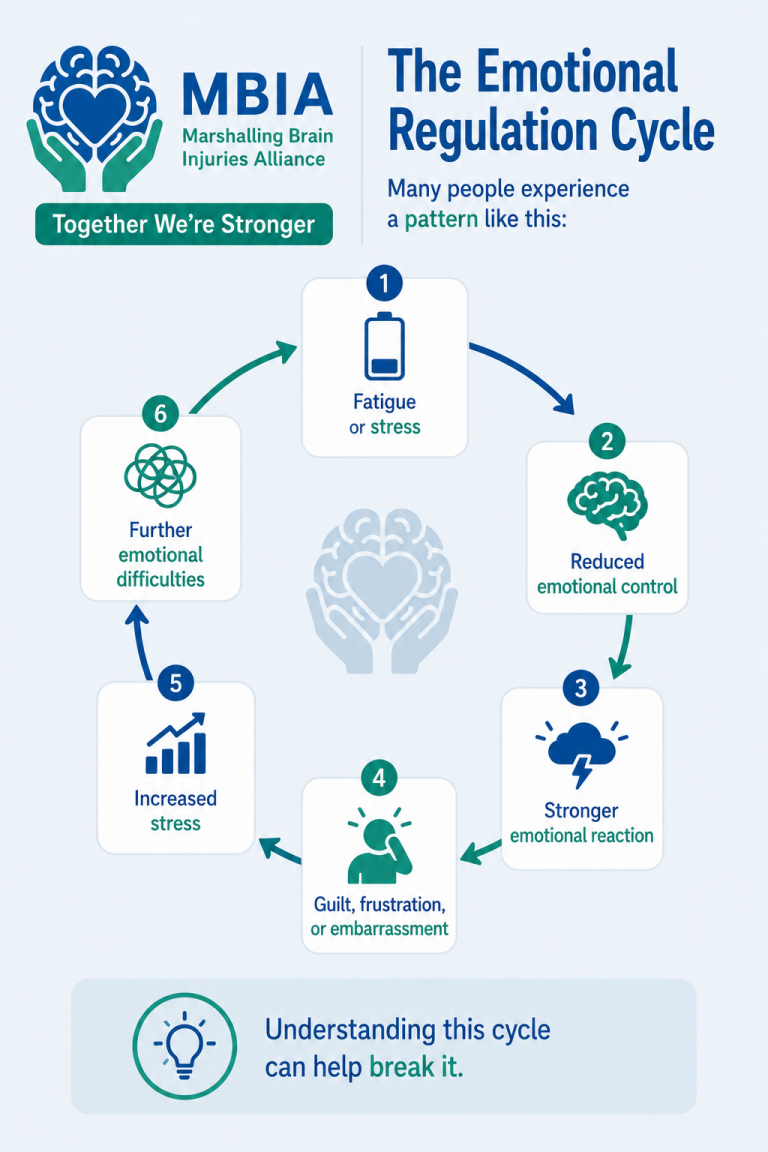
One of the strongest links in brain injury is between fatigue and emotional regulation.
When the brain becomes fatigued:
- Patience decreases
- Frustration increases
- Coping skills reduce
- Emotional control becomes harder
This is one reason many people notice they are more emotional later in the day.
Emotional Regulation and Sensory Overload
Sensory overload often worsens emotional regulation.
When the brain is struggling with:
- Noise
- Light
- Crowds
- Multiple conversations
it has fewer resources available to manage emotions.
This can lead to:
- Irritability
- Anger
- Anxiety
- Emotional shutdown
How Emotional Regulation Difficulties Affect Daily Life
Relationships
Partners and family members may struggle to understand sudden emotional changes.
This can sometimes create tension and misunderstandings.
Work
Stressful environments may become harder to manage.
Some people find workplace pressures trigger emotional responses more easily than before.
Social Situations
Many people avoid social events because they worry about becoming overwhelmed.
Confidence
Repeated emotional reactions can affect self-esteem and confidence.
Start paying attention to situations that commonly lead to emotional reactions.
Common triggers include:
- Fatigue
- Hunger
- Pain
- Stress
- Noise
- Sensory overload
- Feeling rushed
Recognising patterns can help you intervene earlier.
Prioritise Sleep
Poor sleep significantly affects emotional regulation.
Improving sleep may improve emotional resilience.
Manage Fatigue
Many emotional difficulties become worse when the brain is exhausted.
Pacing activities can help protect emotional reserves.
Take Breaks Early
Do not wait until you are overwhelmed.
Stepping away early can prevent situations escalating.
Create a Calm-Down Plan
Consider:
- Going for a walk
- Deep breathing
- Listening to music
- Spending time in a quiet space
- Mindfulness techniques
Find what works for you.
Communicate With Loved Ones
Explaining emotional regulation difficulties can help reduce misunderstandings.
Many families find it easier to support each other once they understand the neurological reasons behind the symptoms.
Practice Self-Compassion
You are likely dealing with challenges that most people cannot see.
Be patient with yourself.
Progress takes time.
Tips for Managing Emotional Regulation Difficulties
There is no instant solution, but many people find these strategies helpful.
Learn Your Triggers
What Family Members Should Know
Emotional regulation difficulties are not usually intentional.
Your loved one is not choosing to:
- Become angry
- Become upset
- Feel overwhelmed
The brain's ability to regulate emotions may have been affected.
This does not excuse harmful behaviour, but it can help explain why it occurs.
Understanding the difference is important.
Will Emotional Regulation Improve?
For many people, yes.
Improvement may occur through:
- Recovery
- Neuroplasticity
- Better sleep
- Reduced fatigue
- Therapy
- Stress management
- Learning effective coping strategies
Progress is often gradual rather than immediate.
A Message of Hope
Emotional regulation difficulties can be one of the most distressing and misunderstood effects of brain injury.
They can leave people feeling guilty, ashamed, or disconnected from who they once were.
But these experiences are common, recognised, and understandable.
You are not weak.
You are not failing.
And you are not alone.
With understanding, support, and the right strategies, many people learn to manage emotional challenges more effectively and regain confidence in themselves and their relationships.
Key Takeaways
- Emotional regulation is the brain's ability to manage emotional responses.
- Brain injury can affect the systems responsible for emotional control.
- Common difficulties include irritability, anger, anxiety, emotional flooding, and mood changes.
- Fatigue, stress, poor sleep, and sensory overload often worsen symptoms.
- Emotional reactions are often neurological rather than intentional.
- Understanding triggers, pacing, sleep, and communication can help.
- Family members benefit from understanding the neurological basis of these changes.
- Improvement is possible through recovery, neuroplasticity, and effective coping strategies.
Continue Exploring
Together We're Stronger