Brain Injuries Are Often Invisible
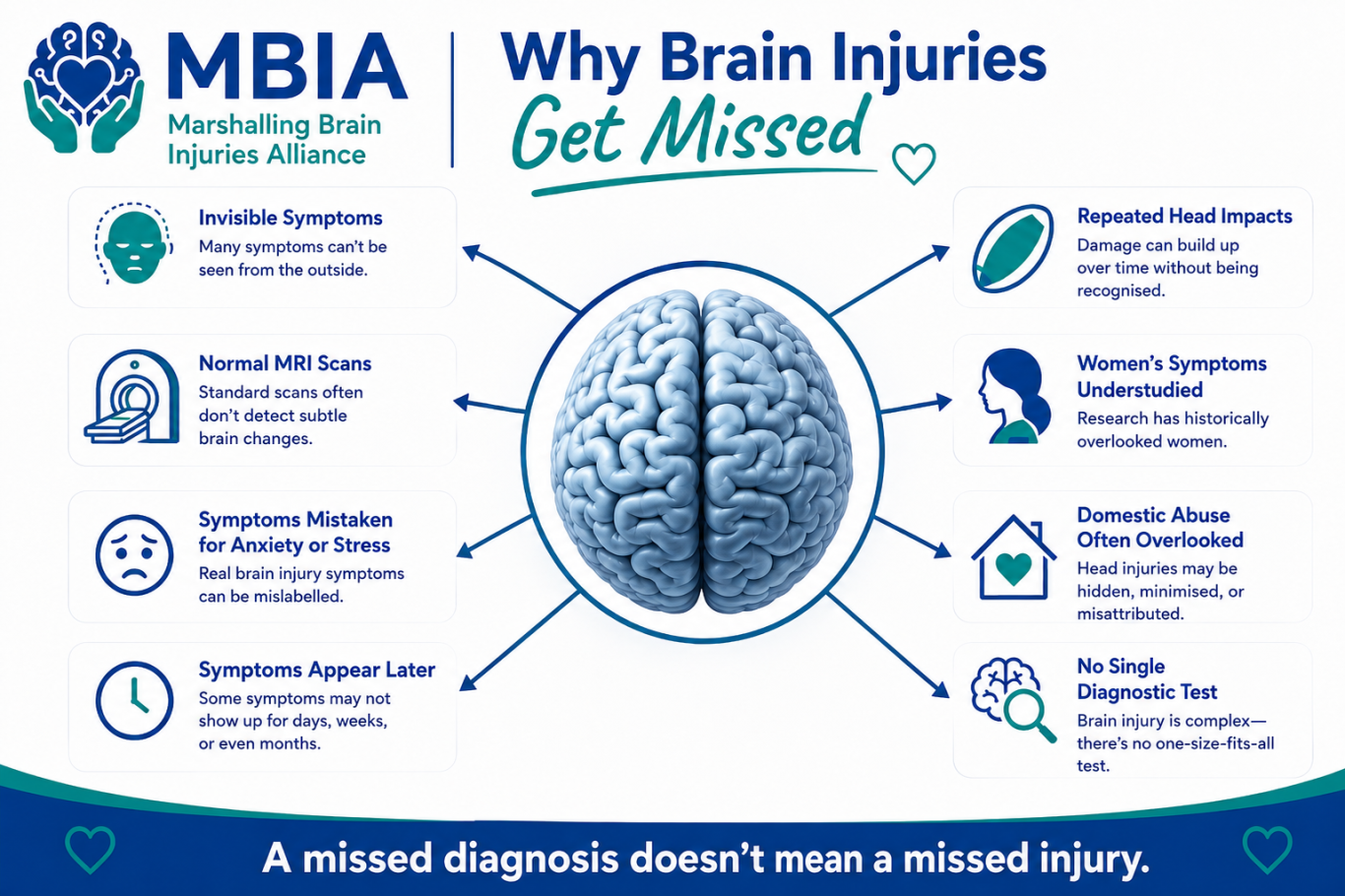
Unlike a broken arm or a visible wound, many brain injuries cannot be seen.
A person may:
- Look healthy
- Speak normally
- Walk normally
- Appear physically well
while struggling with significant symptoms internally.
This is one reason brain injuries are sometimes called invisible injuries.
When symptoms cannot be seen, they are often harder for others to recognise.
People Often Forget Previous Head Injuries
One of the most surprising things clinicians encounter is that many people do not realise they have had a brain injury.
They may say:
"I never had a brain injury."
Then later mention:
- Being knocked unconscious in sport
- A serious fall
- A car accident
- Military blast exposure
- Domestic violence
- Repeated concussions
Many people assume that if they recovered at the time, the injury is no longer relevant.
As a result, important information may never be discussed during medical appointments.
Many Symptoms Overlap With Other Conditions
One of the biggest challenges is that brain injury symptoms are not unique.
Many symptoms overlap with other health conditions.
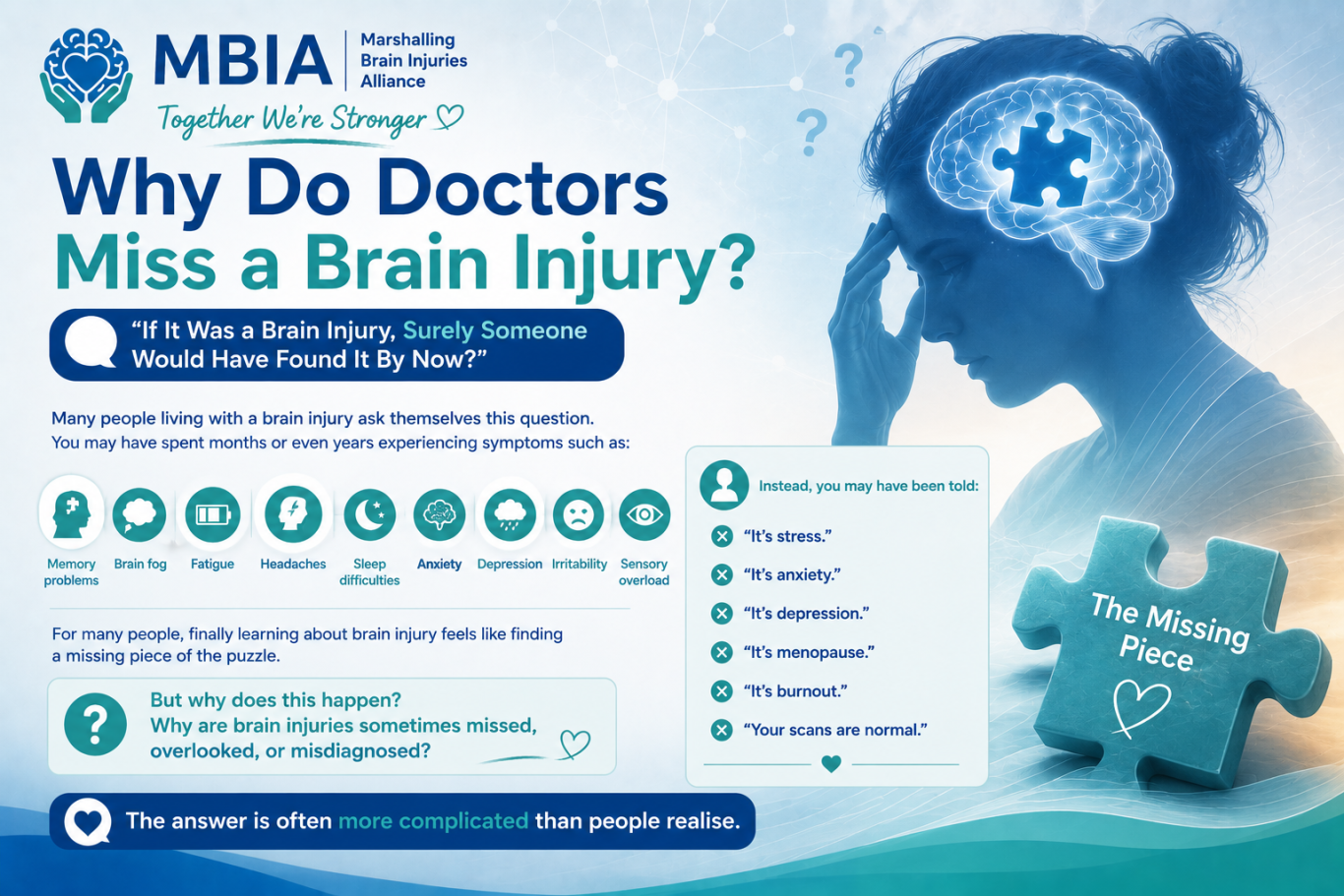
- Fatigue
- Stress, depression, menopause
- Brain fog
- Anxiety, burnout, menopause
- Memory problems
- Stress, ageing, depression
- Irritability
- Anxiety, PTSD
- Sleep difficulties
- Mental health conditions
- Headaches
- Migraine, tension headaches
- Poor concentration
Because these symptoms occur in many different conditions, brain injury is not always the first possibility considered.
Not Everyone Loses Consciousness
Many people believe a brain injury only occurs if someone is knocked out.
This is a myth.
Most concussions do not involve loss of consciousness.
A person can sustain a genuine brain injury while remaining awake throughout the event.
Unfortunately, this misconception still contributes to some injuries being overlooked.
The Difference Between Structural & Functional Problems
Not everyone develops symptoms immediately.
Some people notice problems:
- Days later
- Weeks later
- Months later
Others experience gradual changes over many years.
This delay can make it difficult to connect symptoms back to the original injury.
Standard Brain Scans Are Often Normal
One of the most common reasons people are told they do not have a brain injury is because their scan is normal.
However:
A normal scan does not always mean a normal brain.
Most routine scans are designed to identify:
- Bleeding
- Tumours
- Stroke
- Major structural abnormalities
Many concussion-related changes occur at a microscopic or functional level and may not appear on routine imaging.
This is particularly true for:
- Concussion
- Post-Concussion Syndrome
- Mild Traumatic Brain Injury
The Focus Is Often on Immediate Survival
In emergency settings, healthcare professionals are primarily looking for serious and life-threatening injuries.
Their priority is to identify:
- Brain bleeds
- Skull fractures
- Swelling
- Stroke
If these conditions are ruled out, patients are often discharged.
That does not mean symptoms are not real.
It simply reflects the purpose of emergency medicine.
Repeated Head Impacts Are Often Overlooked
Many people never experienced one major injury.
Instead, they experienced:
- Hundreds or thousands of smaller impacts
- Repeated concussions
- Blast exposure
- Repeated falls
Historically, medicine focused more on single traumatic events than cumulative exposure.
Awareness of repeated head trauma has increased significantly in recent years, but understanding is still evolving.
Mental Health Symptoms Can Complicate Diagnosis
Brain injury and mental health frequently overlap.
People may experience:
- Anxiety
- Depression
- PTSD
- Emotional regulation difficulties
These symptoms are genuine.
However, when mental health symptoms are present, underlying neurological causes may sometimes receive less attention.
This can lead people to feel dismissed or misunderstood.
Women Are Historically Underrepresented in Research
Much of the early brain injury research was conducted on:
- Male athletes
- Military personnel
Researchers now recognise that women may experience:
- Different symptoms
- Different recovery patterns
- Hormonal influences
Awareness is improving, but historical gaps in research may have contributed to missed diagnoses.
Domestic Abuse Survivors Are Frequently Missed
Many survivors of domestic abuse experience:
- Blows to the head
- Strangulation
- Falls
- Repeated trauma
Yet brain injury is often not considered during assessment.
Research increasingly suggests that brain injuries among domestic abuse survivors may be significantly under-recognised.
The Symptoms Can Change Over Time
Brain injury symptoms are rarely static.
People often experience:
- Good days
- Bad days
- New symptoms
- Fluctuating symptoms
This unpredictability can sometimes make diagnosis more challenging.
There Is No Single Test for Brain Injury
Many people expect there to be one definitive test.
Unfortunately, it is not that simple.
Diagnosis often involves:
- Medical history
- Symptom assessment
- Neurological examination
- Cognitive testing
- Imaging where appropriate
There is currently no single scan or blood test that can diagnose every brain injury.
What Should You Do If You Suspect a Brain Injury?
If you believe a previous injury may be contributing to your symptoms:
Document Your History
Write down:
- Previous head injuries
- Concussions
- Falls
- Accidents
- Military service
- Sporting history
- Domestic abuse history
Track Symptoms
Keeping a symptom diary can help identify patterns and provide useful information to healthcare professionals.
Seek Appropriate Assessment
Discuss your concerns with a healthcare professional familiar with brain injury where possible.
Educate Yourself
Understanding brain injury can help you advocate for your own health and wellbeing.
A Message for Healthcare Professionals
Brain injury is complex.
Many symptoms overlap with other conditions.
Many injuries are invisible.
Many patients present years after the original trauma.
Maintaining awareness of brain injury as a potential contributor to persistent symptoms can help reduce missed diagnoses and improve patient outcomes.
A Message of Hope
If you have spent years searching for answers, you are not alone.
Many people living with brain injury have experienced confusion, frustration, and self-doubt before finally understanding what may be contributing to their symptoms.
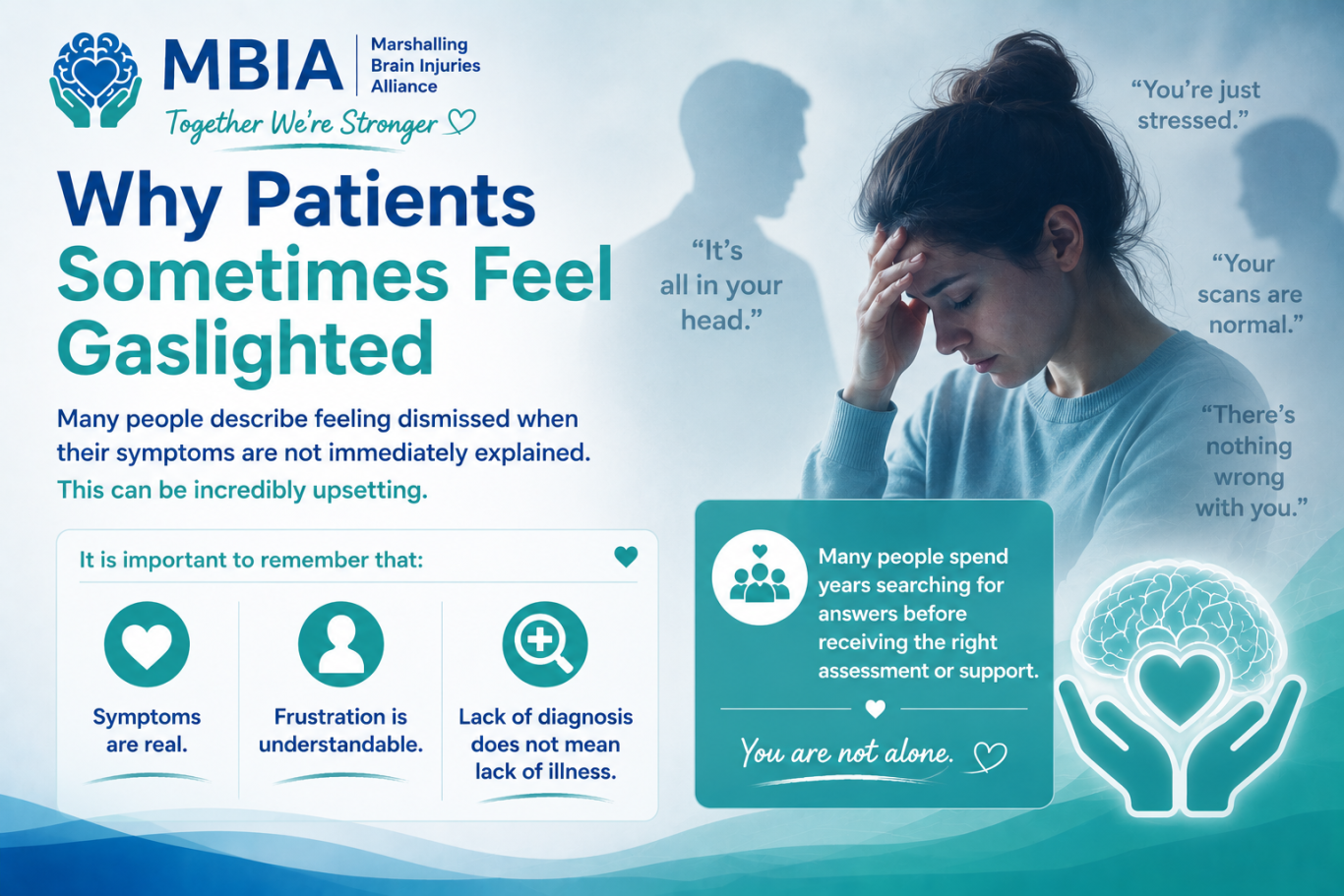
A missed diagnosis does not mean your symptoms are not real.
A normal scan does not mean nothing is wrong.
And a delayed diagnosis does not mean there is no hope.
Understanding what is happening is often the first step towards finding support, improving quality of life, and moving forward.
Key Takeaways
- Brain injuries are often invisible.
- Symptoms frequently overlap with other conditions.
- Many people do not realise they have sustained a brain injury.
- Loss of consciousness is not required for a brain injury to occur.
- Symptoms may appear immediately or much later.
- Normal brain scans do not rule out brain injury.
- Repeated head impacts are often overlooked.
- Mental health symptoms and brain injury frequently overlap.
- There is no single test that identifies every brain injury.
- Increased awareness is helping more people receive appropriate recognition and support.
Continue Exploring
Together We're Stronger