What Does Recovery Mean?
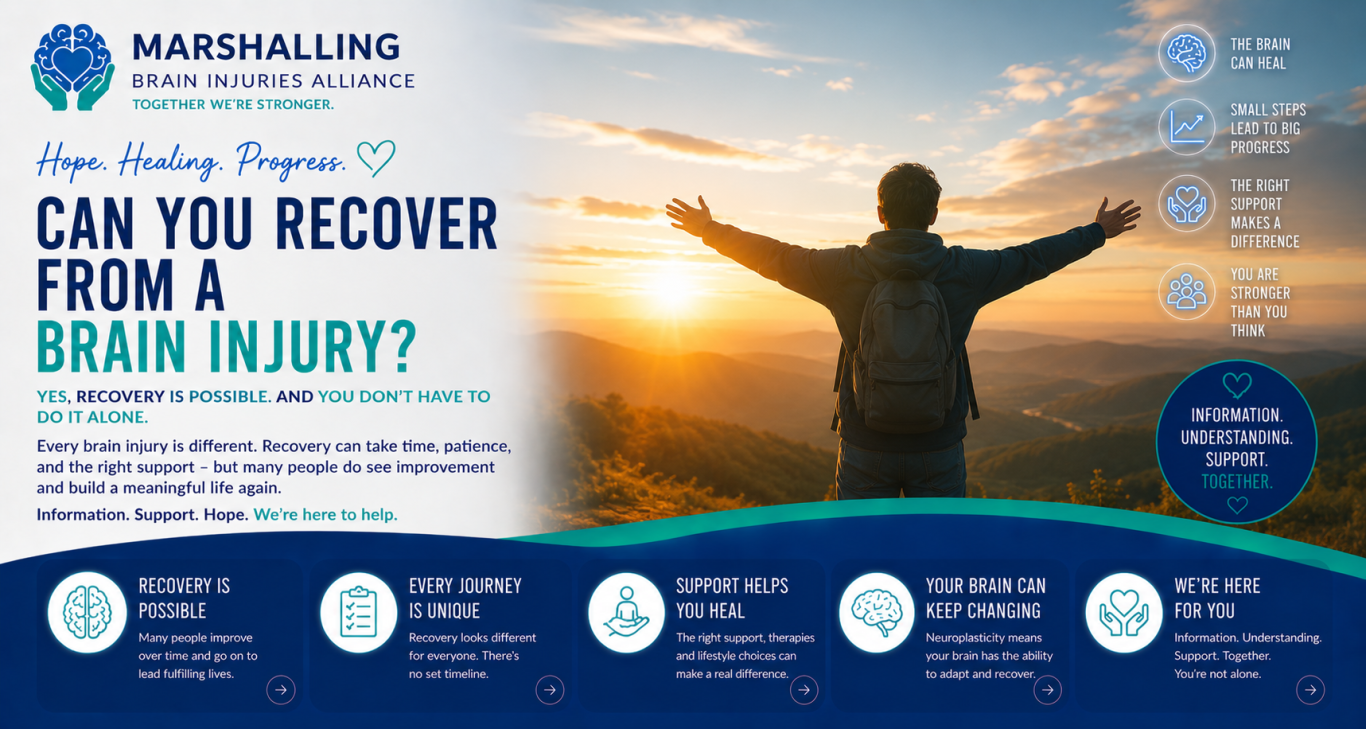
When most people think about recovery, they imagine returning to exactly how they were before the injury.
Sometimes this happens.
Sometimes it does not.
Recovery can mean different things to different people:
- Symptoms improving
- Returning to work or education
- Regaining independence
- Learning new coping strategies
- Improving quality of life
- Rebuilding confidence
- Adapting to a new normal
Recovery is not always all-or-nothing.
Many people experience meaningful improvements even if some symptoms remain.
Every Brain Injury Is Different
No two brain injuries are identical.
Recovery can be influenced by:
- The type of injury
- The severity of injury
- The area of the brain affected
- Age
- General health
- Sleep quality
- Mental health
- Access to rehabilitation
- Social support
- Previous brain injuries
Because of this, it is impossible to predict exactly how any one individual will recover.
Can People Recover From Concussion?
LYes, although recovery may take longer.
Many people continue making progress for months and years after injury.
Recovery may involve:
- Rehabilitation
- Therapy
- Adaptation
- Support from family and professionals
The recovery journey is often longer than people expect.
Yes.
Most people recover from a concussion within days or weeks.
However, some individuals develop persistent symptoms, often referred to as:
- Post-Concussion Syndrome (PCS)
- Persistent Post-Concussion Symptoms (PPCS)
Even when symptoms last longer than expected, many people continue to improve over time.
Can People Recover From Moderate or Severe Brain Injuries?
What About Chronic Symptoms?
Some people experience ongoing difficulties with:
- Fatigue
- Memory
- Concentration
- Sleep
- Headaches
- Emotional regulation
This does not mean recovery has failed.
Recovery is not always about eliminating every symptom.
Sometimes it is about learning how to manage symptoms effectively and improve quality of life.
Does Recovery Stop After a Certain Time?
This is one of the biggest myths in brain injury recovery.
Many people are told:
"You've recovered as much as you're going to."
While recovery often slows over time, improvement can continue for months and even years after injury.
People continue learning:
- New strategies
- New skills
- Better symptom management
- New ways of functioning
The brain's ability to adapt does not suddenly disappear after a fixed period.
Emotional Regulation Difficulties
Brain injury can affect the brain's ability to regulate emotions.
This may result in:
- Irritability
- Anger
- Emotional outbursts
- Crying more easily
- Emotional sensitivity
These reactions are often neurological rather than intentional.
Social Isolation
Neuroplasticity
Many people become isolated after a brain injury.
Reasons may include:
- Fatigue
- Sensory overload
- Anxiety
- Communication difficulties
- Reduced confidence
- Changes in friendships
Isolation can significantly affect mental wellbeing.
Humans are social beings, and connection is important for recovery and quality of life.
The brain can change throughout life
One of the most encouraging things we know about the brain is that it is capable of change.
Neuroplasticity is the brain's ability to:
- Adapt
- Reorganise
- Form new connections
- Learn new skills
For many years, scientists believed the adult brain could not change significantly after injury.
We now know this is not true.
The brain remains capable of adaptation throughout life.
Why Recovery Often Feels Slow
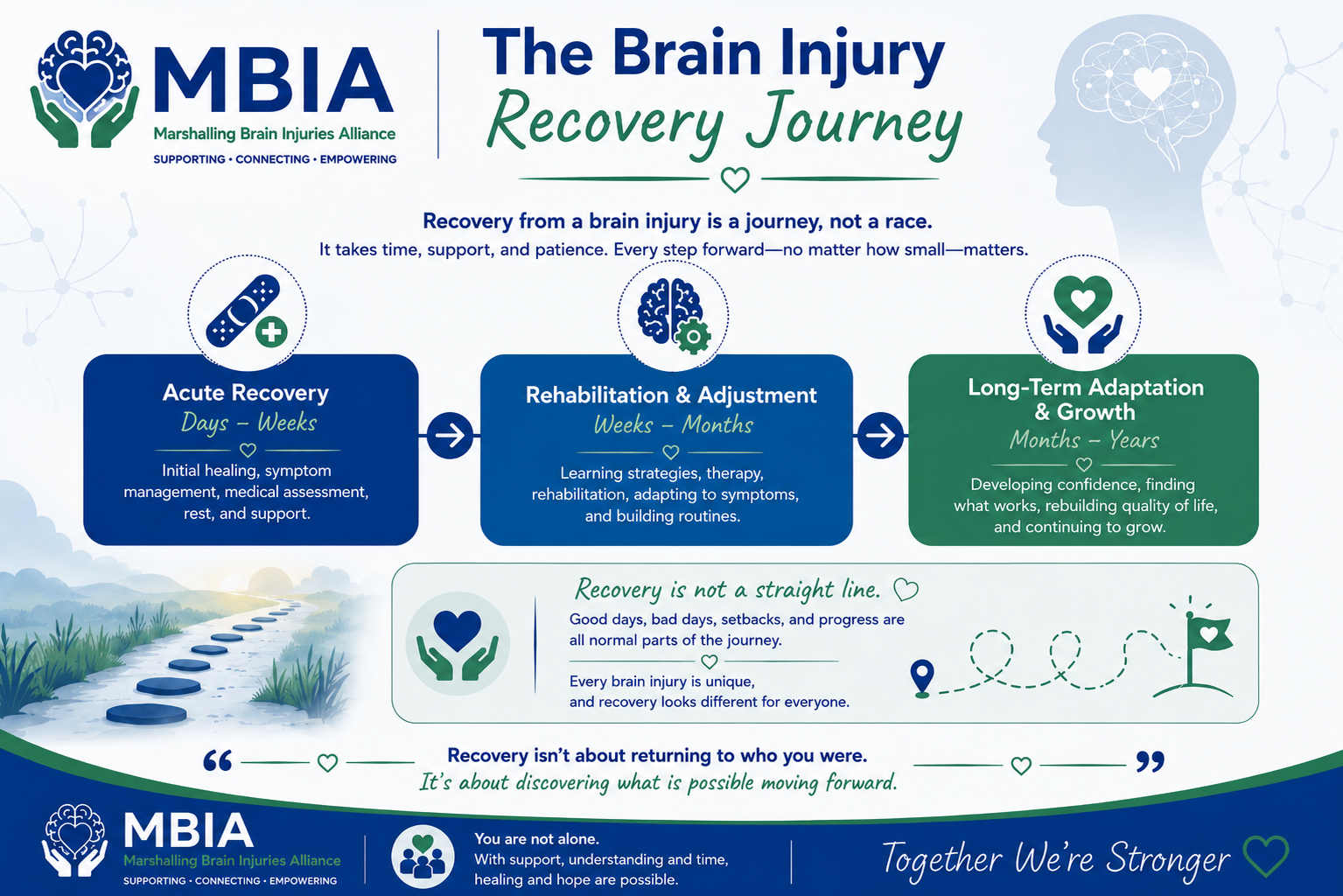
Brain injury recovery is rarely a straight line.
Most people experience:
- Good days
- Bad days
- Improvements
- Setbacks
Progress may be difficult to notice day-to-day.
Looking back over months rather than days often reveals how far someone has come.
What Helps Recovery?
There is no single treatment that works for everyone.
Recovery is often supported by a combination of factors.
Sleep
Sleep plays a crucial role in:
- Healing
- Memory
- Learning
- Mood
- Energy levels
Many people underestimate how important sleep is to recovery.
Physical Activity
Appropriate exercise may help support:
- Brain health
- Mood
- Sleep
- Blood flow
- Overall wellbeing
Always follow medical advice and work within your own limits.
Rehabilitation
Depending on symptoms, this may include:
- Physiotherapy
- Occupational therapy
- Speech and language therapy
- Vestibular rehabilitation
- Psychological support
Nutrition
The brain requires energy and nutrients to function effectively.
A balanced diet may help support overall brain health and recovery.
Managing Stress
Chronic stress can worsen symptoms.
Stress management techniques may help improve quality of life and symptom control.
Social Support
Strong support networks can make a significant difference during recovery.
Family, friends, support groups, and healthcare professionals all play important roles.
Recovery Is Not Just Physical
Many people focus on physical recovery but overlook emotional recovery.
It is normal to experience:
- Frustration
- Anxiety
- Grief
- Fear
- Sadness
Adjusting to life after a brain injury can take time.
Looking after emotional wellbeing is just as important as looking after physical health.
Avoid Comparing Yourself to Others
One of the biggest mistakes people make is comparing their recovery to someone else's.
You may hear:
"My friend was fine after two weeks."
"Someone else recovered in six months."
Recovery is personal.
Your journey is your own.
Comparisons rarely help and often increase frustration.
Chronic Traumatic Encephalopathy (CTE) is different from many other brain injuries.
Current evidence suggests that CTE is a progressive neurodegenerative disease associated with repeated head impacts.
At present:
- There is no cure for CTE.
- There is no treatment proven to stop or reverse the disease process.
However, that does not mean nothing can be done.
Many people living with probable CTE focus on:
- Symptom management
- Brain health
- Physical health
- Mental wellbeing
- Quality of life
- Support and connection
Research into diagnosis and treatment continues to grow.
What About CTE?
A Message for Family Members
Recovery can be difficult to understand from the outside.
Progress is often slow and invisible.
Your loved one may look the same but be working incredibly hard behind the scenes.
Patience, understanding, and encouragement can make a huge difference.
Small improvements are still improvements.
Key Takeaways
- Many people recover from brain injuries, although recovery varies greatly.
- Recovery does not always mean returning to exactly how life was before.
- Neuroplasticity allows the brain to continue adapting and changing throughout life.
- Improvement can continue months and years after injury.
- Sleep, rehabilitation, exercise, nutrition, and support can all contribute to recovery.
- Recovery is rarely linear and often includes setbacks.
- CTE is currently considered a progressive neurodegenerative disease with no cure, but symptom management and quality of life remain important.
- There is always reason for hope.
Continue Exploring
Together We're Stronger