What Does CTE Stand For?
Chronic = Long-term
Traumatic = Related to injury or trauma
Encephalopathy = Disease or dysfunction affecting the brain
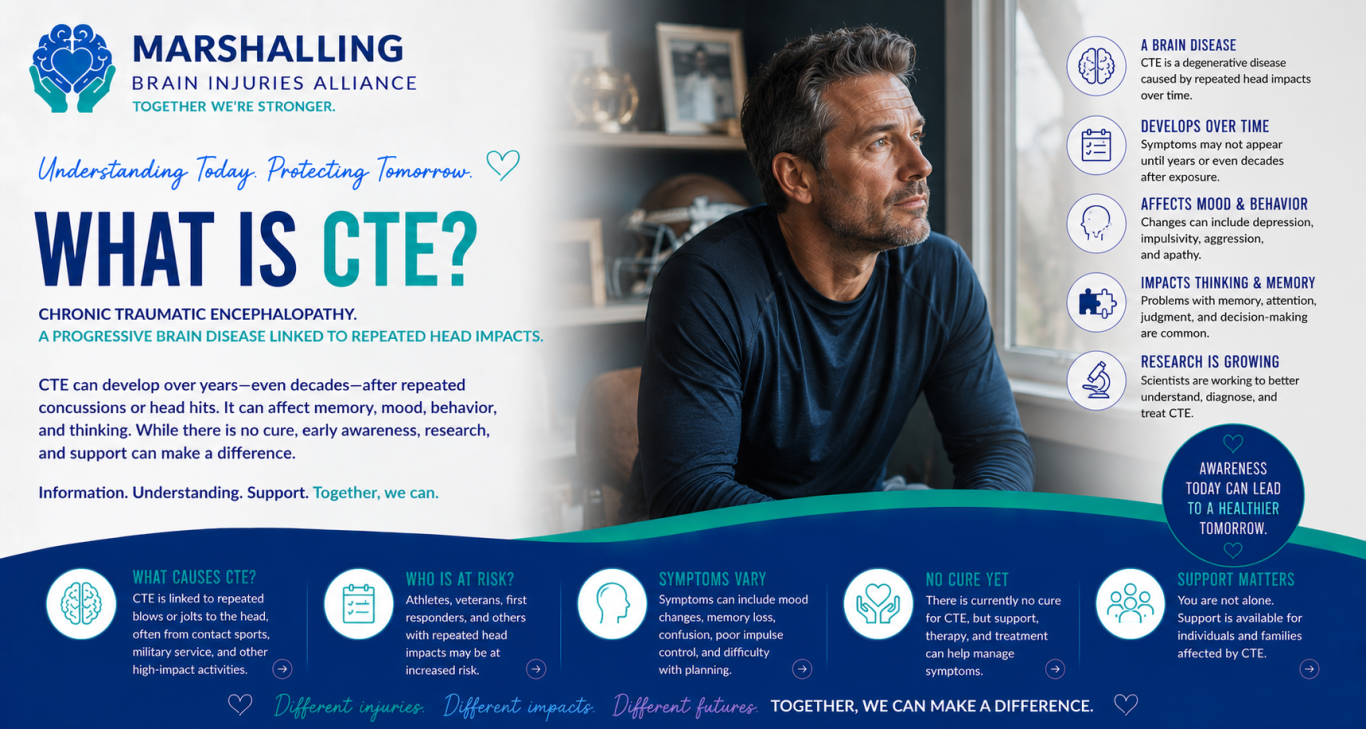
Together, Chronic Traumatic Encephalopathy describes a long-term brain disease associated with repeated trauma to the brain.
How Does CTE Happen?
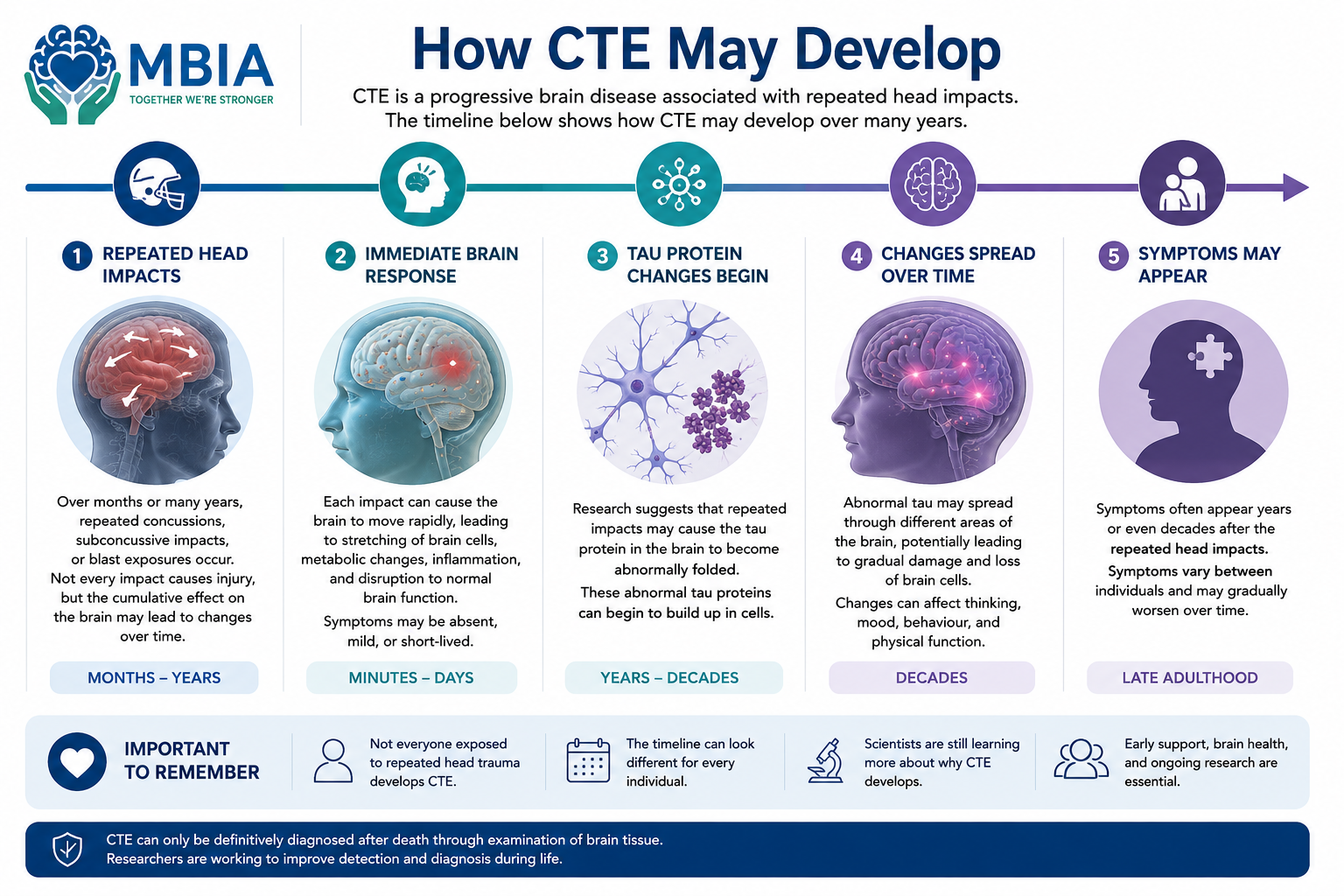
Researchers believe CTE develops following repeated impacts
to the head over time.
These impacts may include:
- Concussions
- Repeated subconcussive impacts
- Blast exposure
- Repetitive head trauma
Importantly, not every head impact causes CTE, and not
everyone exposed to repeated head trauma develops the
disease.
Scientists are still working to understand why some individuals
appear more vulnerable than others.
What Happens Inside the Brain?
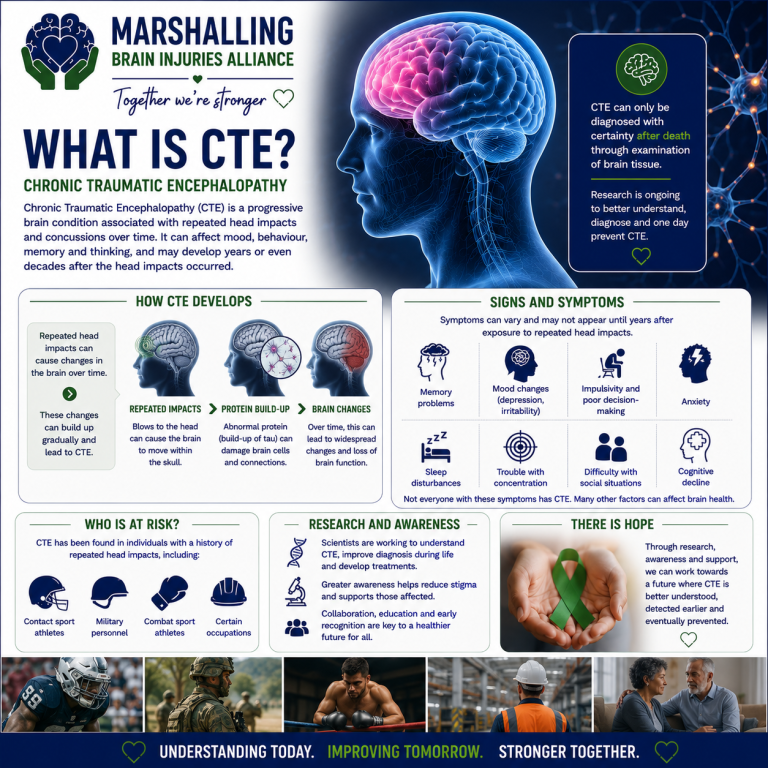
CTE is characterised by the abnormal accumulation of a protein called tau.
Tau is a normal protein found in the brain, but in CTE it becomes abnormally folded and accumulates in specific areas.
Over time, these abnormal tau deposits may interfere with normal brain function and contribute to the loss of brain cells.
Researchers continue to study exactly how these changes lead to symptoms.
Who May Be at Risk?
Most research has focused on individuals with long histories of repeated head impacts.
Groups studied include:
Contact Sport Athletes
Including:
- Rugby
- American football
- Football (soccer)
- Boxing
- Ice hockey
- Martial arts
Military Personnel & Veterans
Blast exposure and repeated trauma have been linked to concerns about long-term brain health.
Domestic Abuse Survivors
Growing research suggests repeated head injuries and strangulation may increase the risk of long-term neurological problems.
Others Exposed to Repeated Head Trauma
Including certain occupations and individuals with repeated falls or injuries.
What Are the Symptoms of CTE?
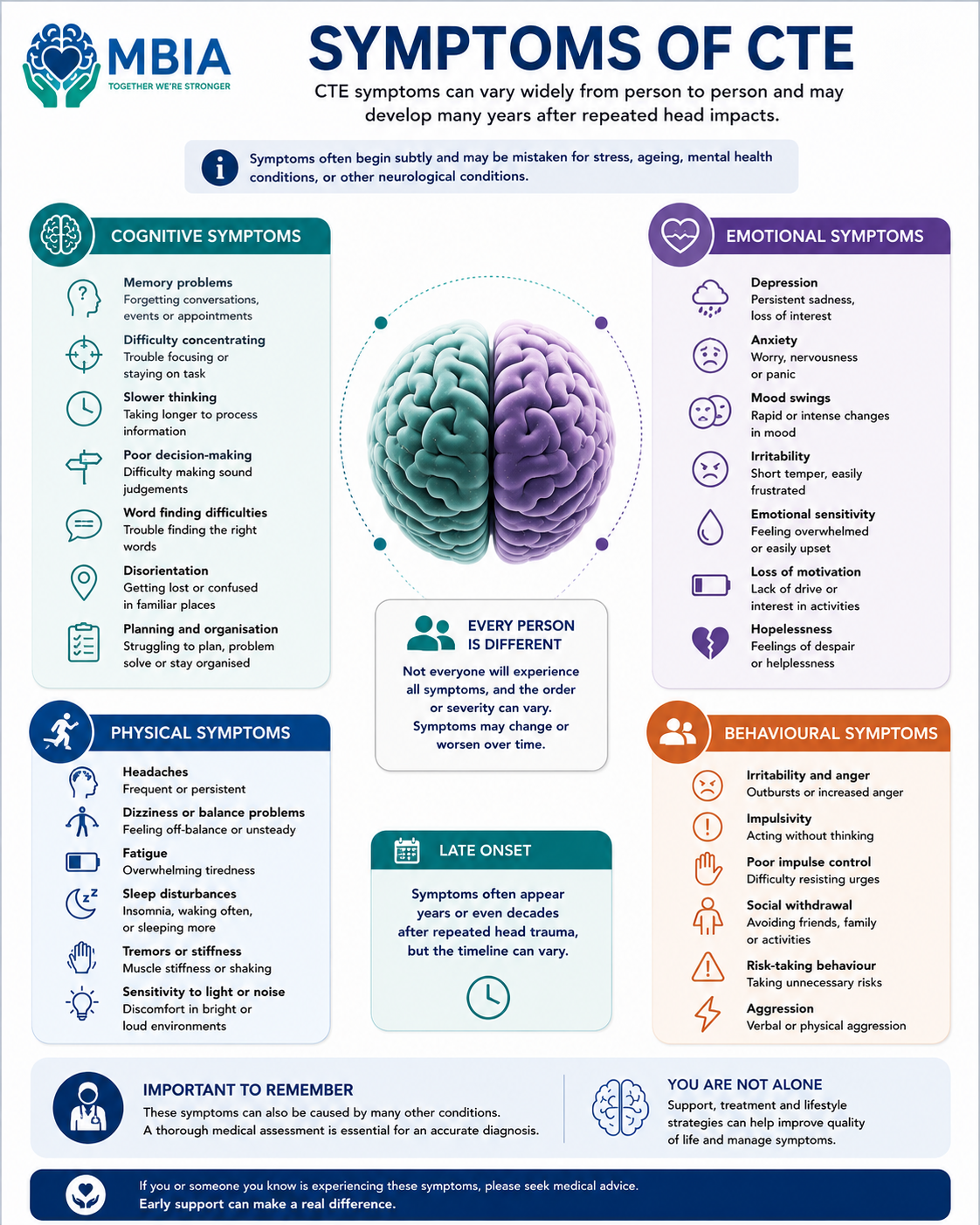
One of the challenges in understanding CTE is that symptoms can vary considerably between individuals.
Symptoms often develop years or even decades after exposure to repeated head trauma.
Possible symptoms include:
Cognitive Symptoms
- Memory problems
- Difficulty concentrating
- Brain fog
- Slower thinking
- Problems planning and organising
- Difficulty finding words
- Reduced attention span
Emotional Symptoms
- Depression
- Anxiety
- Mood swings
- Increased emotional sensitivity
- Feelings of hopelessness
Behavioural Symptoms
- Irritability
- Anger
- Aggression
- Impulsivity
- Reduced frustration tolerance
Physical Symptoms
Some people may also experience:
- Headaches
- Sleep problems
- Balance difficulties
- Dizziness
- Fatigue
Later Symptoms
In some individuals, symptoms may progress to include:
- Significant cognitive decline
- Dementia
- Severe behavioural changes
- Loss of independence
However, symptom progression varies significantly and not everyone experiences the same pattern.
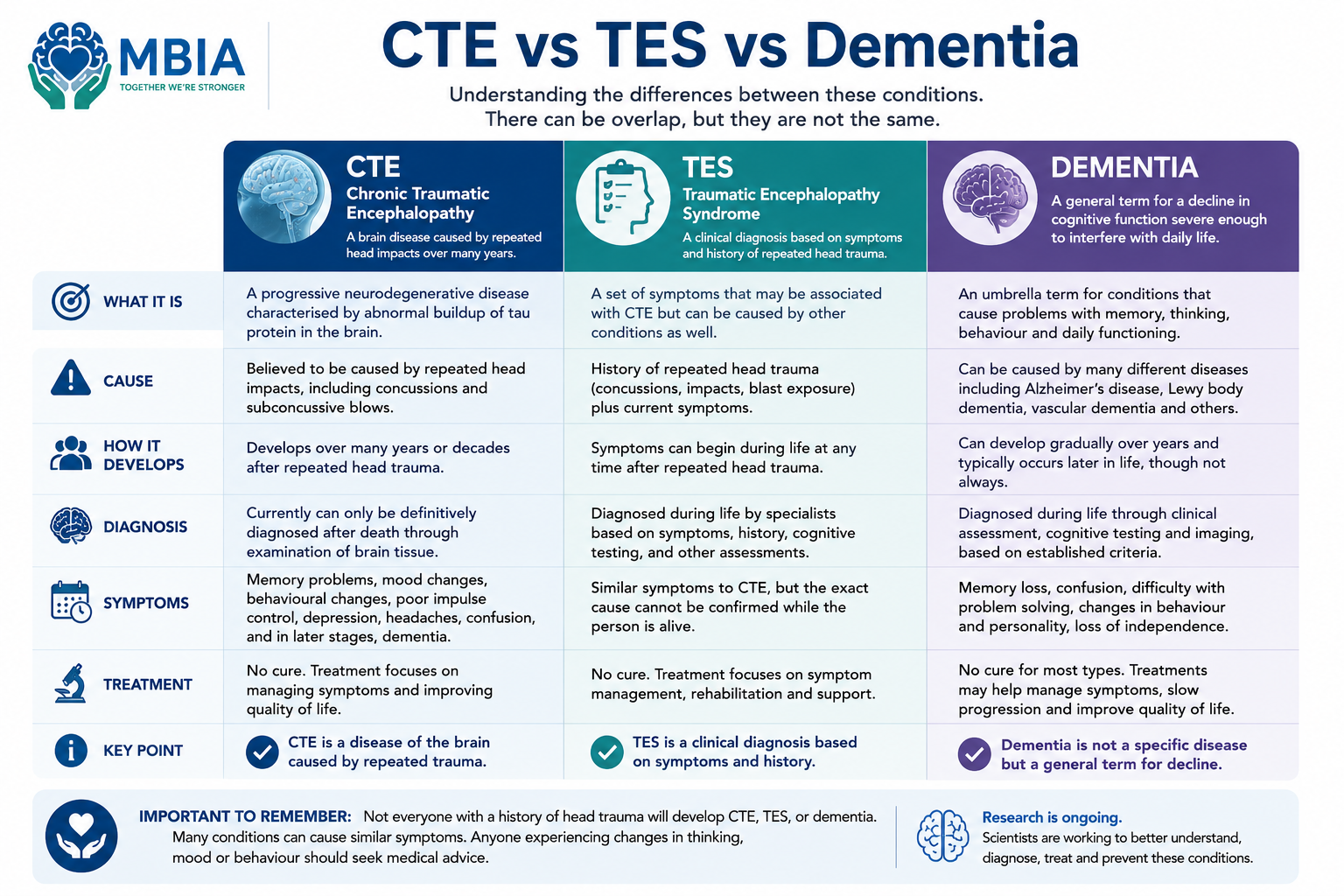
Is CTE the Same as Dementia?
No.
CTE and dementia are not the same thing.
CTE is a specific neurodegenerative disease associated with repeated head impacts.
Dementia is a broad term describing a decline in cognitive abilities severe enough to affect daily life.
Some people with advanced CTE may develop
dementia, but not everyone with CTE develops
dementia.
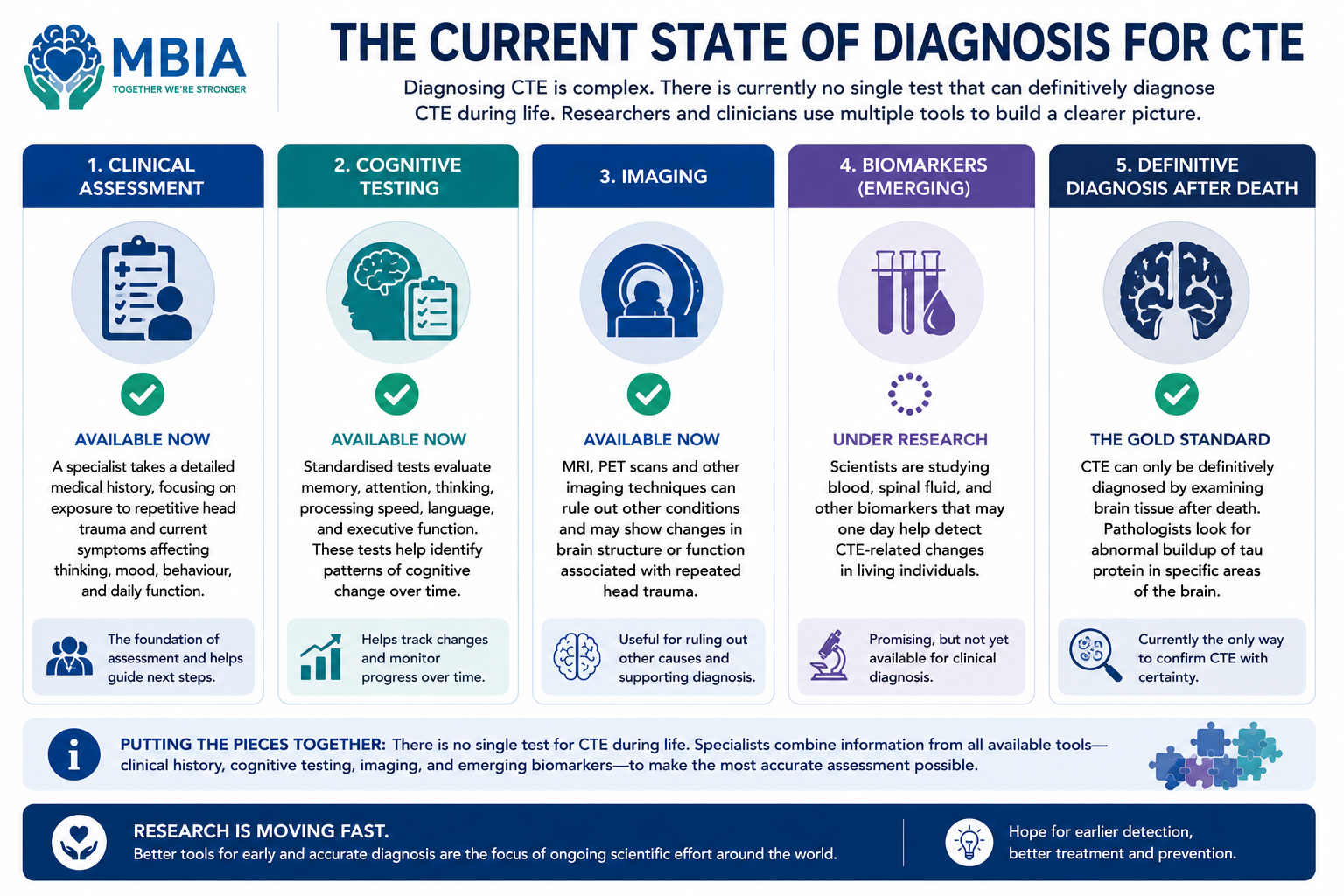
Can CTE Be Diagnosed During Life?
Historically, CTE could only be definitively diagnosed after death through examination of brain tissue.
Today, researchers are working to develop methods that may help identify CTE in living individuals.
These include:
- Advanced brain imaging
- Blood biomarkers
- Cerebrospinal fluid biomarkers
- Cognitive assessments
- Clinical evaluation
At present, there is no single test that can definitively diagnose CTE during life.
What Is Traumatic Encephalopathy Syndrome (TES)?
TES is a clinical syndrome used to describe symptoms associated with repeated head trauma.
It was developed to help researchers and clinicians identify individuals who may be experiencing symptoms consistent with CTE during life.
Not everyone diagnosed with TES will necessarily have CTE pathology, and research in this area continues to evolve.
What is Probable CTE?
In some specialist clinics, healthcare professionals may diagnose:
Probable CTE
or
Traumatic Encephalopathy Syndrome (TES)
These diagnoses are based on:
- History of repeated head trauma
- Symptoms
- Cognitive testing
- Brain imaging
- Exclusion of other causes
These assessments aim to identify people who may have CTE-related disease processes, although a definitive diagnosis remains challenging.
Is There a Cure for CTE?
Currently, there is no cure for CTE.
Research is ongoing into:
- Earlier diagnosis
- Biomarkers
- Disease mechanisms
- Potential treatments
Although no cure currently exists, many symptoms can
be managed through:
- Medical care
- Rehabilitation
- Psychological support
- Lifestyle interventions
- Social support
- Symptom management strategies
Regardless of diagnosis, anyone experiencing cognitive, emotional, behavioural, or neurological symptoms should seek medical advice.
Early assessment and support may help:
- Improve quality of life
- Address treatable symptoms
- Support mental wellbeing
- Improve daily functioning
- Assist families and carers
Why Early Support Matters
What Scientists Still Don't Know
Although significant progress has been made, many questions remain.
Researchers continue to investigate:
- Why some people develop CTE while others do not
- The role of genetics
- The contribution of subconcussive impacts
- How symptoms develop
- How to diagnose CTE accurately during life
- Potential future treatments
The science continues to evolve.
Remember
- CTE is a progressive neurodegenerative disease associated with repeated head impacts.
- It is characterised by abnormal accumulations of tau protein in the brain.
- Symptoms may affect memory, thinking, emotions, behaviour, and daily functioning.
- Symptoms often develop years or decades after repeated head trauma.
- There is currently no definitive test for diagnosing CTE during life.
- Research into diagnosis, biomarkers, prevention, and treatment is ongoing.
- Early support and symptom management remain important.
Related Articles
Together We're Stronger