The Hidden Responsibilities of Caring
People often think caregiving only involves physical support.
In reality, carers frequently become responsible for:
- Managing appointments
- Remembering information
- Coordinating care
- Handling paperwork
- Managing finances
- Supporting mental health
- Monitoring symptoms
- Providing emotional reassurance
This invisible workload can be enormous.
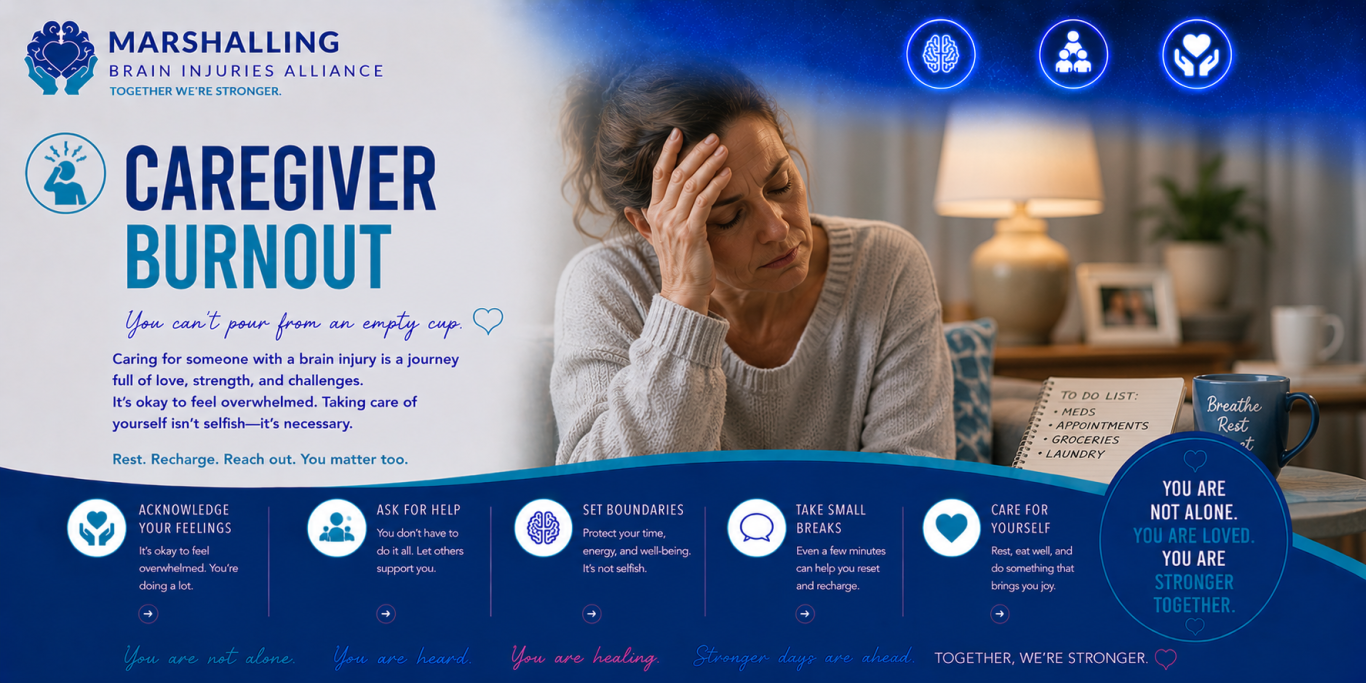
What Is Caregiver Burnout?
Caregiver burnout is a state of physical, emotional, and mental exhaustion that can develop when caring responsibilities become overwhelming.
It often develops gradually.
Most carers do not wake up one morning burned out.
Instead, it builds over weeks, months, or years.
Many carers become so focused on supporting someone else that they stop noticing what is happening to themselves.
Why Is Caregiver Burnout Common After Brain Injury?
Brain injuries often create challenges that are:
- Long-term
- Unpredictable
- Invisible
- Emotionally demanding
Unlike some health conditions, recovery may be uncertain.
Symptoms can fluctuate.
Plans often change.
Family roles may shift.
Many carers find themselves living with ongoing uncertainty while trying to hold everything together.
The Guilt Trap
One of the most difficult aspects of caregiver burnout is guilt.
Many carers think:
"I shouldn't complain."
"They're the one with the injury."
"I need to be stronger."
"Other people have it worse."
These thoughts often prevent carers from seeking help.
The reality is that both things can be true:
Your loved one is struggling.
And you are struggling too.
Compassion Fatigue
Over time, constant caring can lead to something known as:
Compassion Fatigue
This occurs when emotional reserves become depleted.
Signs may include:
- Emotional numbness
- Reduced patience
- Feeling detached
- Difficulty empathising
This does not mean you have stopped caring.
It often means you have been caring for too long without adequate support yourself.
Common Signs of Caregiver Burnout
Burnout can affect every aspect of life.
Physical Signs
You may notice:
- Exhaustion
- Sleep problems
- Frequent headaches
- Muscle tension
- Increased illness
- Changes in appetite
Many carers spend so long looking after someone else that they ignore their own health.
Emotional Signs
Examples include:
- Feeling overwhelmed
- Irritability
- Frustration
- Anxiety
- Sadness
- Emotional numbness
Some carers describe feeling like they are running on autopilot.
Mental Signs
Burnout may affect:
- Concentration
- Memory
- Motivation
- Decision-making
Ironically, carers sometimes develop symptoms that resemble those experienced by the person they are supporting.
Relationship Changes
Many carers report:
- Feeling isolated
- Losing friendships
- Reduced social contact
- Increased conflict at home
Over time, relationships outside of the caregiving role may begin to suffer.
Resentment Is More Common Than People Admit
Many carers feel ashamed when resentment appears.
Examples may include:
- Resenting lost opportunities
- Resenting constant responsibilities
- Resenting the lack of support
These feelings are more common than many people realise.
Having these emotions does not make you a bad person.
What matters is recognising them and addressing them before they grow.
Why Burnout Often Goes Unnoticed
Many carers become so accustomed to putting themselves last that exhaustion becomes normal.
You may tell yourself:
"I'll rest next week."
"Things will calm down soon."
"I just need to get through this month."
But weeks become months and months become years.
Without intervention, burnout often worsens.
Warning Signs You Should Not Ignore
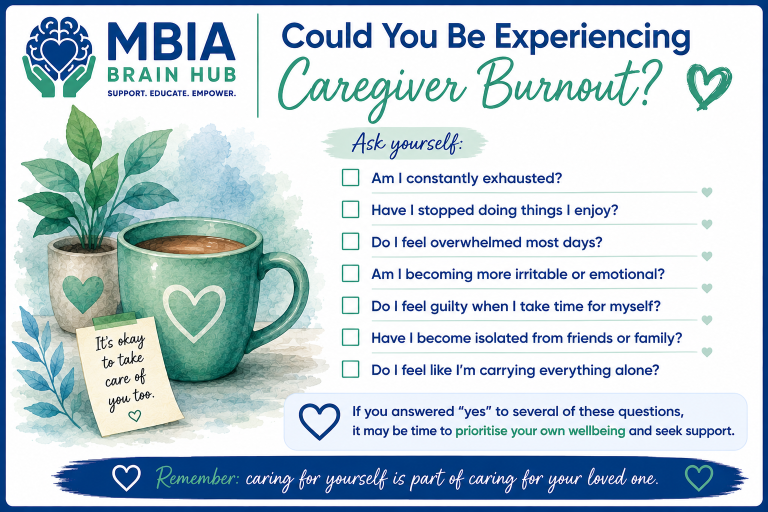
Consider seeking additional support if you notice:
- Constant exhaustion
- Frequent crying
- Feeling trapped
- Increasing anger
- Persistent anxiety
- Depression
- Thoughts of walking away
- Loss of interest in things you once enjoyed
These are signs that your wellbeing needs attention.
Practical Ways to Protect Yourself From Burnout
Take Breaks
Even small breaks matter.
A short walk.
A coffee with a friend.
An hour to yourself.
Recovery does not always require a holiday.
Accept Help
When people offer support, many carers automatically say:
"I'm fine."
Consider saying:
"Yes please."
Accepting help is a strength, not a weakness.
Stay Connected
Try to maintain:
- Friendships
- Hobbies
- Interests
- Social activities
Your identity matters too.
Set Realistic Expectations
You cannot do everything.
No carer can.
Focus on what is most important and let go of perfection.
Prioritise Sleep
Lack of sleep affects:
- Mood
- Stress levels
- Physical health
- Coping ability
Sleep is not a luxury.
It is essential.
Join a Support Group
Talking to people who understand can be incredibly powerful.
Many carers describe feeling relief simply knowing they are not alone.
Seek Professional Support
Counselling, therapy, or coaching may help you process:
- Grief
- Stress
- Guilt
- Relationship changes
Support is not only for the person with the injury.
It is for you too.
Remember Who You Are
Many carers become so consumed by their role that they lose sight of themselves.
You are more than:
- A carer
- A nurse
- A support worker
- An advocate
You are still a person with your own:
- Needs
- Dreams
- Goals
- Identity
Protecting that identity is important.
Key Takeaways
- Caregiver burnout is common among family members supporting someone with a brain injury.
- Burnout can affect physical health, emotional wellbeing, relationships, and quality of life.
- Guilt often prevents carers from seeking help.
- Compassion fatigue and resentment are common and do not make someone a bad person.
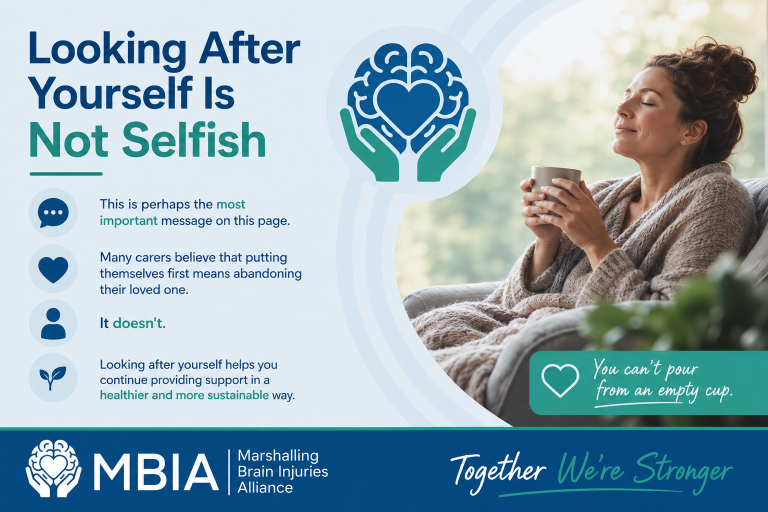
- Looking after yourself is essential, not selfish.
- Support groups, breaks, social connection, and professional support can help reduce burnout.
- You cannot pour from an empty cup.
- Your wellbeing matters too.
Continue Exploring
Together We're Stronger