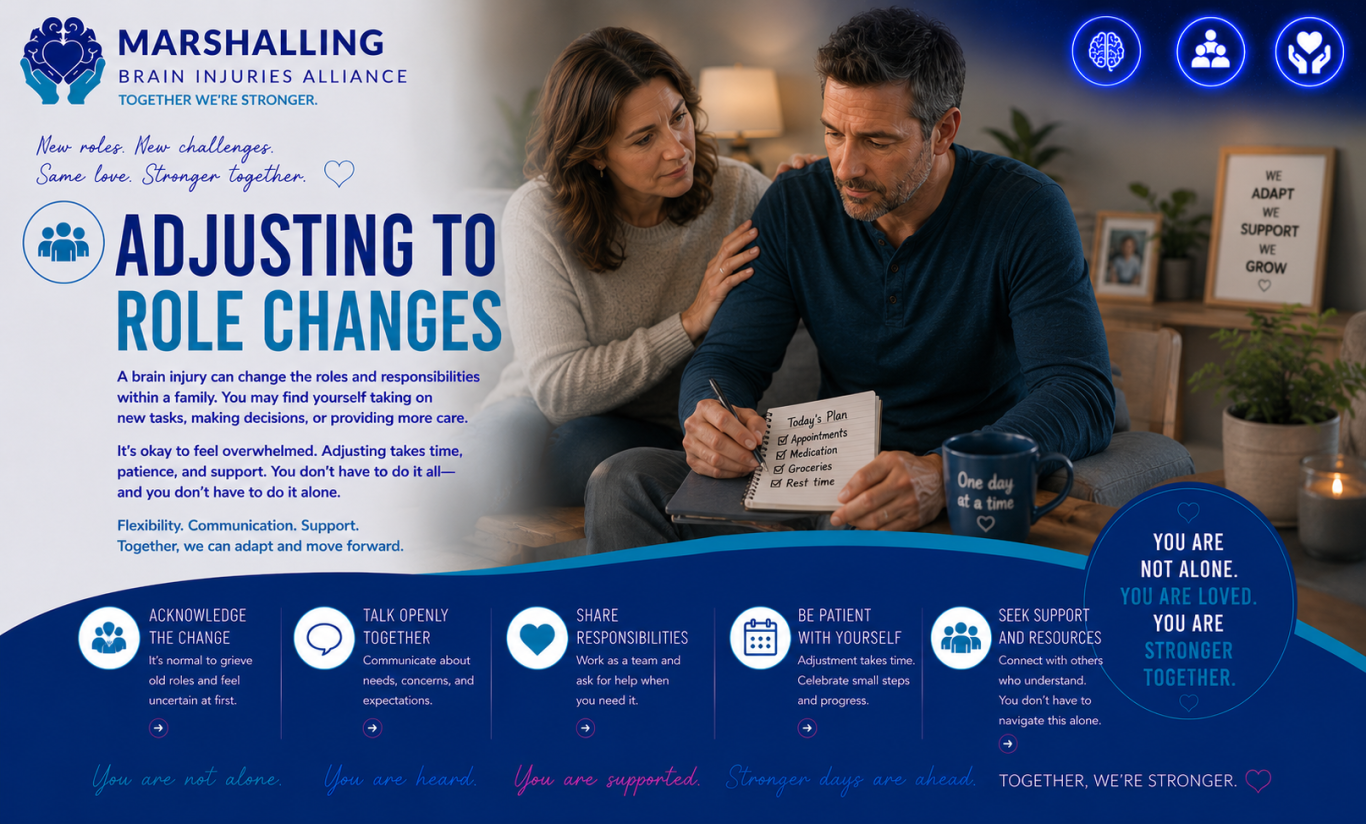
Why Do Roles Change?
Brain injuries can affect many aspects of daily life, including:
- Memory
- Fatigue
- Communication
- Emotional regulation
- Planning and organisation
- Physical abilities
- Confidence
- Independence
As a result, family members often step in to provide additional support.
What starts as helping with a few tasks can gradually become managing large parts of daily life.
When a Partner Becomes a Carer
One of the most common challenges occurs when a spouse or partner becomes a caregiver.
You may find yourself:
- Managing appointments
- Organising medication
- Handling finances
- Driving everywhere
- Monitoring symptoms
- Providing emotional support
At times, it can feel as though you have become more of a carer than a partner.
Many people feel guilty admitting this, but it is a common experience.
The Emotional Impact of Role Changes
Role changes affect everyone involved.
- Many carers experience:
- Sadness
- Frustration
- Resentment
- Exhaustion
- Loneliness
- Guilt
You may love your partner deeply while simultaneously grieving the relationship you once had.
Those feelings can exist together.
The Person With the Injury Is Adjusting Too
Role changes can also be incredibly difficult for your loved one.
Many people struggle with:
- Loss of independence
- Loss of identity
- Reduced confidence
- Feeling like a burden
- Loss of purpose
- Frustration about needing help
Sometimes emotional reactions are driven by grief rather than unwillingness.
Grieving the Life You Expected
Many families experience a form of grief after brain injury.
You may be grieving:
- Shared plans
- Career goals
- Financial security
- Lifestyle changes
- Future expectations
- The relationship dynamic you once had
This grief is normal.
Acknowledging it is often an important part of adapting.
Common Challenges Families Face
Feeling More Like a Carer Than a Partner
Many spouses describe feeling that the balance of the relationship has shifted significantly.
Loss of Independence
Your loved one may become more reliant on support than before.
Increased Responsibilities
Carers often find themselves managing far more than they expected.
Changes in Intimacy
Physical and emotional intimacy may change following a brain injury.
Financial Pressures
Reduced working hours, retirement, disability, or increased care needs can create additional stress.
Feeling Alone
Many carers feel isolated because others do not fully understand what daily life looks like.
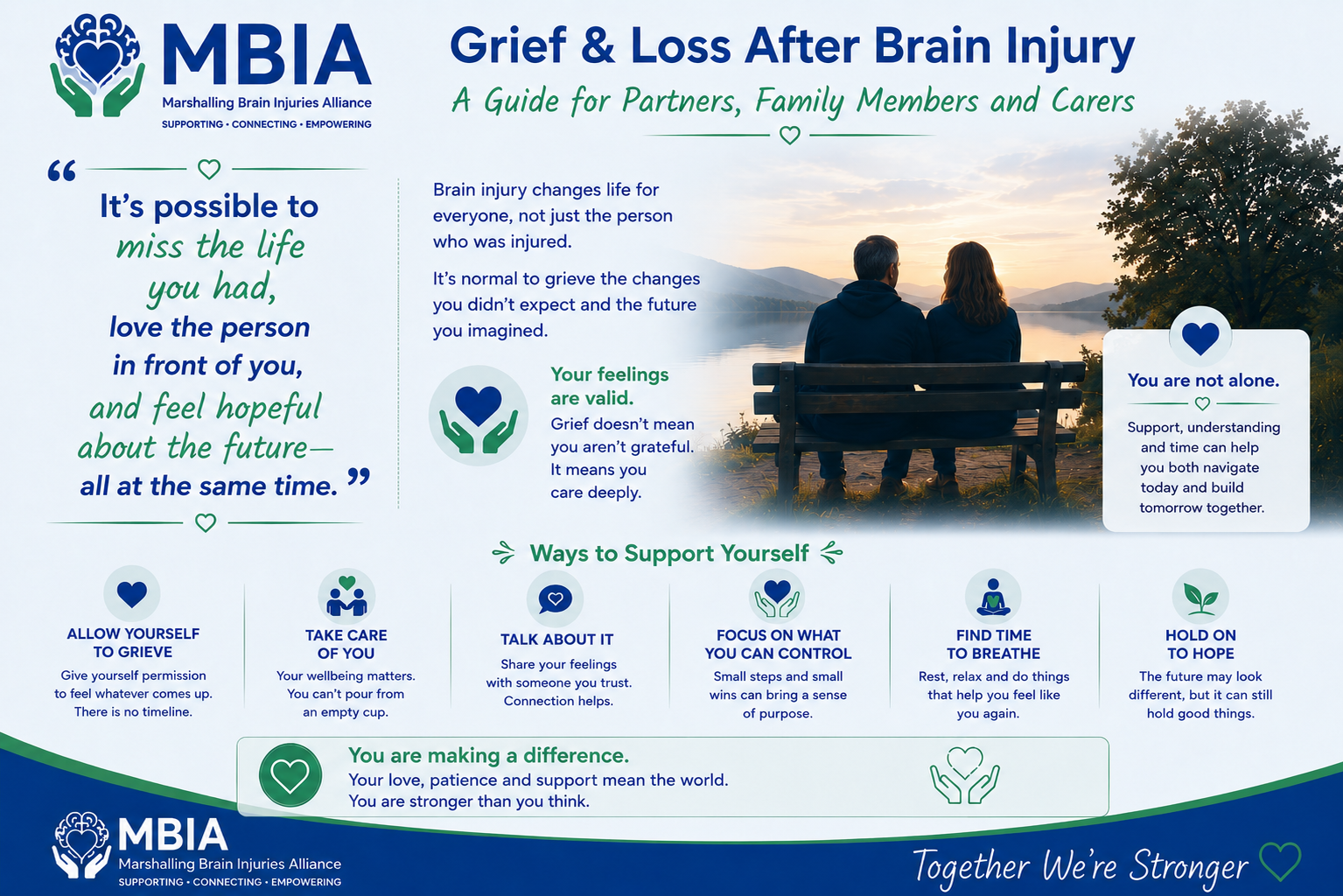
There is no perfect way to navigate these changes, but there are strategies that can help.
Accept That Things Have Changed
Acceptance does not mean giving up hope.
It means recognising reality so you can adapt to it.
Many people find life becomes easier when they stop comparing everything to how things used to be.
Focus on What Remains
It is natural to focus on what has been lost.
However, it can also help to notice what remains.
The relationship may have changed, but many families still find:
- Love
- Shared memories
- Humour
- Friendship
- Connection
- Meaning
within their new reality.
Communicate Openly
Role changes often create unspoken frustrations.
Where possible, try to talk openly about:
- Expectations
- Challenges
- Emotions
- Boundaries
- Practical needs
Neither person can read the other's mind.
Maintain Independence Where Possible
It can be tempting to take over everything.
However, maintaining independence where safe and appropriate can help preserve confidence and self-esteem.
Ask yourself:
"Can I support them to do this rather than doing it for them?"
Share Responsibilities
If possible, avoid carrying everything alone.
Support may come from:
- Family members
- Friends
- Support groups
- Professional services
- Community organisations
Asking for help is not failure.
Protect Your Relationship
When someone becomes a carer, it is easy for every conversation to revolve around appointments, symptoms, and practical tasks.
Try to make space for:
- Shared interests
- Laughter
- Time together
- Meaningful conversations
You are still more than a carer and a patient.
Give Yourself Permission to Feel
Many carers feel guilty for feeling:
- Angry
- Sad
- Overwhelmed
- Frustrated
These emotions are normal.
You are adapting to significant life changes.
Acknowledging those feelings is healthier than pretending they don't exist.
Look After Yourself
This is one of the most important things you can do.
You cannot support someone else effectively if you are completely exhausted yourself.
Try to prioritise:
- Sleep
- Exercise
- Social connection
- Hobbies
- Time for yourself
- Emotional support
Your wellbeing matters.
How to Cope With Role Changes
Healthy Boundaries Matter
Supporting someone does not mean sacrificing yourself completely.
It is okay to:
- Ask for help
- Take breaks
- Have your own interests
- Protect your mental health
- Say no when necessary
Healthy boundaries make long-term caregiving more sustainable.
There Is No "Right" Way to Adjust
Every family's journey is different.
Some people adapt quickly.
Others take years.
Some days you may feel positive and hopeful.
Other days may feel incredibly difficult.
That is normal.
Adjustment is a process, not an event.
A Message of Hope
Although brain injury can change family roles, it does not mean relationships are doomed.
Many families develop:
- Greater empathy
- Stronger communication
- Deeper appreciation for one another
- New ways of connecting
The relationship may not look exactly as it once did, but it can still be meaningful, loving, and fulfilling.
Be patient with yourself.
You are learning how to navigate a path you never expected to walk.
Key Takeaways
- Role changes are common after brain injury.
- Partners often become carers and family responsibilities may shift.
- Both the injured person and their family may experience grief and loss.
- Feelings such as sadness, frustration, and guilt are normal.
- Open communication and maintaining independence where possible can help.
- Protecting your own wellbeing is essential.
- Healthy boundaries support both the carer and the person with the injury.
- Relationships can adapt and continue to thrive despite significant changes.
Continue Exploring
Together We're Stronger