Why Can Brain Injury Change Someone?
The brain controls:
- Thoughts
- Emotions
- Behaviour
- Personality
- Communication
- Decision-making
- Self-awareness
When areas of the brain are injured, it can affect how these functions work.
This is particularly common when injuries affect:
- The frontal lobes
- The temporal lobes
- The connections between different brain regions
The result may be noticeable changes in how a person behaves, reacts, and interacts with others.
The Person Is Still There
One of the most important things to understand is this:
The person you love has not disappeared.
However, the injury may have changed how their brain processes information, manages emotions, controls behaviour, and interacts with the world.
This can sometimes make them seem like a different person, even though they are still fundamentally the same individual.
Why Does It Feel Like They Don't Care?
This is one of the most painful questions families ask.
For example:
- They forget important dates.
- They forget conversations.
- They seem less affectionate.
- They struggle to participate in family life.
It can feel as though they no longer care.
In reality, many people with brain injuries care deeply but are struggling with symptoms that make it harder to show it.
Many report feeling guilty because they know they are letting people down despite trying their best.
Common Changes Families Notice
Not everyone experiences the same changes.
Some people experience very few.
Others experience significant changes.
Increased Irritability
One of the most commonly reported changes.
Your loved one may:
- Become frustrated more easily
- Lose patience quickly
- React strongly to minor issues
- Have a shorter fuse than before
This is often linked to:
- Fatigue
- Emotional regulation difficulties
- Sensory overload
- Cognitive strain
Emotional Changes
Some people become:
- More emotional
- More sensitive
- More tearful
- More anxious
Others may seem emotionally distant or flat.
Both responses can occur after brain injury.
Reduced Tolerance for Stress
Things that once seemed manageable may now feel overwhelming.
Examples include:
- Busy family life
- Financial pressures
- Social events
- Unexpected changes
Your loved one may become overwhelmed more quickly than before.
Changes in Motivation
Families often worry that their loved one has become lazy or stopped caring.
In reality, motivation problems are often linked to:
- Neuro fatigue
- Executive dysfunction
- Depression
- Brain injury-related changes
The desire to do something and the ability to initiate it are not always the same thing.
Memory Problems
Repeated questions, forgotten conversations, and missed plans can be frustrating for everyone involved.
It can sometimes feel personal.
In most cases, it is not.
Memory difficulties are a recognised symptom of brain injury.
Personality Changes
Some families notice significant personality changes.
Examples may include:
- Becoming quieter
- Becoming more withdrawn
- Becoming more impulsive
- Becoming more anxious
- Becoming more emotional
This can be one of the hardest aspects of brain injury for families to process.
Loss of Confidence
Many people with brain injuries lose confidence in themselves.
They may withdraw from activities because they:
- Feel embarrassed
- Fear failure
- Feel overwhelmed
- No longer trust their own abilities
This can sometimes be mistaken for a lack of interest.
The Hidden Effort Families Don't See
One thing many families do not realise is how hard the injured brain is working.
Tasks that once happened automatically may now require significant effort.
Your loved one may spend much of their day:
- Managing symptoms
- Fighting fatigue
- Concentrating
- Trying to remember things
- Coping with sensory overload
By the time they get home, they may have very little left in reserve.
Understanding the Difference Between Choice and Symptom
A useful question to ask is:
"Is this a choice, or is this a symptom?"
Examples:
Forgetting appointments
Often a symptom.
Becoming overwhelmed in busy environments
Often a symptom.
Struggling to start tasks
Often a symptom.
Needing more rest
Often a symptom.
Recognising symptoms does not excuse harmful behaviour, but it can help explain some of what is happening.
Common Feelings Family Members Experience
Many carers and family members report:
- Sadness
- Anger
- Frustration
- Guilt
- Loneliness
- Exhaustion
- Resentment
- Fear about the future
These feelings are normal.
You are navigating a challenging situation.
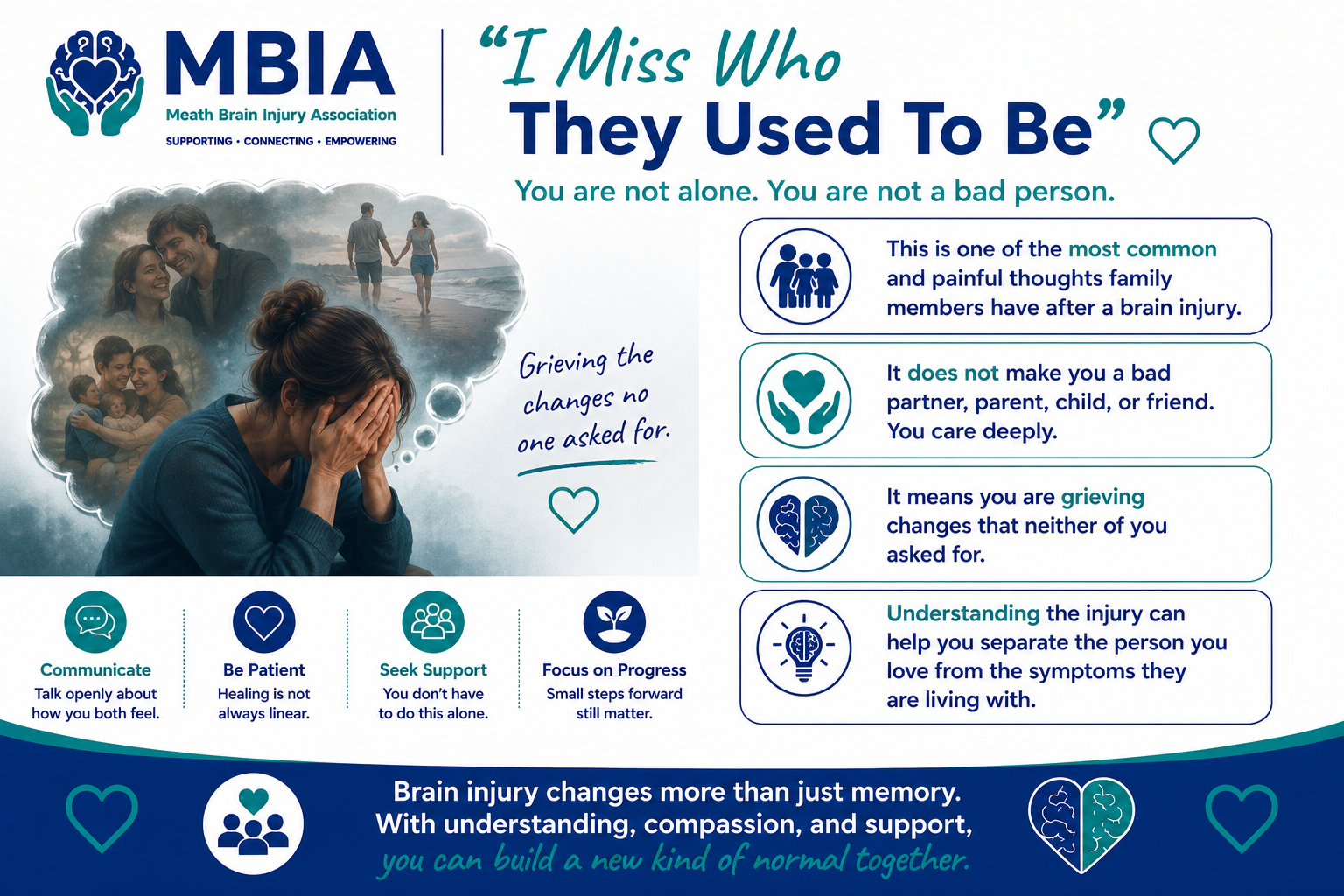
It Is Normal to Grieve
Many family members feel guilty for grieving.
But grief is a natural response to loss and change.
You may grieve:
- The relationship you once had
- Shared plans
- Future expectations
- The person they used to be
These feelings do not mean you love them any less.
They mean you are adapting to a difficult reality.
What Can Help?
Learn About Brain Injury
Understanding symptoms often reduces conflict and confusion.
Knowledge helps families separate the person from the injury.
Focus on Communication
Try to:
- Speak calmly
- Be clear and direct
- Avoid overwhelming conversations
- Choose the right time to discuss difficult topics
Adjust Expectations
This does not mean giving up.
It means recognising current limitations and working with them rather than constantly fighting against them.
Celebrate Small Wins
Recovery and adaptation often happen gradually.
Small successes still matter.
Seek Support
You do not have to carry everything alone.
Consider:
- Family support groups
- Carer support groups
- Counselling
- Peer support
Connecting with others who understand can make a huge difference.
Look After Yourself
Many family members become so focused on supporting their loved one that they neglect their own wellbeing.
Your needs matter too.
When Changes Become Concerning
Some behavioural changes may require additional support.
Seek professional advice if you are concerned about:
- Aggression
- Severe depression
- Substance misuse
- Risk-taking behaviour
- Thoughts of self-harm
- Suicidal thoughts
Safety should always come first.
Understanding Does Not Mean Accepting Abuse
This is an important distinction.
Brain injury can explain behaviour.
It does not excuse abuse.
Everyone deserves to feel safe and respected.
If behaviour becomes threatening, controlling, or abusive, seek support and prioritise safety.
Key Takeaways
- Brain injury can affect personality, emotions, behaviour, and relationships.
- The person you love is still there, but the injury may affect how they think, feel, and respond.
- Changes are often neurological rather than intentional.
- Family members commonly experience grief, frustration, and loss.
- Understanding symptoms can help reduce conflict and misunderstanding.
- Looking after your own wellbeing is essential.
- Compassion and healthy boundaries can exist together.
- Many families find new ways to adapt and reconnect over time.
Continue Exploring
Together We're Stronger