What Is Sensory Overload?
Your brain is constantly receiving information from your environment.
Every second it processes:
- Sounds
- Light
- Movement
- Touch
- Smells
- Conversations
- Visual information
In a healthy brain, much of this information is filtered automatically.
The brain decides what is important and what can be ignored.
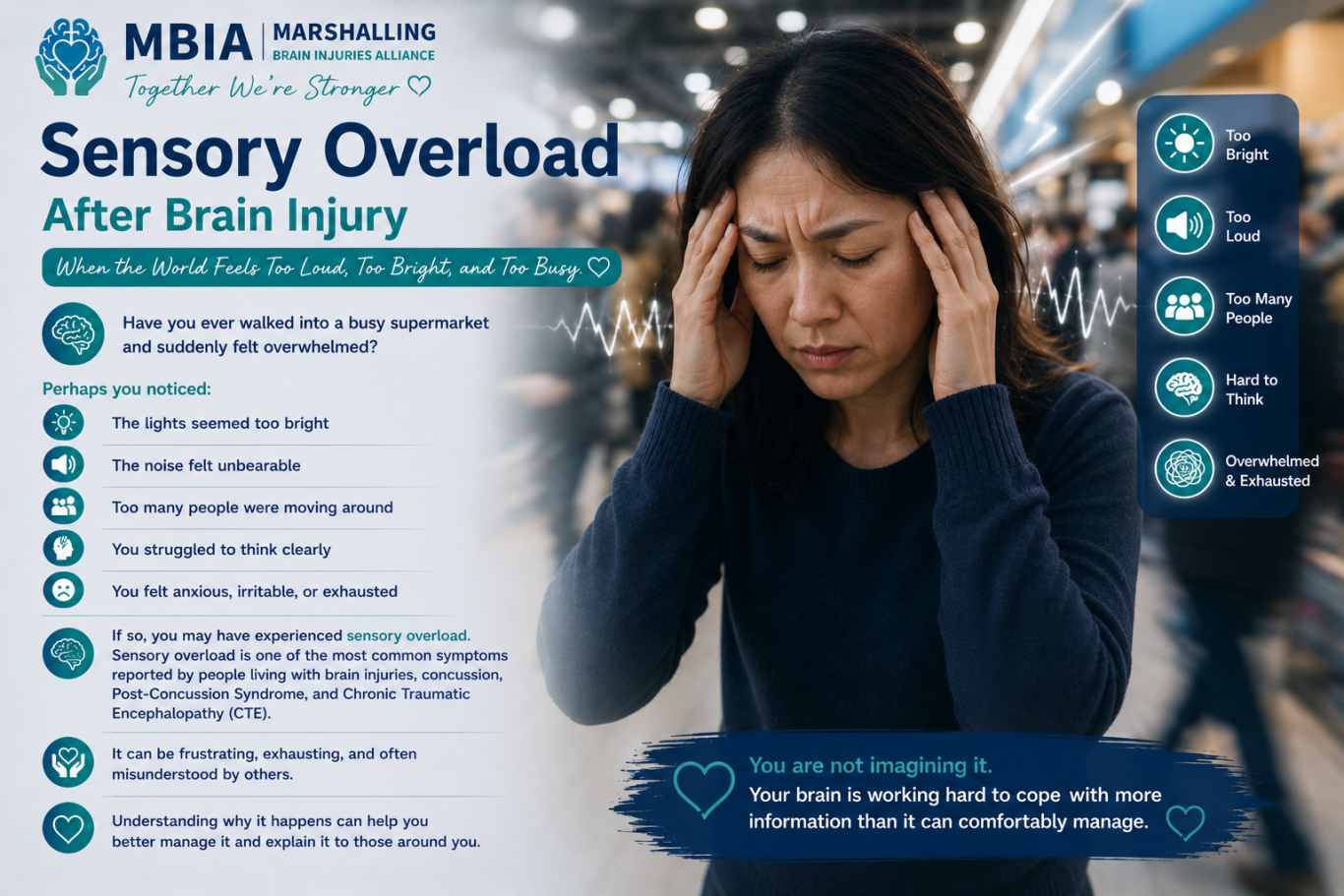
After a brain injury, this filtering system may not work as efficiently.
As a result, the brain can become overwhelmed by the sheer amount of information it is trying to process.
This is known as sensory overload.
What Does Sensory Overload Feel Like?
People describe it in many different ways.
Common experiences include:
- Feeling overwhelmed
- Difficulty concentrating
- Brain fog
- Headaches
- Dizziness
- Irritability
- Anxiety
- Exhaustion
- Confusion
- Feeling "shut down"
- Difficulty finding words
- Feeling emotional or tearful
Some people describe it as:
"My brain simply runs out of capacity."
Common Triggers
Everyone's triggers are different, but common examples include:
Noise
- Crowded cafés
- Restaurants
- Shopping centres
- Family gatherings
- Multiple conversations
Light
- Bright sunlight
- Fluorescent lighting
- Flashing lights
- Screens
- Headlights at night
Visual Stimulation
- Busy environments
- Crowds
- Fast-moving objects
- Cluttered spaces
Social Situations
- Large groups
- Parties
- Meetings
- Networking events
Smells
- Perfume
- Cleaning products
- Cooking smells
- Petrol or fuel
Multitasking
Trying to do several things at once may overwhelm the brain more quickly than before.
Why Does It Happen?
Think of your brain as a computer.
Before the injury, it may have been able to run multiple programs at once without difficulty.
After an injury, the brain often has fewer processing resources available.
Tasks that once happened automatically now require more effort.
When too much information arrives at once, the brain can struggle to cope.
This can trigger a range of symptoms.
Why Does It Sometimes Feel Like Anxiety?
Sensory overload and anxiety can look very similar.
Both may cause:
- Increased heart rate
- Sweating
- Feeling overwhelmed
- Wanting to escape
- Difficulty concentrating
The difference is that sensory overload is often triggered by too much incoming information rather than fear itself.
Of course, the two can occur together.
Repeated experiences of overload can understandably make people anxious about entering certain environments.
Why Symptoms May Appear Later
One of the confusing aspects of sensory overload is that symptoms do not always appear immediately.
You may cope well during an activity and then crash hours later.
This delayed response is common.
Your brain may continue processing the demands of the environment long after you have left it.
How Sensory Overload Affects Daily Life
Many people begin avoiding:
- Shops
- Public transport
- Restaurants
- Sporting events
- Family gatherings
- Social occasions
This can lead to:
- Isolation
- Loneliness
- Reduced confidence
While avoidance can sometimes be necessary, complete avoidance may not always be helpful long term.
Finding a balance is important.
What Family Members Should Know
Sensory overload is not:
❌ Being antisocial
❌ Being difficult
❌ Being lazy
❌ Not making an effort
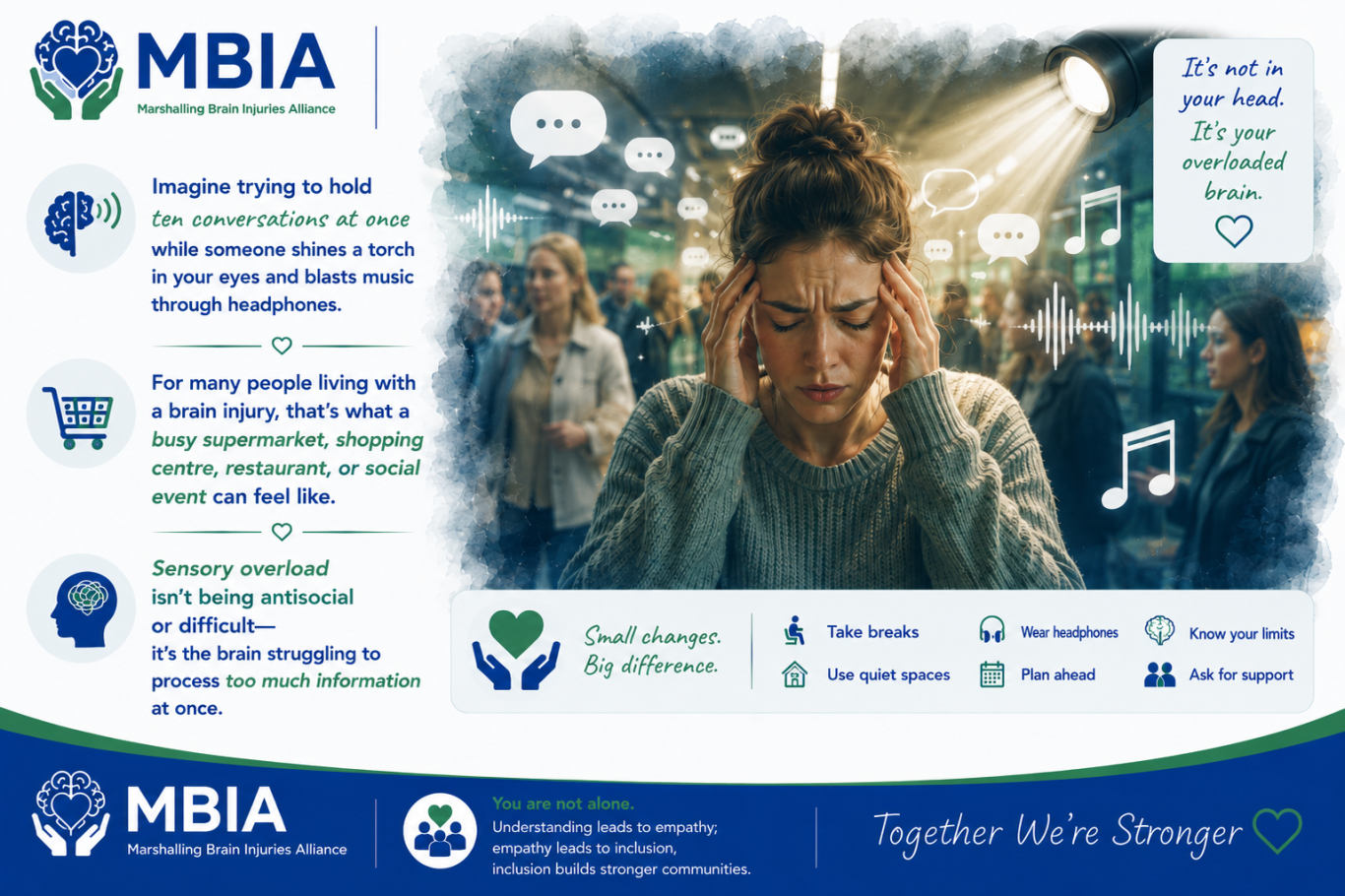
Sensory overload is a genuine neurological symptom.
When someone leaves a busy room, wears headphones, or needs quiet time, they are often managing symptoms rather than avoiding people.
Understanding this can make a huge difference.
Will Sensory Overload Improve?
For many people, sensory overload becomes easier to manage over time.
Improvement may occur through:
- Recovery
- Neuroplasticity
- Rehabilitation
- Learning triggers
- Developing coping strategies
Even if symptoms do not disappear completely, many people learn how to navigate them successfully.
Tips for Managing Sensory Overload
While it may not be possible to eliminate sensory overload completely, there are strategies that can help.
Learn Your Triggers
Start noticing:
- Where overload occurs
- What environments affect you most
- How long it takes symptoms to develop
Understanding patterns can help you plan ahead.
Pace Yourself
Try not to fill your day with multiple demanding activities.
Leave recovery time between events.
Take Breaks Early
Many people wait until they are overwhelmed before taking a break.
It is often more effective to take breaks before symptoms become severe.
Use Quiet Spaces
If you feel overload building:
- Step outside
- Sit somewhere quieter
- Reduce stimulation where possible
Even a few minutes can help.
Consider Sunglasses or Hats
For those affected by light sensitivity, reducing visual input may be helpful.
Consider Earplugs or Noise-Cancelling Headphones
Many people find these useful in:
- Shops
- Airports
- Public transport
- Crowded environments
Limit Multitasking
Focus on one thing at a time whenever possible.
The injured brain often performs better when demands are reduced.
Prioritise Sleep
A tired brain is more vulnerable to sensory overload.
Good sleep supports sensory processing and recovery.
Plan Recovery Time
After demanding activities, allow time for:
- Rest
- Quiet environments
- Reduced stimulation
Think of recovery as part of the activity itself.
Explain It to Others
Friends and family may not understand why certain environments are difficult.
Explaining sensory overload can help reduce misunderstandings and make it easier to ask for support.
Key Takeaways
- Sensory overload is a common symptom after brain injury.
- It occurs when the brain struggles to process large amounts of sensory information.
- Common triggers include noise, light, crowds, busy environments, and multitasking.
- Symptoms may include headaches, fatigue, brain fog, anxiety, irritability, and overwhelm.
- Symptoms may appear immediately or hours later.
- Understanding triggers and pacing activities can help.
- Sensory overload is a genuine neurological symptom, not a sign of weakness.
- Many people learn to manage it successfully over time.
Continue Exploring
Together We're Stronger