What Is Executive Function?
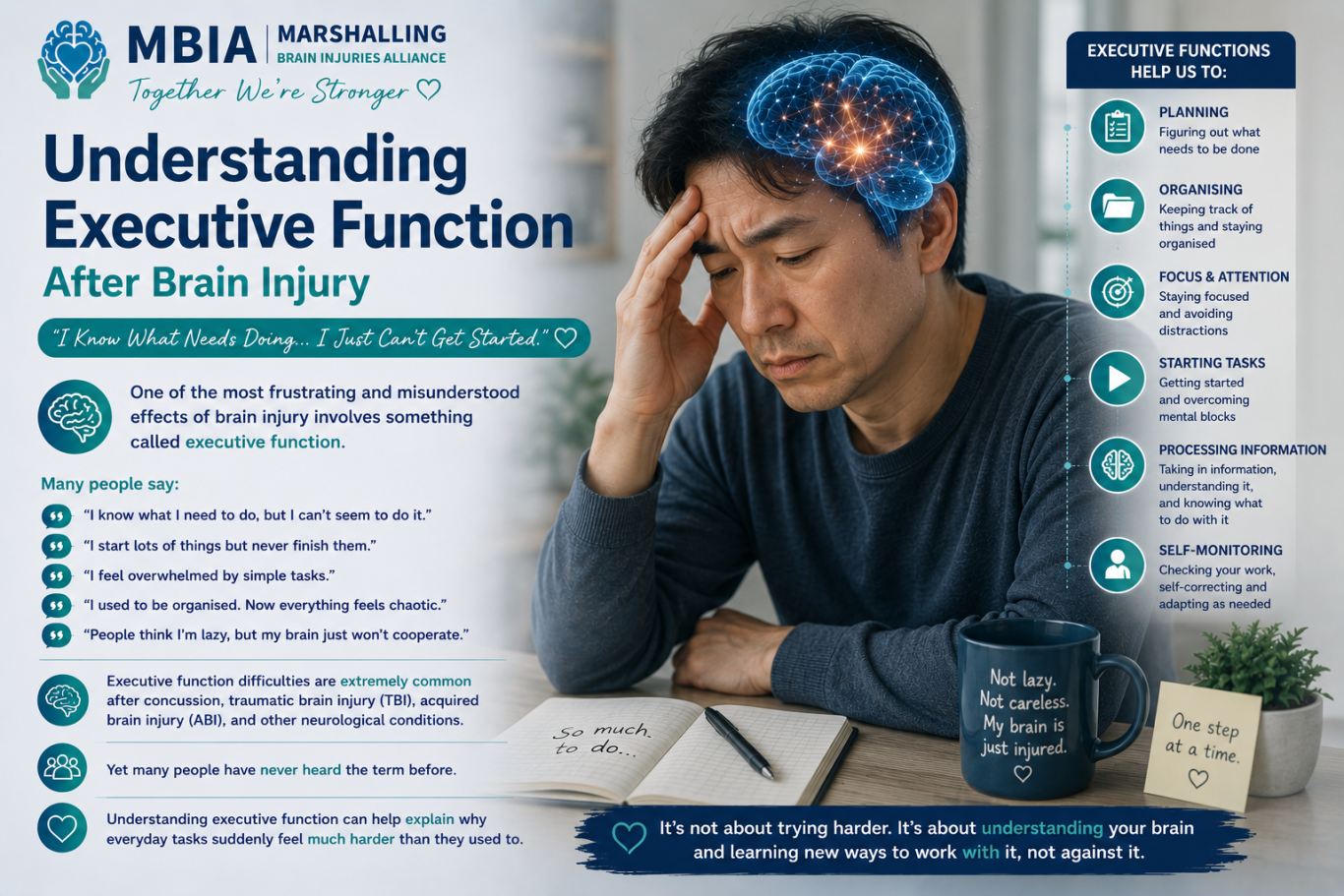
Executive function is often described as the brain's management system.
It helps us:
- Plan
- Organise
- Prioritise
- Make decisions
- Manage time
- Solve problems
- Start tasks
- Complete tasks
- Adapt to change
- Control impulses
Think of executive function as the brain's chief executive officer (CEO).
It helps coordinate all the different systems needed to get through everyday life.
Which Part of the Brain Is Involved?
Executive functions are primarily associated with the frontal lobes, particularly the prefrontal cortex.
These areas help us:
- Think ahead
- Regulate behaviour
- Organise information
- Make decisions
- Manage emotions
Because the frontal lobes are particularly vulnerable during many brain injuries, executive function difficulties are common.
Why Does Brain Injury Affect Executive Function?
Following a brain injury, the brain often has to work harder to process information and complete tasks.
This can affect the complex networks responsible for planning, organisation, and decision-making.
The result is that tasks which once happened automatically may now require significantly more effort.
What Does Executive Dysfunction Look Like?
Executive dysfunction simply means difficulties with executive functioning.
The symptoms can vary greatly from person to person.
Difficulty Starting Tasks
One of the most common challenges.
You may:
- Know exactly what needs doing
- Want to do it
- Understand why it matters
but still struggle to begin.
This is often called initiation difficulty.
It is not laziness.
It is a neurological symptom.
Difficulty Planning
Tasks that involve multiple steps can become overwhelming.
Examples include:
- Planning a holiday
- Organising paperwork
- Preparing a meal
- Managing appointments
What once felt straightforward may now feel impossible.
Difficulty Prioritising
You may struggle to decide:
- What needs doing first
- What is most important
- Which task should wait
Everything can feel equally urgent.
Difficulty Managing Time
Many people experience:
- Running late
- Underestimating how long tasks take
- Missing appointments
- Losing track of time
This is sometimes referred to as time blindness.
Difficulty Completing Tasks
Starting something is one challenge.
Finishing it can be another.
Many people report:
- Half-finished projects
- Uncompleted chores
- Becoming distracted halfway through tasks
- Difficulty Multitasking
Trying to juggle multiple tasks at once may become much harder.
Many people find they work better when focusing on one thing at a time.
Difficulty Making Decisions
Even simple decisions can feel overwhelming.
Examples include:
- What to eat
- What to wear
- Which task to start
- Which option to choose
Decision fatigue is common.
Difficulty Adapting to Change
Unexpected changes may feel more challenging than before.
Examples include:
- Changes to routine
- Last-minute plans
- Unexpected problems
The brain often prefers predictability because it reduces cognitive demand.
Emotional Impact
Executive dysfunction can affect more than practical tasks.
It can also affect:
- Confidence
- Self-esteem
- Independence
- Relationships
Many people begin questioning themselves.
They may think:
- "What's wrong with me?"
- "Why can't I do simple things?"
- "I used to manage all of this."
These feelings are understandable but often stem from neurological changes rather than a lack of ability.
Executive Dysfunction Is Often Misunderstood
From the outside, executive difficulties may look like:
- Laziness
- Poor motivation
- Disorganisation
- Carelessness
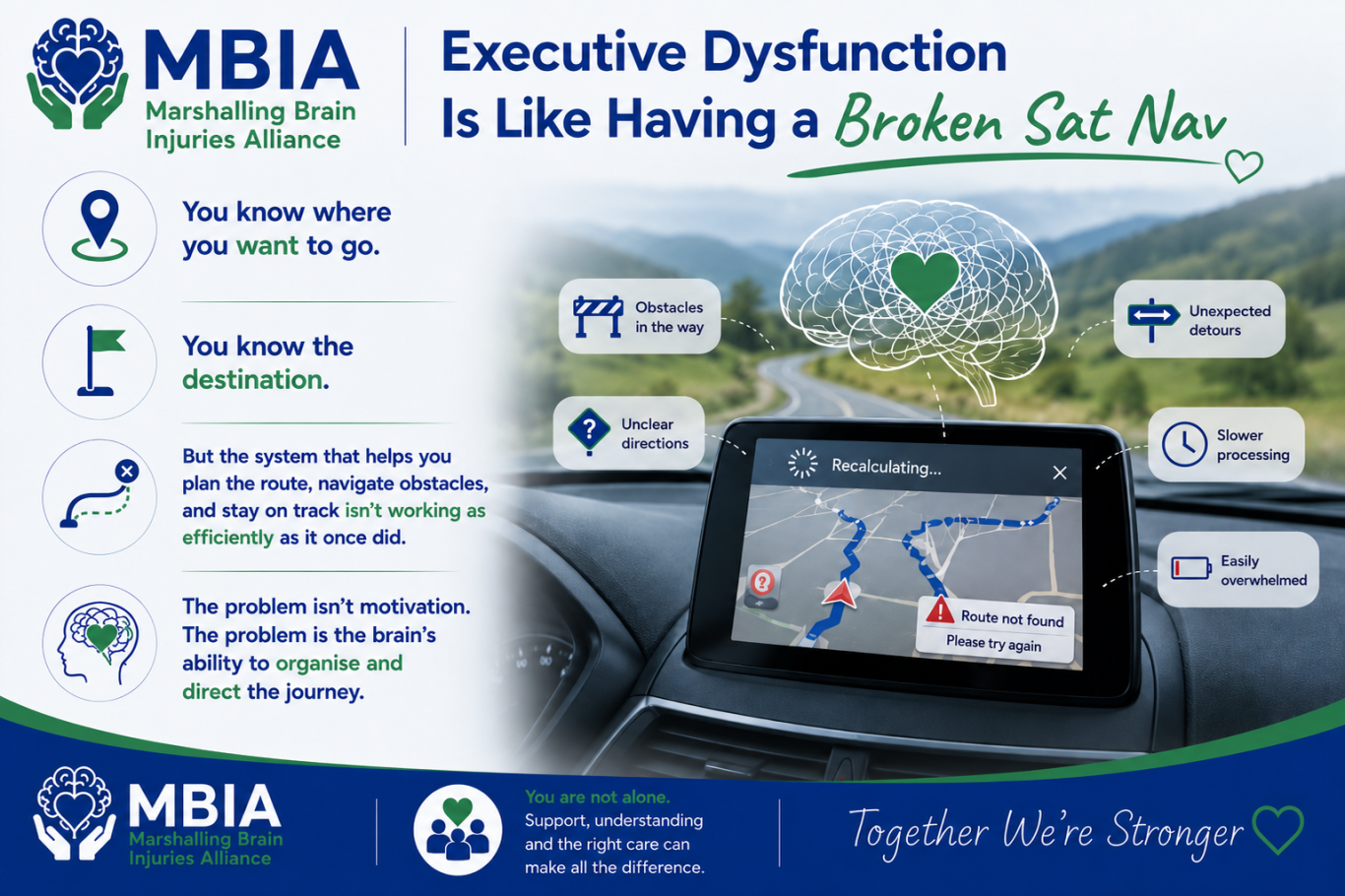
In reality, many people are working extremely hard just to complete everyday tasks.
The challenge is not effort.
The challenge is how the brain is functioning.
How Executive Dysfunction Affects Daily Life
Examples may include:
At Home
- Forgetting household tasks
- Struggling with routines
- Difficulty managing bills
- Losing important items
At Work
- Missing deadlines
- Difficulty prioritising
- Becoming overwhelmed
- Reduced productivity
In Relationships
- Forgetting plans
- Difficulty organising social activities
- Frustration caused by misunderstandings
Managing Health
- Missing appointments
- Forgetting medications
- Difficulty following treatment plans
Tips for Managing Executive Function Difficulties
There is no single solution, but many people find these strategies helpful.
Break Tasks Into Small Steps
Large tasks often feel overwhelming.
Instead of:
❌ "Clean the house"
Try:
✅ Put dishes away
✅ Wipe kitchen surfaces
✅ Vacuum one room
Smaller steps are easier for the brain to process.
Use External Supports
Many people benefit from:
- Calendars
- Planners
- Phone reminders
- Sticky notes
- Whiteboards
- To-do lists
Using tools is not a weakness.
It is a strategy.
Focus on One Task at a Time
Multitasking often increases cognitive load.
Try to complete one task before moving to another.
Create Routines
The brain often uses less energy when tasks become habitual.
Consistent routines can reduce decision-making demands.
Reduce Distractions
Consider:
- Quiet workspaces
- Turning off notifications
- Noise-cancelling headphones
Reducing distractions can improve focus.
Allow Extra Time
Tasks may simply take longer than before.
Giving yourself extra time reduces stress and pressure.
Prioritise Sleep
Poor sleep often worsens executive functioning.
Good sleep supports:
- Planning
- Memory
- Attention
- Decision-making
Manage Fatigue
Pacing activities and scheduling breaks can help protect cognitive energy.
Be Realistic
You do not have to do everything today.
Focus on what matters most.
Progress is more important than perfection.
Why Fatigue Makes It Worse
Executive function requires energy.
When fatigue increases, executive functioning often becomes more difficult.
Many people notice they can manage tasks reasonably well in the morning but struggle later in the day.
This is particularly common in people experiencing neuro fatigue.
Can Executive Function Improve?
For many people, yes.
Improvement may occur through:
- Recovery
- Rehabilitation
- Neuroplasticity
- Learning strategies
- Reducing fatigue
- Better symptom management
Many people continue to develop effective coping strategies long after their injury.
What Family Members Should Know
Executive dysfunction is not:
❌ Laziness
❌ Lack of motivation
❌ Carelessness
❌ Not trying hard enough
People with executive difficulties often know exactly what needs doing.
The challenge is organising, initiating, and completing tasks.
Patience and understanding can make a significant difference.
Key Takeaways
- Executive function is the brain's management system.
- It helps with planning, organisation, decision-making, prioritising, and completing tasks.
- Executive dysfunction is common after brain injury.
- Difficulties may include starting tasks, managing time, planning, and staying organised.
- These challenges are neurological symptoms, not laziness.
- Fatigue often makes executive difficulties worse.
- Routines, reminders, pacing, and reducing distractions can help.
- Many people improve with time, support, and effective strategies.
Continue Exploring
Together We're Stronger