Why Does Tinnitus Happen After Brain Injury?
There is no single cause.
Several factors may contribute.
Changes in Auditory Processing
The brain constantly processes information from the ears.
Following a brain injury, the way the brain interprets sound signals may change.
Some researchers believe tinnitus can occur when the brain tries to compensate for disrupted auditory input.
In simple terms:
The brain may start generating its own noise.
Hearing Damage
Some brain injuries occur alongside damage to the hearing system.
Examples include:
- Explosions
- Blast exposure
- Sporting impacts
- Falls
- Road traffic collisions
Damage to hearing pathways may contribute to tinnitus.
Military Blast Exposure
Many veterans report tinnitus following:
- Explosions
- Weapons fire
- Training exercises
- Repeated blast exposure
In fact, tinnitus is one of the most common service-related health problems reported by veterans worldwide.
Whiplash and Neck Injuries
Tinnitus can sometimes develop following:
- Whiplash injuries
- Neck trauma
- Cervical spine problems
This is because the neck, nervous system, and auditory pathways are closely connected.
Stress and the Nervous System
Stress does not cause tinnitus.
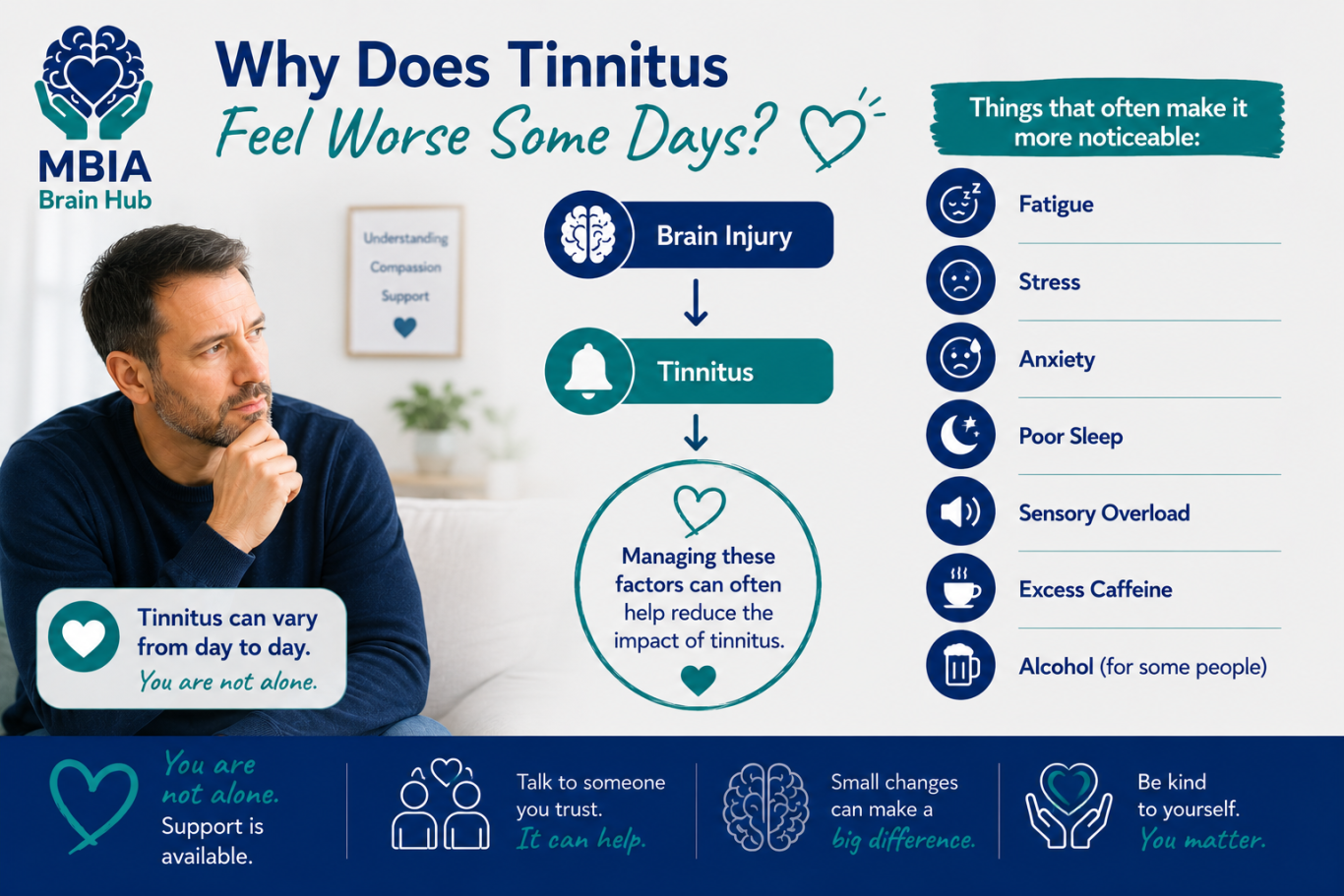
However, it can make it much more noticeable.
Many people report that their tinnitus becomes worse when they are:
- Anxious
- Stressed
- Overwhelmed
- Exhausted
What Is Tinnitus?
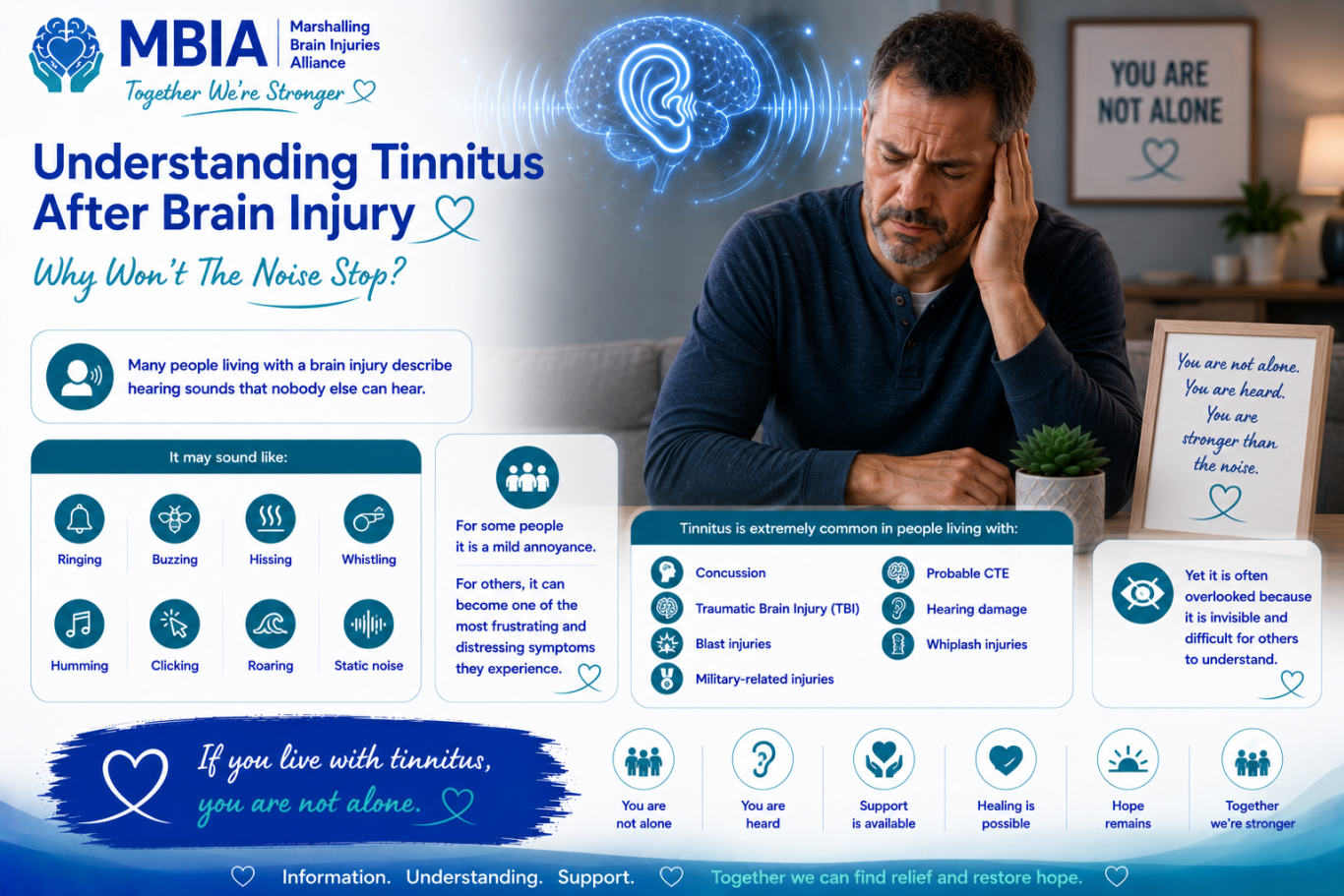
Tinnitus is the perception of sound when there is no external source producing that sound.
In simple terms:
Your brain hears a noise that is not coming from the environment around you.
The sound may occur:
- In one ear
- In both ears
- Inside the head
- Constantly
- Intermittently
Everyone experiences tinnitus differently.
What Does Tinnitus Sound Like?
People often describe:
🔔 Ringing
🐝 Buzzing
📺 Static
💨 Hissing
🎵 High-pitched tones
⚡ Electrical sounds
🌊 Roaring
Some people experience a single sound.
Others experience multiple sounds that change over time.
Why Is Tinnitus So Distressing?
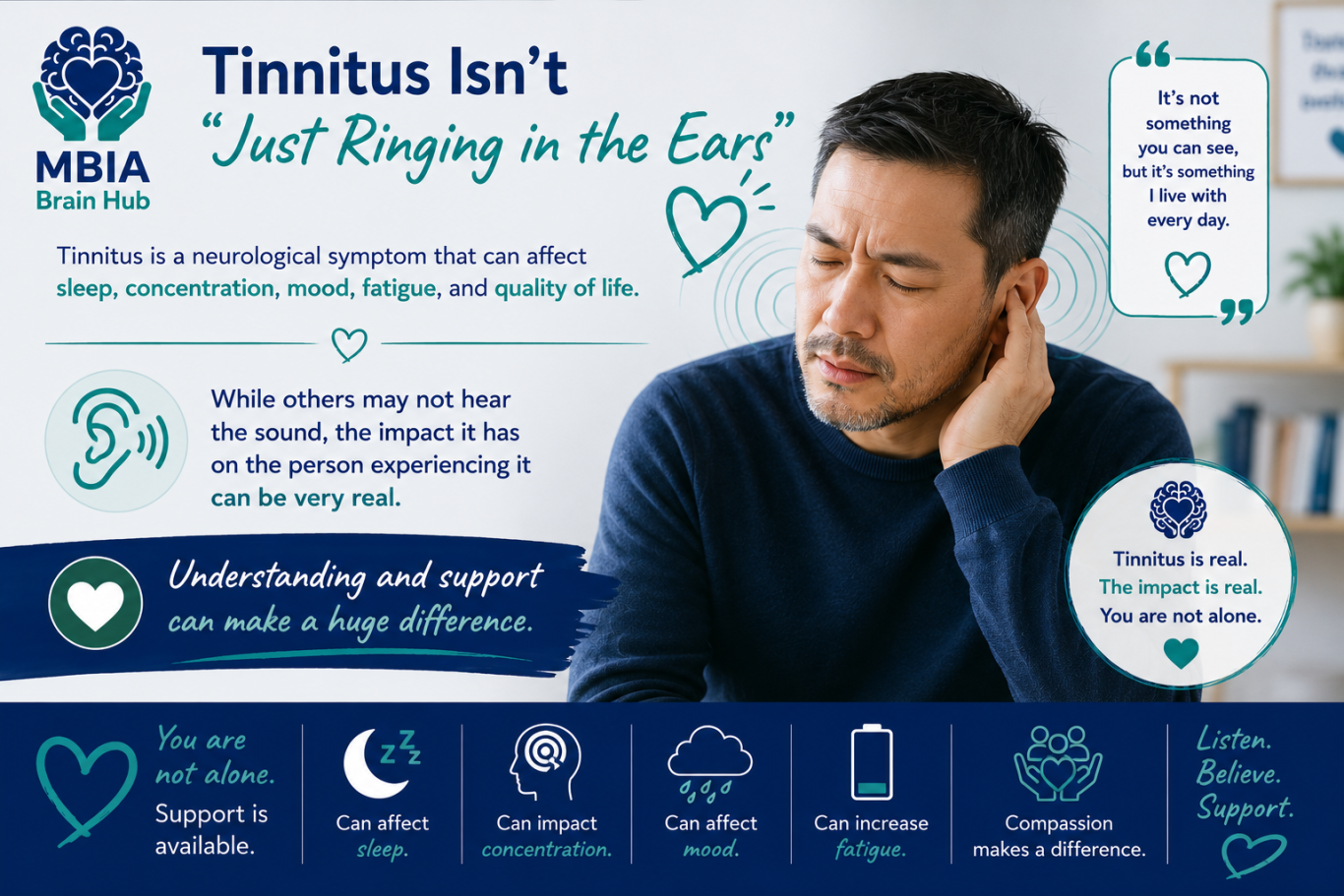
The sound itself is only part of the problem.
Many people experience:
- Frustration
- Anxiety
- Sleep difficulties
- Concentration problems
- Irritability
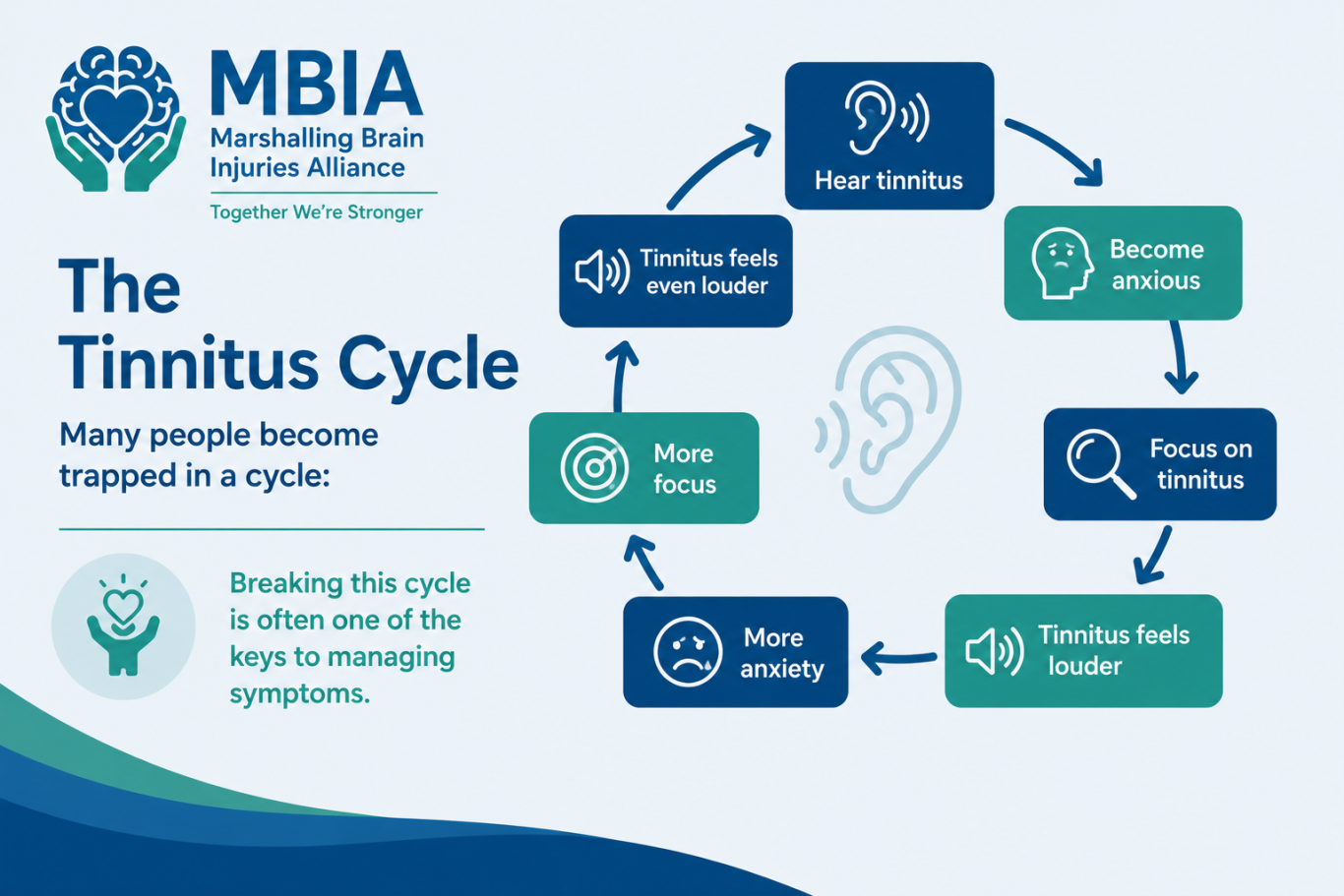
The brain naturally pays attention to things it perceives as important or threatening.
Unfortunately, the more attention we give tinnitus, the louder it can seem.
Why Tinnitus Is Often Worse at Night
Many people notice tinnitus becomes more noticeable when trying to sleep.
This is because:
- The environment becomes quieter
- There are fewer distractions
- The brain has less competing information to focus on
The tinnitus itself may not have changed.
It simply becomes more noticeable.
The Link Between Tinnitus and Fatigue
Many people living with brain injury notice:
Fatigue makes tinnitus worse.
When the brain becomes exhausted:
- Coping becomes harder
- Concentration decreases
- Stress increases
This often makes tinnitus feel louder and more intrusive.
Can Tinnitus Improve?
For some people:
Yes.
Symptoms may improve over time.
For others:
The sound may remain, but the brain gradually learns to pay less attention to it.
This process is known as:
Habituation
Many people eventually reach a point where tinnitus is still present but no longer dominates their life.
The Link Between Tinnitus and Brain Injury Symptoms
Tinnitus frequently occurs alongside:
- Headaches
- Migraines
- Sensory overload
- Brain fog
- Fatigue
- Sleep problems
- Anxiety
These symptoms can influence one another and sometimes create a vicious cycle.
Coping Strategies
Avoid Complete Silence
Many people find tinnitus more noticeable in very quiet environments.
Gentle background sound may help.
Examples include:
- Soft music
- Nature sounds
- Rain sounds
- White noise
- Fans
The goal is not to drown out tinnitus completely.
The goal is to give the brain something else to focus on.
Protect Your Hearing
If you are exposed to loud environments:
- Wear hearing protection
- Avoid excessive noise exposure
Protecting hearing may help prevent symptoms worsening.
Manage Stress
Stress often increases awareness of tinnitus.
Helpful strategies may include:
- Mindfulness
- Breathing exercises
- Meditation
- Walking
- Exercise
- Relaxation techniques
Prioritise Sleep
Poor sleep often worsens tinnitus.
Good sleep habits may help reduce distress.
Examples include:
- Consistent sleep routines
- Reducing caffeine late in the day
- Limiting screen use before bed
- Using background sound if helpful
Monitor Caffeine and Alcohol
Some people notice tinnitus becomes worse after:
- Excess caffeine
- Alcohol
- Certain stimulants
This varies from person to person.
Keeping a symptom diary may help identify triggers.
Reduce Sensory Overload
Brain injury often increases sensitivity to sound.
Managing sensory overload may reduce stress on the nervous system.
Examples include:
- Taking breaks
- Using quieter environments
- Noise-cancelling headphones when appropriate
Try Not to Constantly Check the Sound
Many people fall into the habit of repeatedly asking:
"Can I still hear it?"
Unfortunately, this keeps the brain focused on tinnitus.
The more attention it receives, the more noticeable it often becomes.
Talk About It
Tinnitus can feel isolating.
Many people find relief simply by speaking to others who understand.
Support groups can help people realise they are not alone.
Speak to a healthcare professional if:
- Tinnitus develops suddenly
- It only affects one ear
- It is accompanied by hearing loss
- It is accompanied by dizziness
- It significantly affects your wellbeing
It is important to rule out other potential causes.
If tinnitus is affecting you, please know:
You are not imagining it.
You are not overreacting.
The sound may be invisible to others, but the impact it has on your life is very real.
Many people living with brain injury and probable CTE experience similar challenges.
When Should I Seek Medical Advice?
A Message for People Living With Tinnitus
Key Takeaways
- Tinnitus is the perception of sound when no external sound is present.
- It is common after concussion, brain injury, blast exposure, and in some people with probable CTE.
- Stress, fatigue, anxiety, and poor sleep often make symptoms more noticeable.
- Tinnitus can contribute to sleep problems, concentration difficulties, and emotional distress.
- Background sound, stress management, good sleep, and hearing protection may help.
- Many people learn to habituate to tinnitus over time.
- Support is available, and you are not alone.
- The sound may be real, but it does not have to control your life.
Continue Exploring
Together We're Stronger