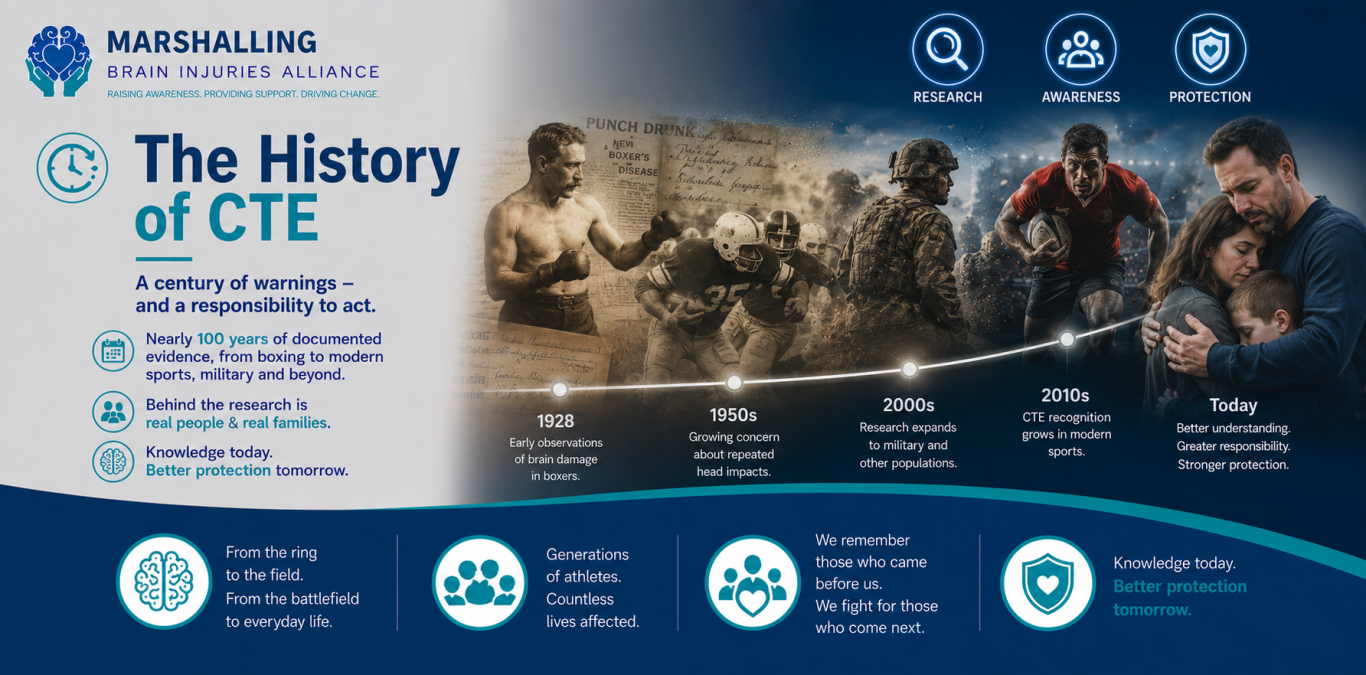
From boxers in the 1920s to modern athletes, military veterans, and survivors of domestic abuse, researchers have repeatedly observed the same troubling pattern: repeated blows to the head can lead to long-term changes in the brain.
Many people believe CTE is a recent discovery. In reality, the condition has been recognised, described, renamed, debated, and researched across multiple generations.
The history of CTE is not simply a story about science.
It is a story about people, families, and the lessons we continue to learn about protecting the human brain.
The question is no longer whether repeated brain trauma can have long-term consequences.
The challenge today is ensuring that knowledge leads to better education, prevention, support, and protection for future generations.
For nearly 100 years, scientists have documented the consequences of repeated head trauma.
The history of CTE spans almost a century.
While public awareness has grown significantly in recent decades, the medical community has been documenting the effects of repeated head trauma since the 1920s.
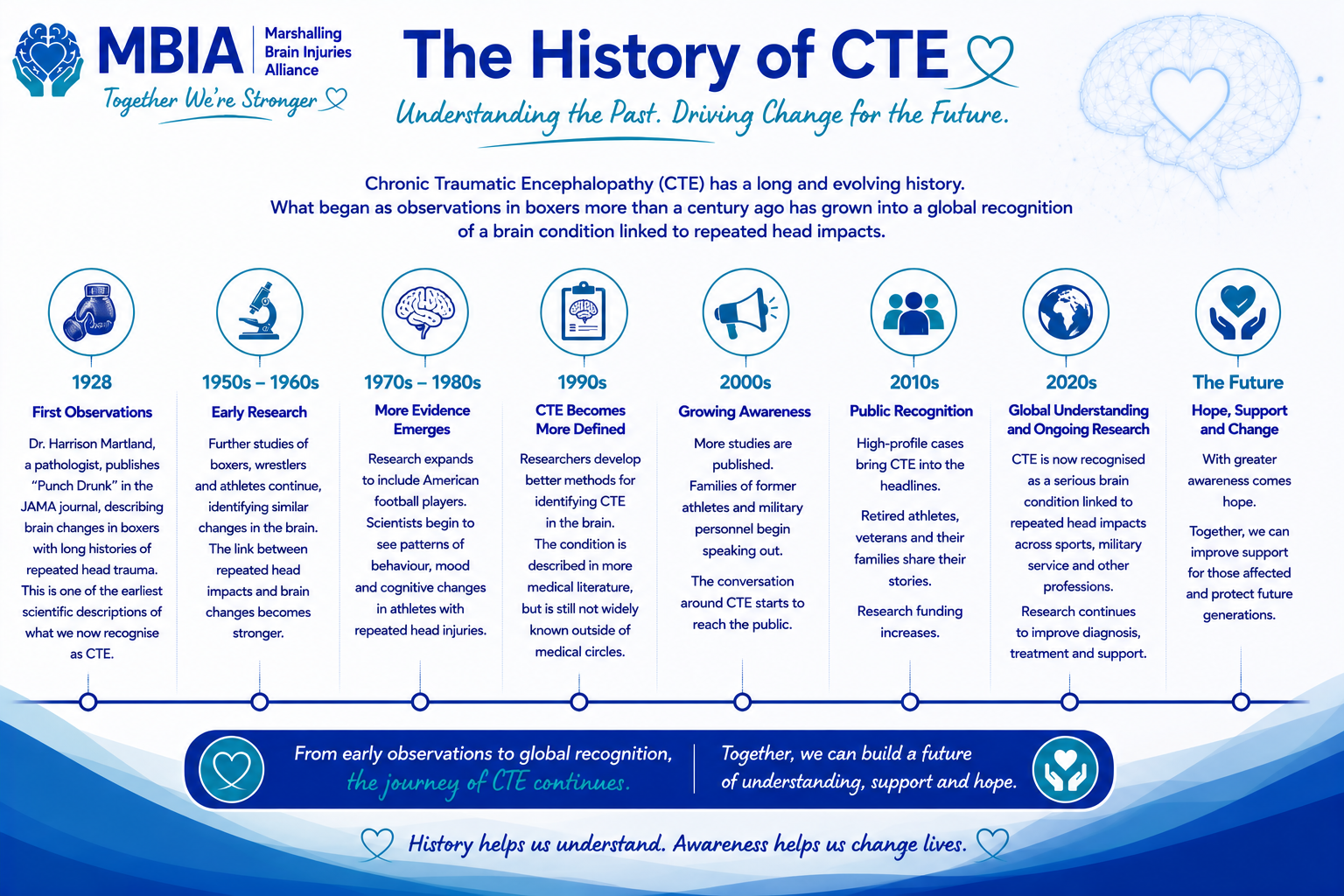
The timeline below highlights some of the most important milestones in our understanding of CTE.
The History of CTE: A Timeline
What the History of CTE Teaches Us
1. This Is Not a New Condition
CTE did not suddenly appear in the 21st century.
Researchers have been documenting neurological problems linked to repeated head trauma since 1928.
What has changed is our ability to study the brain and better understand the underlying disease process.
2. Concussions Are Only Part of the Story
Historically, much of the focus was placed on diagnosed concussions.
Modern research suggests that repeated sub-concussive impacts — blows to the head that do not cause obvious concussion symptoms — may also contribute to long-term brain changes.
This has important implications for sport, military service, domestic abuse, and other forms of repetitive brain trauma.
3. CTE Extends Beyond Sport
Although CTE was first identified in boxers and later brought to public attention through American football, research has identified CTE pathology in:
- Military veterans exposed to blast injuries
- Survivors of domestic abuse
- Individuals with repetitive head-banging behaviours
- People exposed to other forms of repetitive brain trauma
CTE is not a sport-specific disease. It is a brain injury disease.
4.Early Recognition Matters
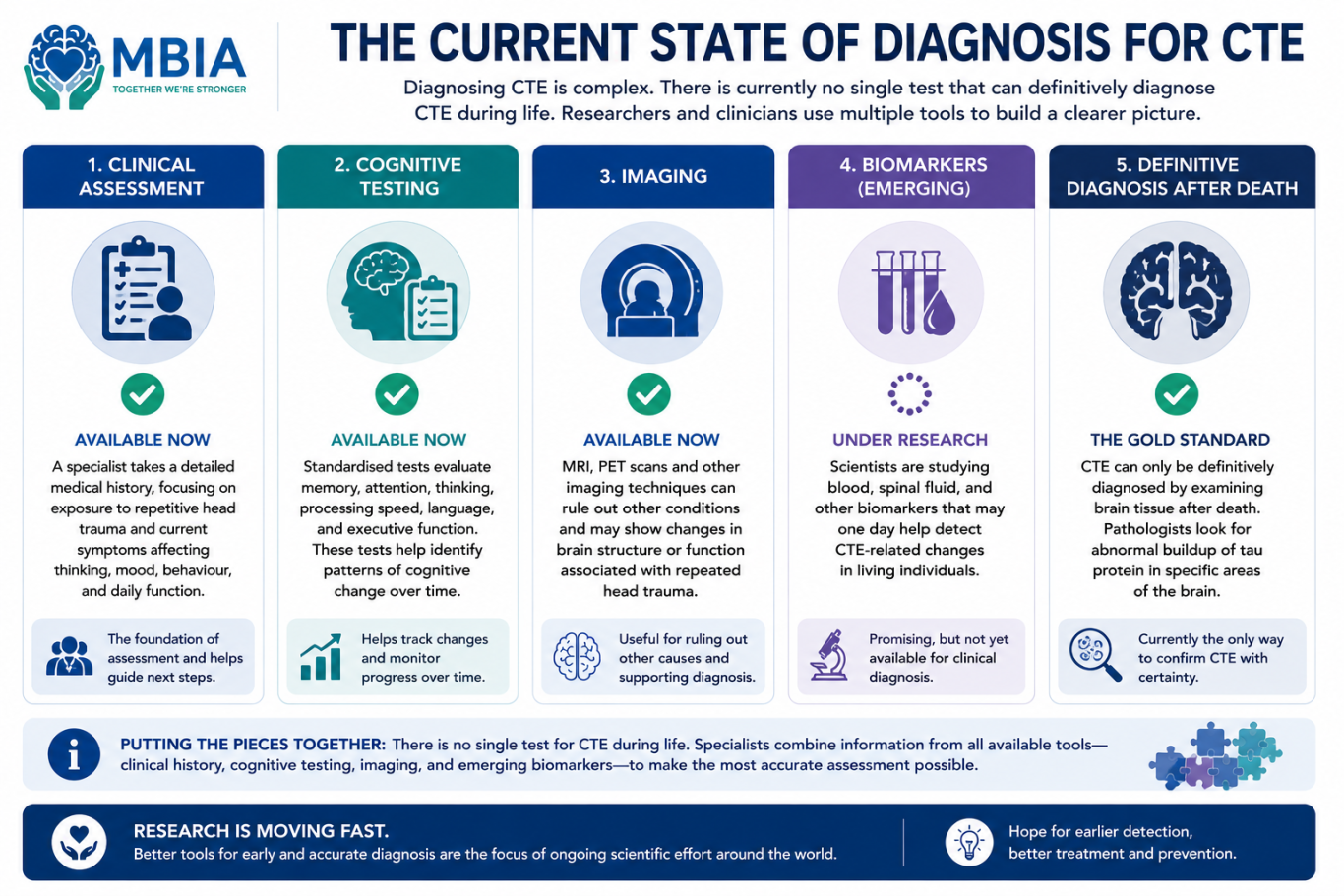
While CTE cannot currently be definitively diagnosed during life, many symptoms associated with repetitive brain trauma can be recognised, managed, and supported.
Education, awareness, and early intervention remain some of our most important tools.
5. Prevention Matters
The history of CTE reminds us that protecting the brain should never be viewed as optional.
Better concussion management, improved safety protocols, education, and ongoing research all play an important role in reducing risk for future generations.
While many questions remain, our understanding of CTE is greater today than at any point in history.
Researchers around the world are working towards earlier identification, improved support, better treatments, and ultimately prevention.
Every advance begins with awareness, education, and a commitment to protecting brain health.
Looking Forward
Read More