What Is a Traumatic Brain Injury (TBI)?
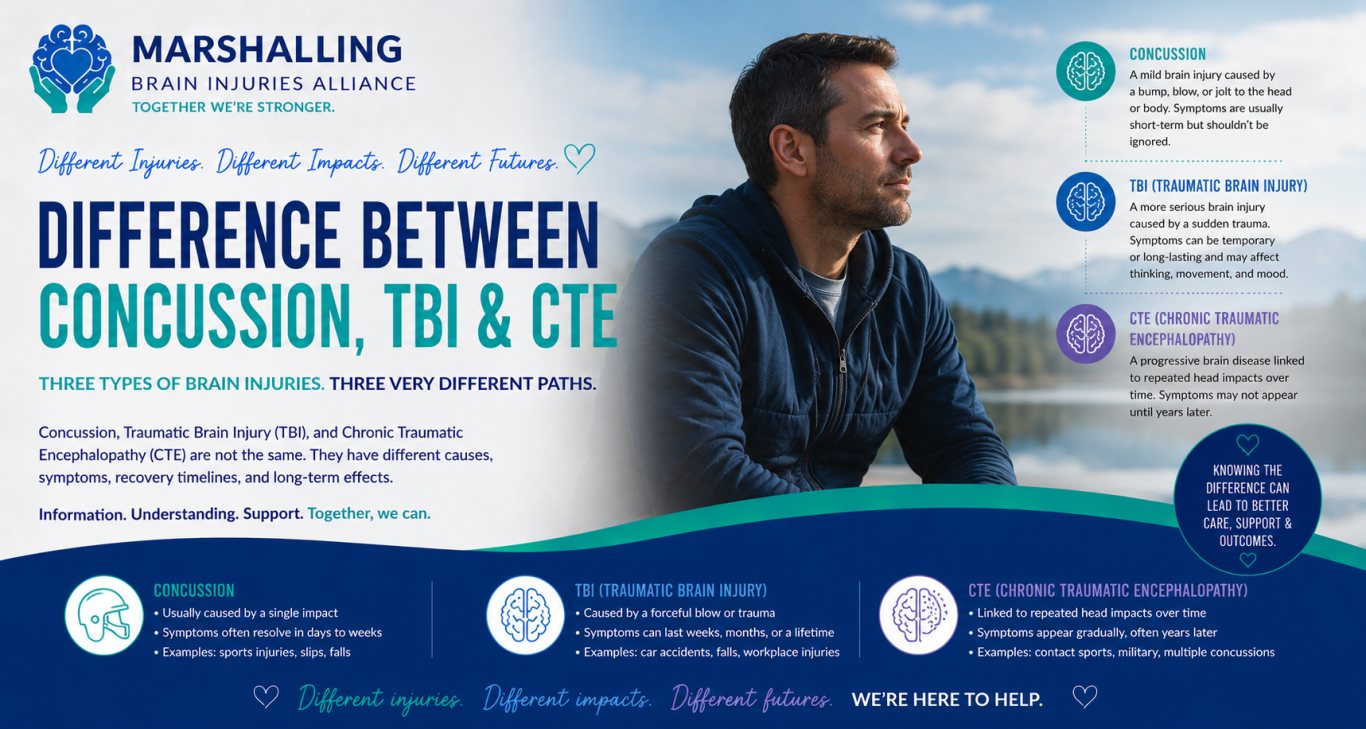
A Traumatic Brain Injury (TBI) is an injury to the brain caused by an external force.
Examples include:
- Falls
- Road traffic collisions
- Sporting injuries
- Assaults
- Military blast exposure
- Workplace accidents
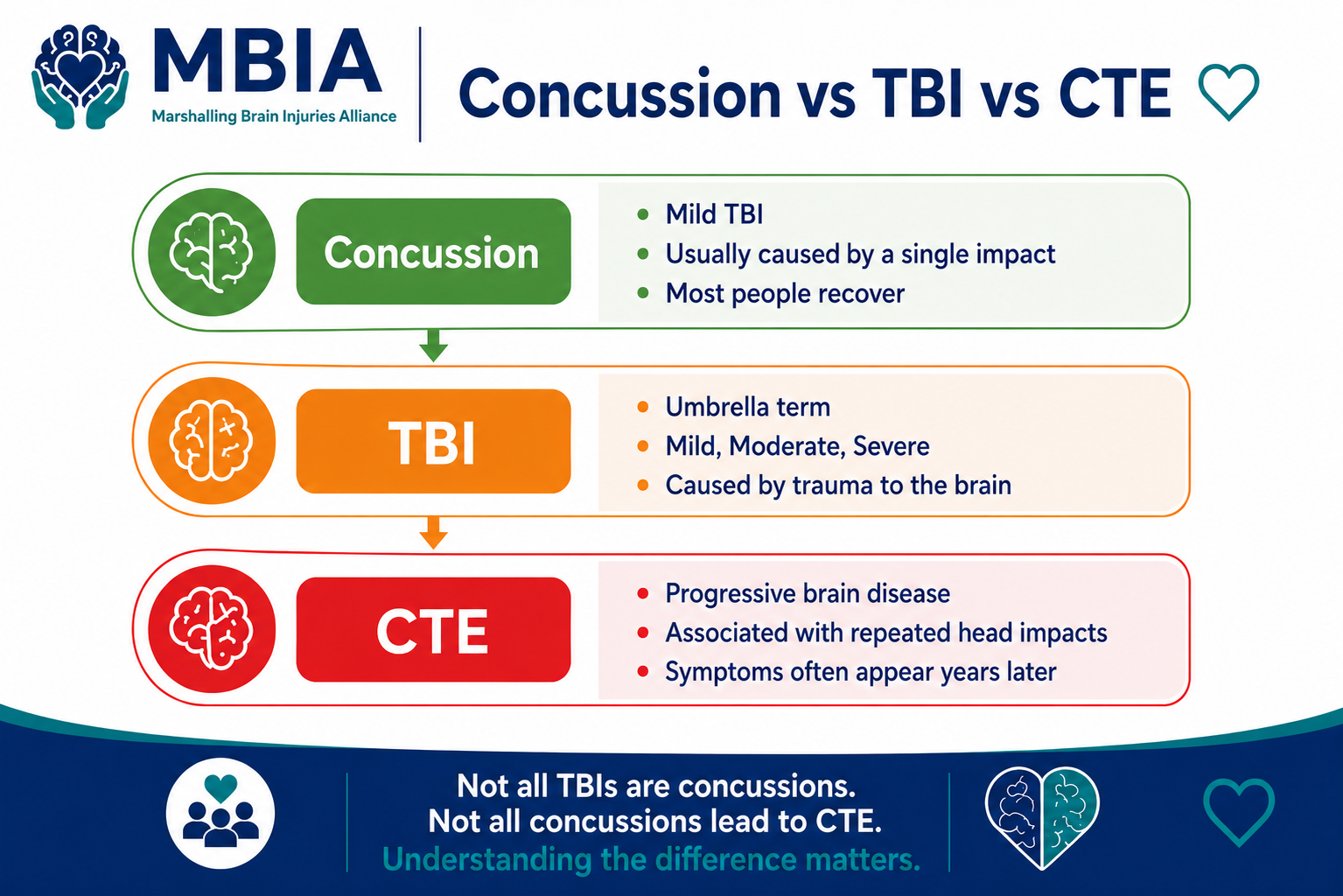
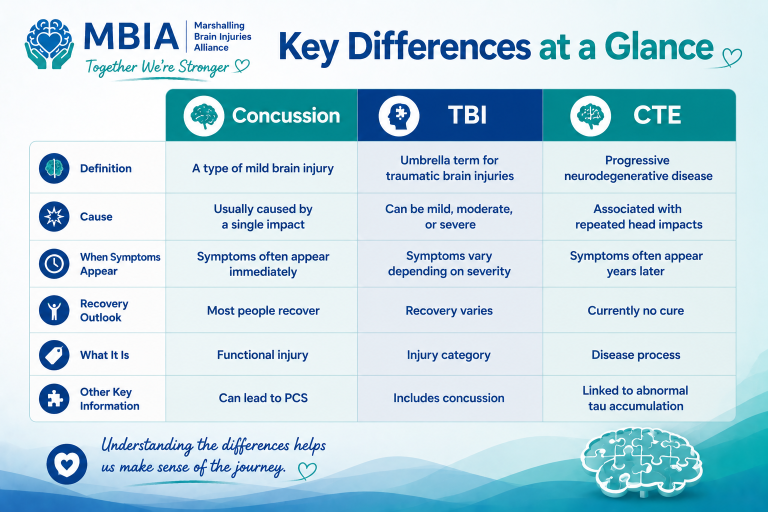
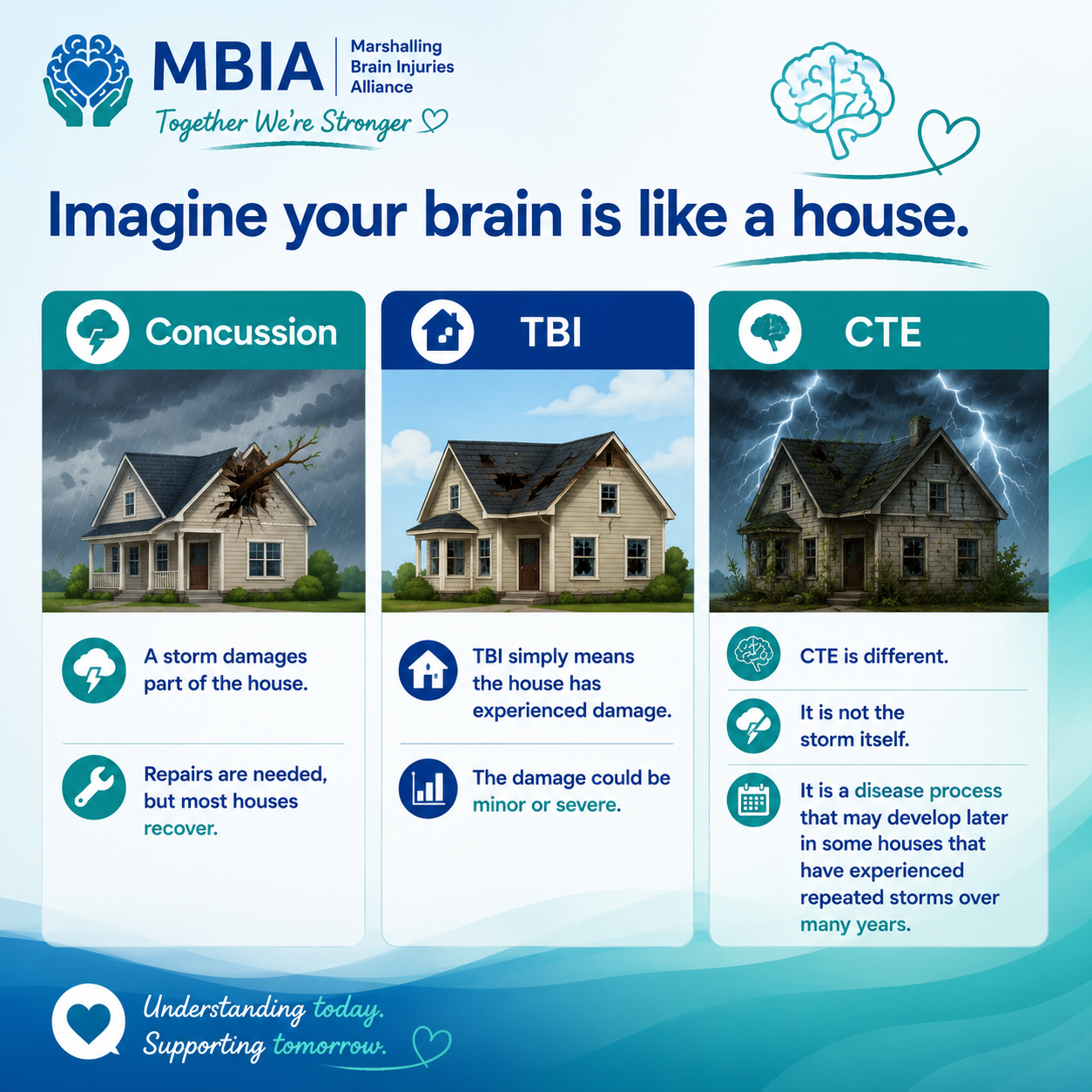
TBI is an umbrella term that covers many different types of brain injuries.
These injuries can range from mild to severe.
Types of TBI
Mild TBI
Often referred to as a concussion.
Moderate TBI
May involve:
- Longer loss of consciousness
- More significant symptoms
- Longer recovery periods
Severe TBI
May involve:
- Prolonged unconsciousness
- Significant structural brain damage
- Long-term disability
What Is a Concussion?
A concussion is a type of mild traumatic brain injury (mTBI).
It occurs when a force causes the brain to move rapidly inside the skull.
Common causes include:
- Sporting impacts
- Falls
- Car accidents
- Assaults
- Blast exposure
Importantly:
You do not need to lose consciousness to have a concussion.
In fact, most people do not lose consciousness.
What Is Chronic Traumatic Encephalopathy (CTE)?
CTE stands for:
Chronic Traumatic Encephalopathy
Unlike concussion or TBI, CTE is not an injury.
CTE is a progressive neurodegenerative disease associated with repeated head impacts.
Researchers believe CTE develops over many years following repeated exposure to:
- Concussions
- Sub-concussive impacts
- Repeated head trauma
What Happens During a Concussion?
A concussion temporarily affects how the brain functions.
It can disrupt:
- Memory
- Concentration
- Balance
- Vision
- Sleep
- Emotional regulation
Many concussion-related changes occur at a microscopic level and often cannot be seen on routine scans.
Common Concussion Symptoms
- Headaches
- Dizziness
- Brain fog
- Memory problems
- Fatigue
- Sleep difficulties
- Sensitivity to light
- Sensitivity to noise
- Irritability
- Mood changes
Most people recover within days or weeks.
However, some develop:
Post-Concussion Syndrome (PCS)
Where symptoms persist for longer than expected.
What Are Sub-Concussive Impacts?
Sub-concussive impacts are blows to the head that do not cause obvious concussion symptoms.
Examples may occur in:
- Rugby
- Boxing
- Football (soccer heading)
- American football
- Military training
Although they may not cause immediate symptoms, researchers believe repeated exposure may contribute to long-term brain changes in some individuals.
What Happens in CTE?
CTE is associated with the abnormal accumulation of a protein called:
Tau
These abnormal tau deposits gradually build up in specific areas of the brain.
Over time, this may affect:
- Thinking
- Memory
- Behaviour
- Mood
- Movement
Common Symptoms Associated With Probable CTE
Symptoms vary from person to person but may include:
- Memory difficulties
- Cognitive decline
- Impulsivity
- Depression
- Anxiety
- Irritability
- Aggression
- Emotional instability
- Sleep problems
- Difficulties with judgement and decision-making
Symptoms often develop years or decades after exposure to repeated head trauma.
Can You Diagnose CTE During Life?
Currently:
CTE can only be definitively diagnosed after death.
Diagnosis requires examination of brain tissue.
However, clinicians may diagnose:
Traumatic Encephalopathy Syndrome (TES)
or
Probable CTE
based on:
- Exposure history
- Symptoms
- Clinical assessment
Research into biomarkers and imaging techniques continues.
Does Delayed Symptoms Mean Progressive Damage?
Not necessarily.
This is an important distinction.
Many delayed symptoms are thought to reflect:
- Reduced ability to compensate
- Increased life demands
- Ageing
- Fatigue
- Stress
rather than ongoing damage.
However, some neurological conditions linked to repeated head trauma may involve progressive changes.
This is why assessment by healthcare professionals is important.
Important: Not Everyone With Concussions Develops CTE
This is one of the most important things to understand.
Most people who sustain a concussion do not develop CTE.
Similarly:
- Not everyone with repeated head impacts develops CTE.
- Not everyone with CTE experiences the same symptoms.
- Researchers are still studying why some people appear more vulnerable than others.
Factors may include:
- Genetics
- Number of impacts
- Duration of exposure
- Age at exposure
- Overall health
- Other risk factors
Why Understanding the Difference Matters
Confusion around these terms can create unnecessary fear.
Some people hear "concussion" and immediately worry they will develop dementia or CTE.
Others assume a concussion is "just a bump on the head."
Neither view is entirely accurate.
The reality lies somewhere in between.
Concussions should be taken seriously.
Most people recover well.
Repeated head trauma may increase long-term risks.
But having a concussion does not mean someone is destined to develop CTE.
Message of Hope
Learning about brain injury can sometimes feel overwhelming.
The information can be frightening, especially when terms like concussion, TBI, dementia, and CTE are used together.
Understanding the differences helps put the risks into perspective.
Most people who sustain a concussion recover.
Many people with brain injuries go on to live full and meaningful lives.
Research into brain injury, prevention, diagnosis, and treatment is advancing rapidly.
Knowledge is one of the most powerful tools we have.
Key Takeaways
- A concussion is a type of mild traumatic brain injury (TBI).
- TBI is an umbrella term that includes mild, moderate, and severe brain injuries.
- CTE is a progressive neurodegenerative disease associated with repeated head impacts.
- Most people recover from a concussion.
- Not everyone with repeated head trauma develops CTE.
- CTE is currently only definitively diagnosed after death.
- Understanding the differences can help reduce confusion and misinformation.
Continue Exploring
Together We're Stronger