Common Communication Difficulties
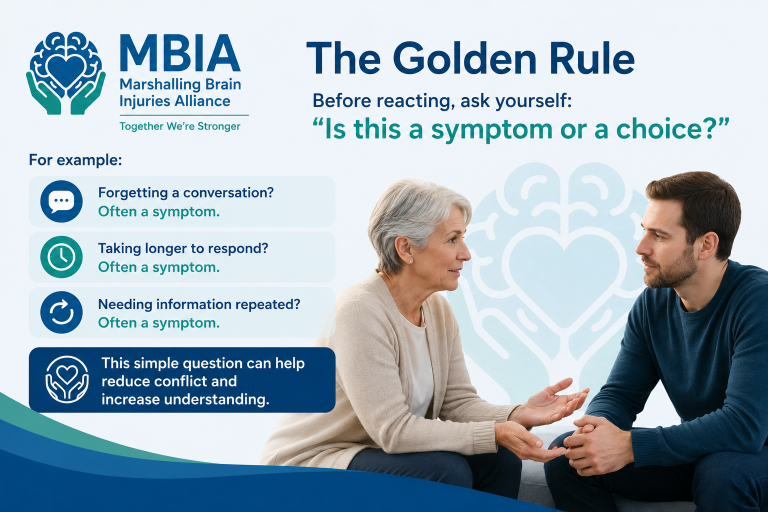
Slower Processing Speed
One of the most common changes.
Your loved one may:
- Need more time to understand information
- Pause before responding
- Struggle to keep up with fast conversations
This does not mean they are ignoring you.
Their brain simply needs more time.
Memory Difficulties
They may:
- Forget conversations
- Repeat questions
- Forget instructions
- Forget plans
This can be frustrating for everyone involved.
However, it is usually a symptom rather than a choice.
Word-Finding Difficulties
Many people know exactly what they want to say but struggle to find the right word.
They may:
- Pause frequently
- Use the wrong word
- Lose their train of thought
This can be embarrassing and frustrating.
Difficulty Following Conversations
Particularly when:
- Several people are talking
- There is background noise
- The topic changes quickly
Family gatherings and busy environments can be especially difficult.
Emotional Reactions
Brain injury can affect emotional regulation.
As a result, conversations may become:
- More emotional
- More intense
- More frustrating
especially when fatigue or stress is present.
Brain Injury Can Affect Communication in Many Ways
Communication is not just about speaking.
It also involves:
- Listening
- Understanding
- Remembering
- Processing information
- Managing emotions
- Reading body language
- Responding appropriately
Brain injury can affect any or all of these skills.
Why Communication Often Changes
Following a brain injury, the brain may need more time and energy to process information.
Symptoms such as:
- Memory problems
- Brain fog
- Neuro fatigue
- Executive dysfunction
- Sensory overload
can all affect communication.
As a result, conversations that once felt effortless may now feel exhausting.
Why Arguments Often Increase
Many families report more arguments after a brain injury.
Often this happens because:
The injured person feels:
- Misunderstood
- Criticised
- Overwhelmed
The family member feels:
- Ignored
- Frustrated
- Unheard
Neither person is necessarily wrong.
Both are often struggling with the effects of the injury.
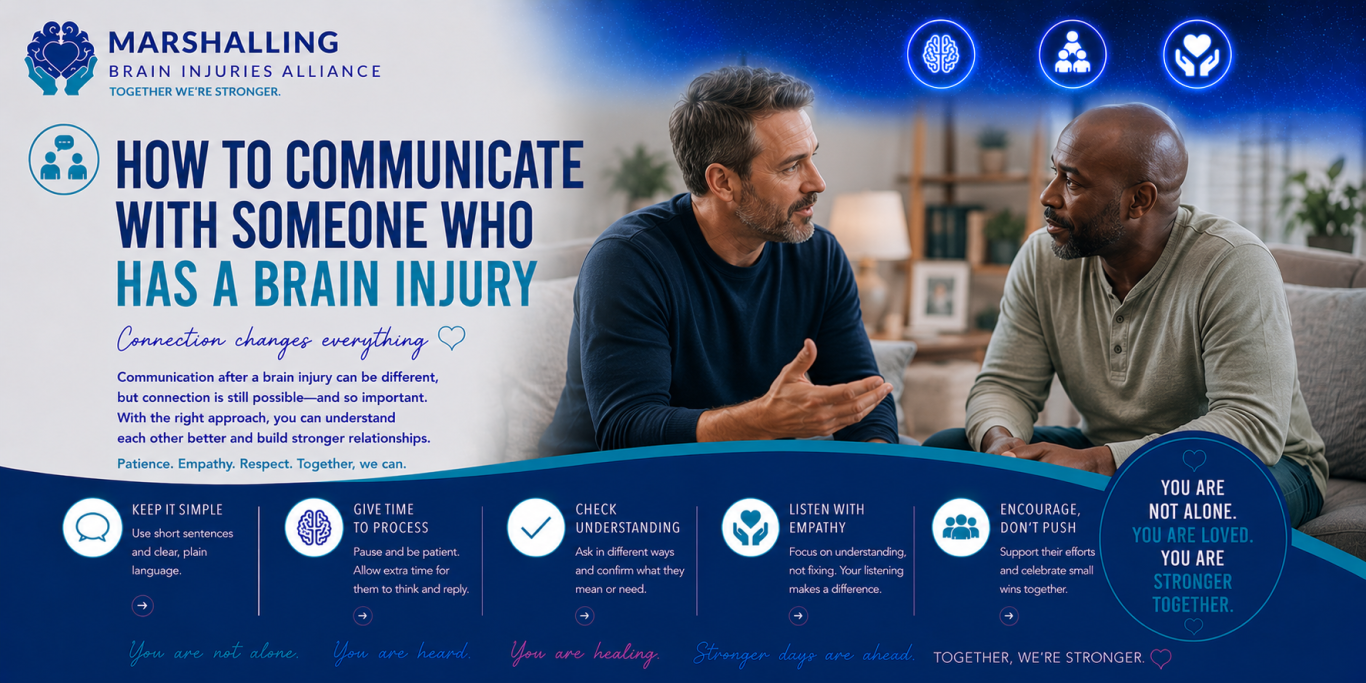
Get Their Attention First
Before speaking:
✅ Say their name
✅ Make eye contact
✅ Ensure they are focused on the conversation
This gives the brain the best chance of processing information.
Reduce Distractions
Important conversations are easier when:
- The television is off
- Phones are put away
- Background noise is reduced
Less information competing for attention means more energy available for communication.
Speak Clearly and Simply
This does not mean speaking to someone like a child.
It means:
- Being direct
- Being clear
- Avoiding unnecessary complexity
Simple communication is often more effective.
Give One Piece of Information at a Time
Instead of:
❌ Giving five instructions at once
Try:
✅ One step at a time
This reduces cognitive overload.
Allow Extra Time
Many people feel pressured to answer quickly.
Try allowing pauses.
Silence does not mean they have nothing to say.
Often it means their brain is processing.
Communication Tips That Help
Check Understanding
Instead of asking:
❌ "Do you understand?"
Try:
✅ "Can we go over that together?"
This helps identify misunderstandings without creating pressure.
Write Things Down
Many people benefit from:
- Notes
- Calendars
- Whiteboards
- Shared planners
- Reminder apps
These tools support memory and reduce misunderstandings.
Choose the Right Time
Trying to have an important conversation when someone is:
- Exhausted
- Overwhelmed
- In pain
- Sensory overloaded
rarely ends well.
Timing matters.
Things That Often Make Communication Worse
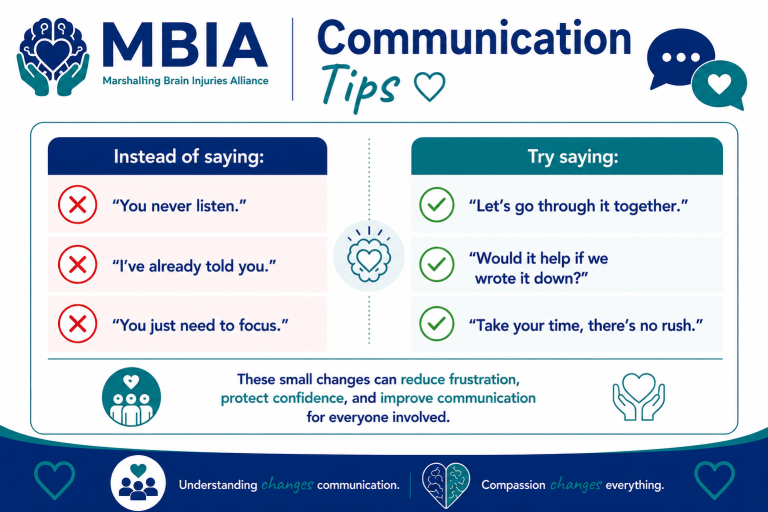
"I've Told You Already"
This is one of the most hurtful phrases many people with brain injuries hear.
Instead of:
❌ "I've already told you."
Try:
✅ "No problem, let's go through it again."
Rushing Them
Finishing sentences or demanding immediate answers can increase stress and frustration.
Talking Over Them
People with brain injuries often report feeling invisible when others constantly speak for them.
Allow them time to express themselves.
Giving Too Much Information
Large amounts of information can quickly become overwhelming.
Less is often more.
Correcting Every Mistake
Constant correction can damage confidence.
Focus on what is important rather than correcting every detail.
When Emotions Are Running High
If a conversation becomes heated:
- Pause
- Take a break
- Return later
Sometimes the most productive thing you can do is stop and come back when everyone is calmer.
Communication During Fatigue
Many communication difficulties worsen when the brain is tired.
You may notice:
- More forgetfulness
- Slower thinking
- Increased irritability
- Difficulty finding words
Recognising fatigue can help prevent unnecessary conflict.
Looking After the Relationship
Good communication is not just about exchanging information.
It is about maintaining connection.
Remember to make time for:
- Shared laughter
- Positive conversations
- Affection
- Quality time
Not every interaction should be about symptoms, appointments, or problems.
Communication Is a Team Effort
Communication after brain injury often requires adaptation from everyone.
This is not about placing responsibility on one person.
It is about working together.
Families often see the greatest improvements when both people learn new ways of communicating.
A Message for People Living With Brain Injury
Communication difficulties do not define you.
You still deserve to be heard, respected, and included in conversations.
If you are struggling, let people know what helps.
Most people want to support you—they simply may not know how.
A Message for Families
Your frustration is understandable.
Communication difficulties can be exhausting.
But many behaviours that appear rude, dismissive, or uncaring are often symptoms of an injured brain struggling to process information.
Approaching conversations with patience and curiosity rather than assumptions can make a significant difference.
Key Takeaways
- Brain injury can affect memory, processing speed, concentration, and communication.
- Many communication difficulties are symptoms rather than intentional behaviours.
- Clear, simple communication often works best.
- Reducing distractions and allowing extra processing time can help.
- Fatigue frequently worsens communication difficulties.
- Patience and understanding can reduce conflict.
- Communication is a team effort.
- Connection matters more than perfection.
Continue Exploring
Together We're Stronger