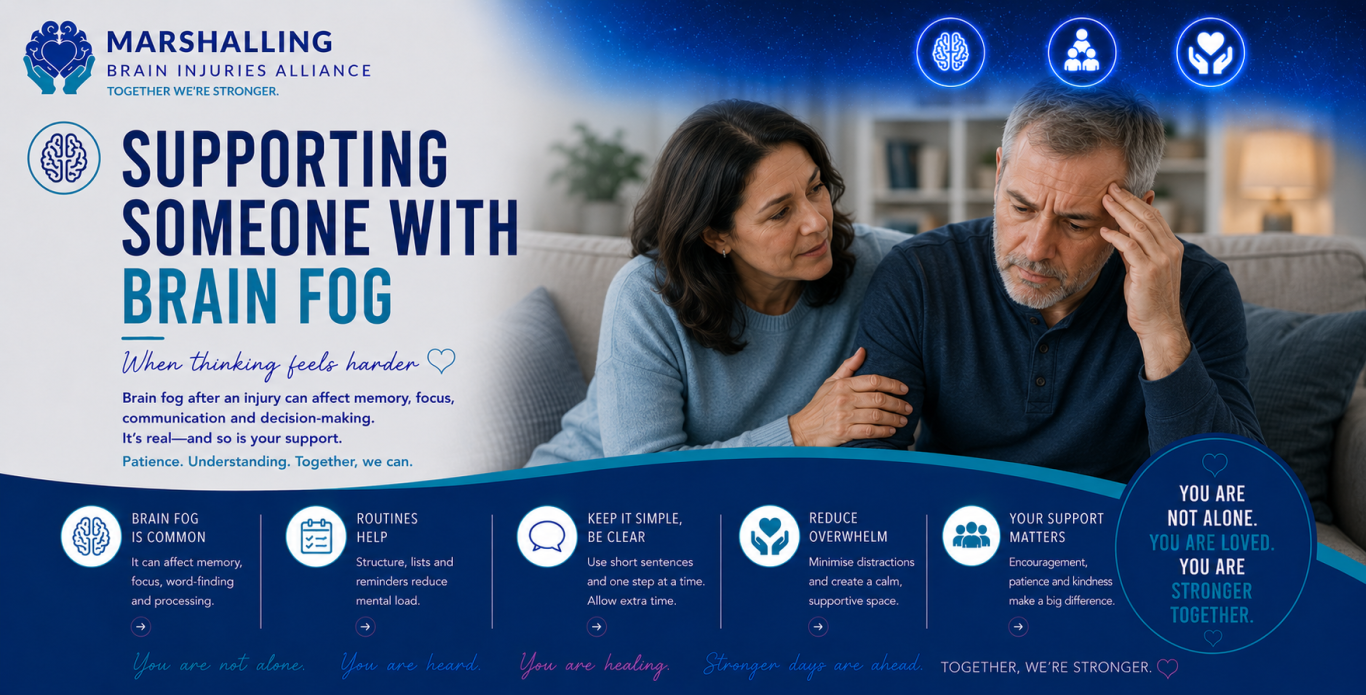
What Is Brain Fog?
Brain fog is not a medical diagnosis.
It is a term used to describe a collection of cognitive symptoms that affect:
- Thinking
- Concentration
- Memory
- Mental clarity
- Processing speed
- Communication
People often describe it as:
"Thinking through fog."
"Having cotton wool in my brain."
"Knowing the information is there but not being able to find it."
Brain fog is extremely common after:
- Concussion
- Post-Concussion Syndrome
- Traumatic Brain Injury (TBI)
- Acquired Brain Injury (ABI)
- Stroke
- Neurological conditions
- Probable CTE
What Causes Brain Fog?
Following a brain injury, the brain often has to work much harder to perform tasks that were once automatic.
This increased effort can affect:
- Attention
- Memory
- Concentration
- Processing speed
- Decision-making
Brain fog is often made worse by:
- Neuro fatigue
- Poor sleep
- Stress
- Pain
- Sensory overload
- Hormonal changes
- Mental health difficulties
What Brain Fog Can Look Like to Family Members
Many symptoms are invisible.
You may notice your loved one:
Forgetting Conversations
You discuss something and later they seem to have no recollection of it.
Losing Their Train of Thought
They stop mid-sentence because they can no longer remember what they were saying.
Taking Longer to Respond
They may need extra time to process information.
Struggling to Follow Conversations
Particularly when several people are talking.
Repeating Questions
Sometimes because information has not been retained.
Appearing Distracted
Even when they are trying very hard to pay attention.
Becoming Easily Overwhelmed
Especially when there is a lot of information to process.
Why It Can Feel Personal
Brain fog often affects the very things relationships depend on.
For example:
- Remembering conversations
- Following plans
- Remembering important dates
- Completing tasks
It can sometimes feel like your loved one:
- Isn't listening
- Doesn't care
- Isn't trying
In reality, brain fog is usually a symptom of how the brain is functioning rather than a reflection of how they feel about you.
What Brain Fog Feels Like
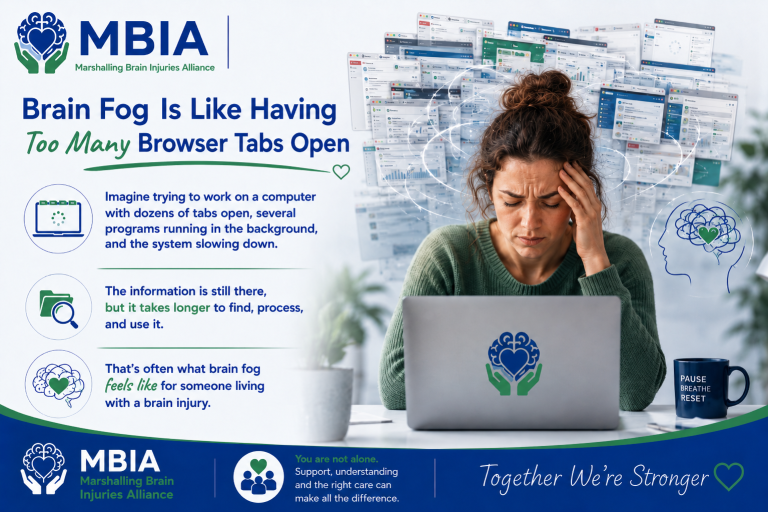
Many people living with brain fog describe:
"I feel stupid."
"I know the answer but can't access it."
"My brain feels slow."
"I'm trying harder than people realise."
"I get exhausted from thinking."
Many also experience embarrassment, frustration, and reduced confidence.
How Families Can Help
Be Patient
Giving someone a few extra seconds to process information can make a huge difference.
Avoid rushing to fill silences.
Reduce Distractions
If discussing something important:
- Turn off the television
- Reduce background noise
- Minimise interruptions
This makes it easier for the brain to focus.
Give Information in Smaller Chunks
Instead of:
❌ Giving several instructions at once
Try:
✅ One step at a time
This reduces cognitive overload.
Write Things Down
Many people benefit from:
- Notes
- Calendars
- Whiteboards
- Shared planners
- Reminder apps
These tools support memory and organisation.
Avoid Saying "I Already Told You"
This is one of the most common frustrations for people with brain fog.
Instead of:
❌ "I've told you three times already."
Try:
✅ "No problem, let's go through it again."
A small change in language can significantly reduce shame and frustration.
Check Understanding
Rather than assuming information has been understood, gently confirm it.
For example:
"Would it help if we wrote that down?"
Respect Mental Fatigue
If your loved one appears overwhelmed, it may be time for a break.
Mental fatigue often worsens brain fog.
Celebrate Successes
People with brain fog often focus on what they can no longer do.
Acknowledging progress can help rebuild confidence.
Why They May Need More Time
One of the biggest changes after brain injury is often slower processing speed.
This means the brain may take longer to:
- Understand information
- Respond to questions
- Make decisions
- Follow conversations
The information still gets there.
It simply takes longer.
Why Symptoms Fluctuate
One of the most confusing aspects of brain fog is that it is often inconsistent.
Some days your loved one may appear almost back to normal.
Other days they may struggle significantly.
This does not mean they are exaggerating.
Brain fog is influenced by:
- Sleep
- Fatigue
- Stress
- Pain
- Overstimulation
- Activity levels
Why Too Much Information Makes Things Worse
Imagine trying to have:
- The television on
- Two conversations happening
- A phone ringing
- A child asking questions
all at the same time.
For an injured brain, processing all of this can become exhausting.
Brain fog often worsens when information arrives too quickly or from multiple sources.
The Link Between Brain Fog and Fatigue
Brain fog and neuro fatigue often go hand in hand.
As the brain becomes tired:
- Thinking slows
- Memory worsens
- Concentration decreases
- Mistakes increase
This is why your loved one may seem much sharper on some days than others.
Key Takeaways
- Brain fog is a common symptom after brain injury.
- It can affect memory, concentration, communication, and processing speed.
- Brain fog is often invisible but very real.
- Symptoms frequently fluctuate depending on fatigue, sleep, stress, and other factors.
- Slower thinking does not mean reduced intelligence.
- Patience, reduced distractions, written reminders, and clear communication can help.
- Understanding brain fog can reduce frustration and strengthen relationships.
- Many people develop effective ways to manage symptoms over time.
Continue Exploring
Together We're Stronger