
What Is Executive Function?
Executive function is the brain's management system.
It helps us:
- Plan
- Organise
- Prioritise
- Make decisions
- Manage time
- Start tasks
- Complete tasks
- Adapt to change
- Solve problems
Think of executive function as the brain's project manager.
It coordinates all the different steps needed to get things done.
Which Part of the Brain Controls Executive Function?
Executive function is largely controlled by the frontal lobes, particularly the prefrontal cortex.
These areas help us:
- Think ahead
- Organise information
- Regulate behaviour
- Stay focused
- Manage everyday responsibilities
Brain injuries commonly affect these areas and the networks connected to them.
The Desire Is Often Still There
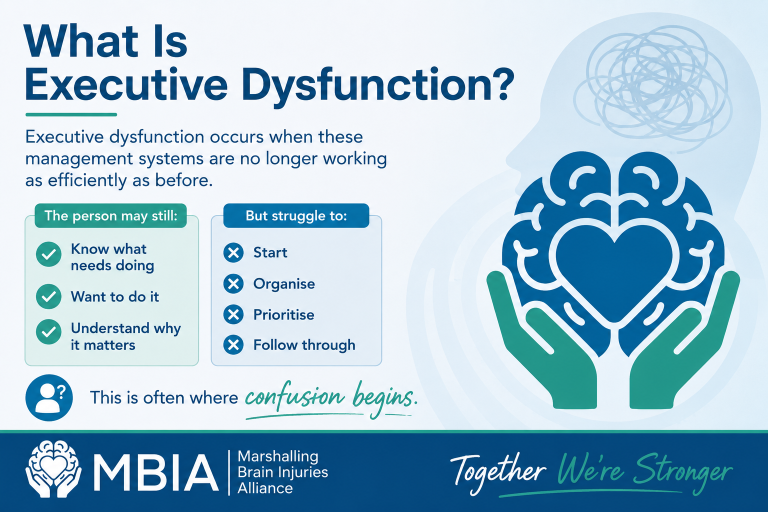
One of the biggest misunderstandings about executive dysfunction is assuming the person lacks motivation.
In reality, many people are deeply frustrated by their difficulties.
They often know exactly what needs to happen.
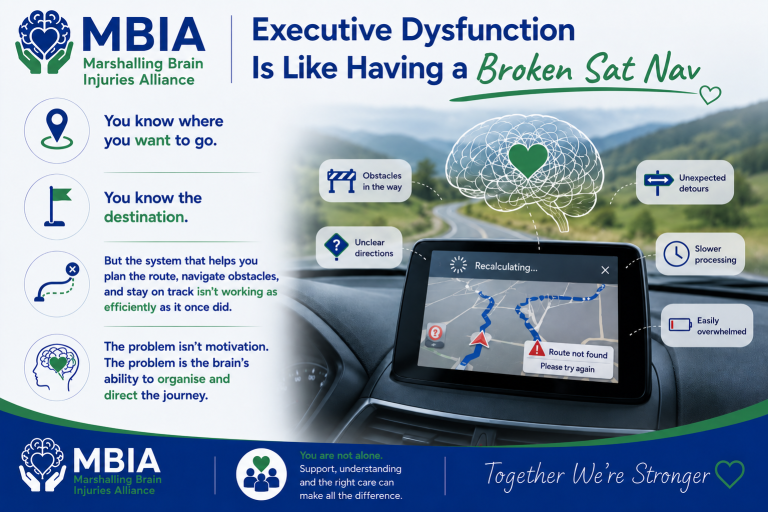
The problem is turning intention into action.
Why It Can Look Like Laziness
Executive dysfunction is invisible.
From the outside it may appear as:
- Laziness
- Procrastination
- Lack of effort
- Lack of motivation
In reality, many people are fighting an internal battle every day.
They are often just as frustrated as their family members.
Common Signs Families Notice
Difficulty Starting Tasks
Perhaps the most common symptom.
Examples include:
- Paying bills
- Making phone calls
- Filling in forms
- Household chores
- Arranging appointments
The task may remain undone despite repeated reminders.
This is called an initiation difficulty.
Difficulty Finishing Tasks
Some people start tasks but never complete them.
Examples:
- Half-finished DIY projects
- Unfinished paperwork
- Partially completed chores
This is not usually because they have lost interest.
The brain may struggle to stay organised and focused long enough to complete the task.
Poor Organisation
Families may notice:
- Clutter
- Missed appointments
- Lost paperwork
- Forgotten deadlines
People who were once highly organised may appear chaotic.
Time Management Difficulties
Many people experience:
- Running late
- Underestimating how long things take
- Missing appointments
- Losing track of time
This is sometimes called time blindness.
Difficulty Making Decisions
Even simple decisions can become exhausting.
Examples:
- What to eat
- What to wear
- Which task to start first
Too many choices can lead to complete overwhelm.
Becoming Easily Overwhelmed
Tasks that involve multiple steps can feel impossible.
For example:
"Sort out the finances"
may actually involve:
- Finding paperwork
- Understanding bills
- Making calls
- Completing forms
- Following instructions
The brain may struggle to organise these steps into a manageable plan.
Why Reminding Them Doesn't Always Work
This is one of the biggest sources of frustration for families.
You may think:
"I've reminded them ten times."
The issue is that executive dysfunction is often not a memory problem.
The person may remember perfectly well.
The difficulty lies in:
- Initiating action
- Organising action
- Following through
More reminders do not necessarily solve those challenges.
The Internal Experience
People living with executive dysfunction often describe thoughts such as:
"I know I need to do it."
"I want to do it."
"Why can't I just get started?"
"What's wrong with me?"
Many experience guilt and shame because they know tasks are not getting done.
Executive Dysfunction and Fatigue
Executive functioning requires energy.
When fatigue increases:
- Planning becomes harder
- Organisation becomes harder
- Decision-making becomes harder
This is why many people seem to function better earlier in the day than later.
Executive Dysfunction and Relationships
Without understanding what is happening, executive dysfunction can lead to:
- Arguments
- Resentment
- Frustration
- Misunderstandings
Family members may feel:
- Ignored
- Unappreciated
- Overburdened
The injured person may feel:
- Criticised
- Ashamed
- Misunderstood
Understanding the symptom can help both sides move away from blame.
What Families Should Avoid
How Families Can Help
Assuming They Don't Care
In most cases, they care deeply.
The difficulty is often execution, not motivation.
Interpreting Everything as Laziness
Executive dysfunction is a recognised neurological symptom.
Understanding this distinction is important.
Taking It Personally
Forgotten tasks or unfinished jobs are rarely about lack of love or respect.
They are often symptoms of the injury.
Doing Everything for Them
While support is important, maintaining independence where possible is equally important.
The goal is support, not complete takeover.
Break Tasks Into Smaller Steps
Instead of:
❌ "Can you sort out the paperwork?"
Try:
✅ "Can you find the insurance letter?"
Smaller tasks are often easier for the brain to process.
Reduce Overwhelm
Large tasks can feel impossible.
Breaking them into manageable pieces often improves success.
Use External Supports
Examples include:
- Calendars
- Whiteboards
- Reminder apps
- Shared family planners
- Checklists
These tools support the brain's management system.
Prioritise One Thing at a Time
Too many demands can increase paralysis and overwhelm.
Focus on:
"What is the most important thing today?"
Allow Extra Time
Tasks may genuinely take longer than they used to.
Rushing often increases stress and mistakes.
Encourage Without Nagging
Repeated criticism can increase shame and reduce confidence.
Try:
"How can I help make this easier?"
rather than:
"Why haven't you done it yet?"
Recognise Successes
Many people spend their lives hearing about what they are no longer doing.
Celebrating progress can help rebuild confidence.
Looking After Yourself
Executive dysfunction can place significant demands on family members.
You may find yourself becoming:
- Organiser
- Reminder system
- Appointment manager
- Problem solver
This can be exhausting.
Remember:
Your wellbeing matters too.
Seeking support is not selfish.
It is necessary.
Key Takeaways
- Executive function is the brain's management system.
- Executive dysfunction is a common symptom of brain injury.
- Difficulties may include planning, organisation, decision-making, and task initiation.
- It often looks like laziness but is actually a neurological symptom.
- Repeated reminders do not always solve the problem.
- Breaking tasks into smaller steps and reducing overwhelm can help.
- Understanding the symptom can reduce conflict and improve relationships.
- Support and healthy boundaries are equally important.
Continue Exploring
Together We're Stronger