Brain Injury Can Affect Behaviour
The brain plays a major role in controlling:
- Emotions
- Impulses
- Reactions
- Social behaviour
- Self-awareness
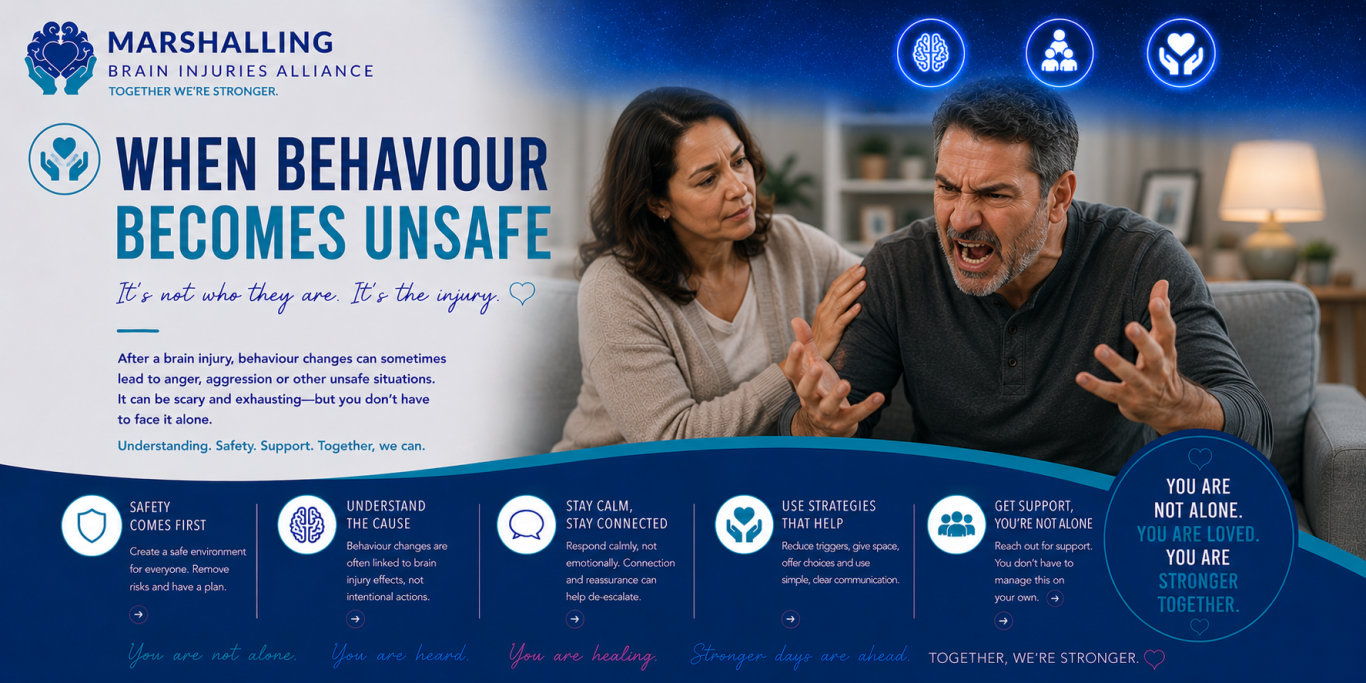
When these systems are affected by injury, some people may experience behavioural changes that are very different from how they behaved previously.
Examples may include:
- Increased anger
- Reduced patience
- Verbal outbursts
- Impulsivity
- Poor judgement
- Risk-taking behaviour
These changes can be frightening for both the individual and those around them.
Most Behavioural Changes Are Not Dangerous
It is important to remember that most people living with a brain injury are not violent or dangerous.
Many behavioural changes involve:
- Irritability
- Frustration
- Emotional overwhelm
- Withdrawal
- Reduced tolerance for stress
These symptoms can be challenging but do not necessarily place others at risk.
Understanding Aggression
Aggression is often one of the most misunderstood symptoms.
Aggressive behaviour can sometimes be triggered by:
- Fatigue
- Sensory overload
- Frustration
- Emotional regulation difficulties
- Pain
- Anxiety
- Cognitive overload
Understanding triggers can be helpful.
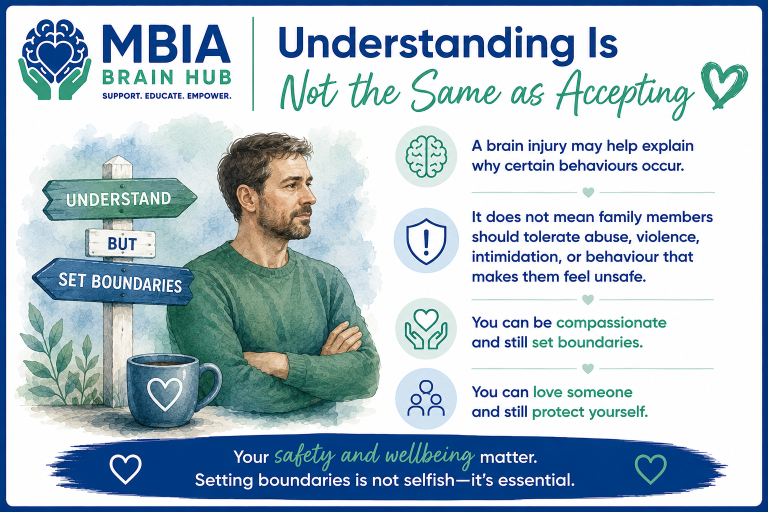
However, understanding a trigger does not make unsafe behaviour acceptable
When Behaviour Becomes Concerning
Behaviour becomes concerning when it starts affecting:
- Safety
- Wellbeing
- Relationships
- Daily life
Examples may include:
- Frequent verbal aggression
- Threatening behaviour
- Property damage
- Intimidation
- Dangerous impulsive decisions
- Physical aggression
- Self-harming behaviours
These situations require attention and support.
Warning Signs That Behaviour May Be Escalating
Examples include:
- Increasing anger
- More frequent outbursts
- Escalating threats
- Growing impulsivity
- Substance misuse
- Isolation
- Increased paranoia
- Increasing hopelessness
Recognising changes early may help prevent situations from worsening.
Verbal Aggression
Examples include:
- Shouting
- Swearing
- Threats
- Personal insults
- Intimidating language
Even when physical violence is not present, verbal aggression can have a significant emotional impact on family members.
Examples include:
- Hitting
- Pushing
- Throwing objects
- Blocking exits
- Physical intimidation
Physical aggression should always be taken seriously.
No one should feel unsafe in their own home.
Physical Aggression
Self-Harm and Self-Destructive Behaviour
Some people living with brain injury experience:
- Depression
- Hopelessness
- Suicidal thoughts
- Self-harming behaviours
These situations should always be taken seriously and require professional support.
Risk-Taking Behaviour
Brain injury can sometimes affect judgement and impulse control.
Examples may include:
- Dangerous driving
- Excessive spending
- Gambling
- Substance misuse
- Unsafe decision-making
These behaviours can place both the individual and their family at risk.
Property Damage
Some individuals may:
- Punch walls
- Break objects
- Throw items
Even if no one is physically harmed, these behaviours can be frightening and create an unsafe environment.
Creating a Safety Plan
If behaviour is becoming concerning, it can help to have a plan.
Consider:
- Safe places to go
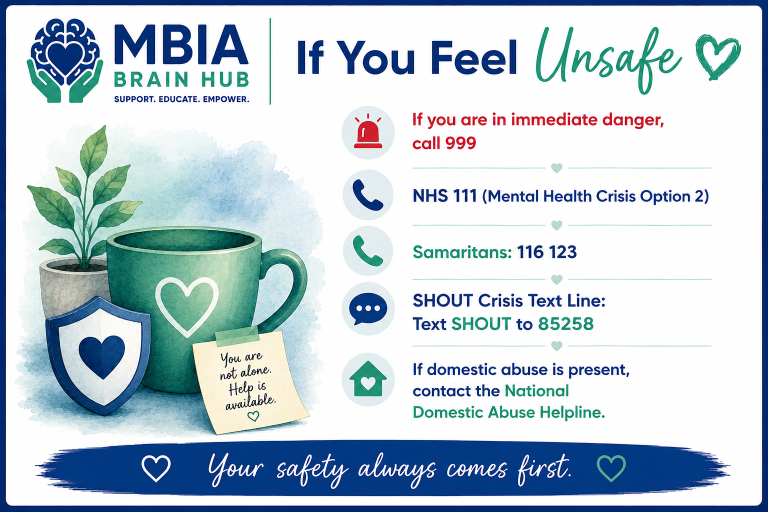
- Emergency contacts
- Important phone numbers
- Trusted family members or friends
- Access to support services
Knowing what you will do in advance can reduce panic during difficult situations.
Why Families Often Struggle to Respond
Many family members find themselves caught between two realities:
They understand the behaviour may be related to the injury.
But they also know:
The behaviour is hurting people.
This can create enormous guilt and confusion.
You may find yourself thinking:
"I know they can't help it."
"But this can't continue."
Both feelings can be true at the same time.
Protecting Children
Children should never be expected to manage unsafe behaviour.
If children are being exposed to:
- Aggression
- Threats
- Violence
- Intimidation
their safety and wellbeing must remain a priority.
Seeking support is not betraying your loved one.
It is protecting your family.
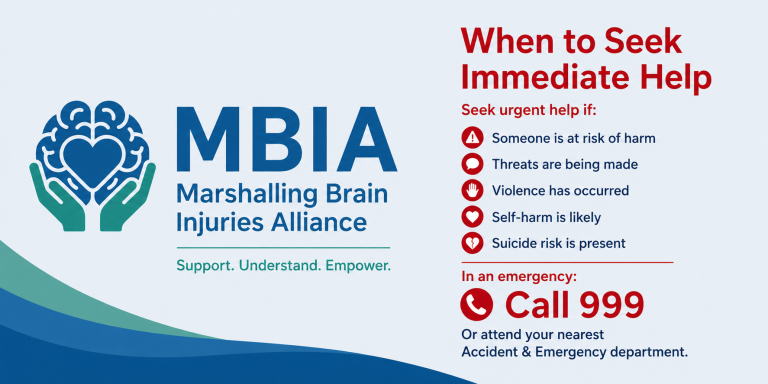
When to Seek Professional Help
Seek support if behaviour is:
- Escalating
- Affecting safety
- Affecting relationships
- Causing fear within the home
Support may come from:
- GPs
- Neurology teams
- Mental health services
- Brain injury specialists
- Social services where appropriate
Looking After Yourself
Living alongside unsafe or unpredictable behaviour can be exhausting.
Many family members experience:
- Anxiety
- Hypervigilance
- Burnout
- Fear
- Isolation
You deserve support too.
You do not have to manage everything alone.
A Message for Families
You can love someone deeply and still set boundaries.
You can understand their injury and still protect yourself.
You can support them and still seek help.
Your safety matters.
Your wellbeing matters.
And you do not have to choose between compassion and self-protection.
Both are important.
Key Takeaways
- Brain injury can affect emotions, behaviour, judgement, and impulse control.
- Most behavioural changes are not dangerous, but some can become unsafe.
- Understanding behaviour does not mean accepting abuse or violence.
- Verbal aggression, physical aggression, property damage, and risk-taking behaviour should be taken seriously.
- Children should always be protected from unsafe environments.
- Seeking help is a sign of strength, not betrayal.
- Compassion and boundaries can exist together.
- Everyone deserves to feel safe.
Continue Exploring
Together We're Stronger