Why Does Brain Injury Affect Anger?
The brain plays a major role in controlling emotions, behaviour,
and impulse regulation.
When certain areas of the brain are affected by injury, managing
emotions can become much more difficult.
This doesn't mean your loved one has stopped caring or
deliberately wants to hurt those around them.
It means the systems responsible for regulating emotions may
not be working as efficiently as before.
The Brain's "Brake System"
Many people describe it like this:
Before the injury, they might feel angry but pause, think, and
choose how to respond.
After the injury, that pause can become much shorter.
The emotion may arrive faster and feel more intense.
Their ability to stop, reflect, and regulate may be reduced.
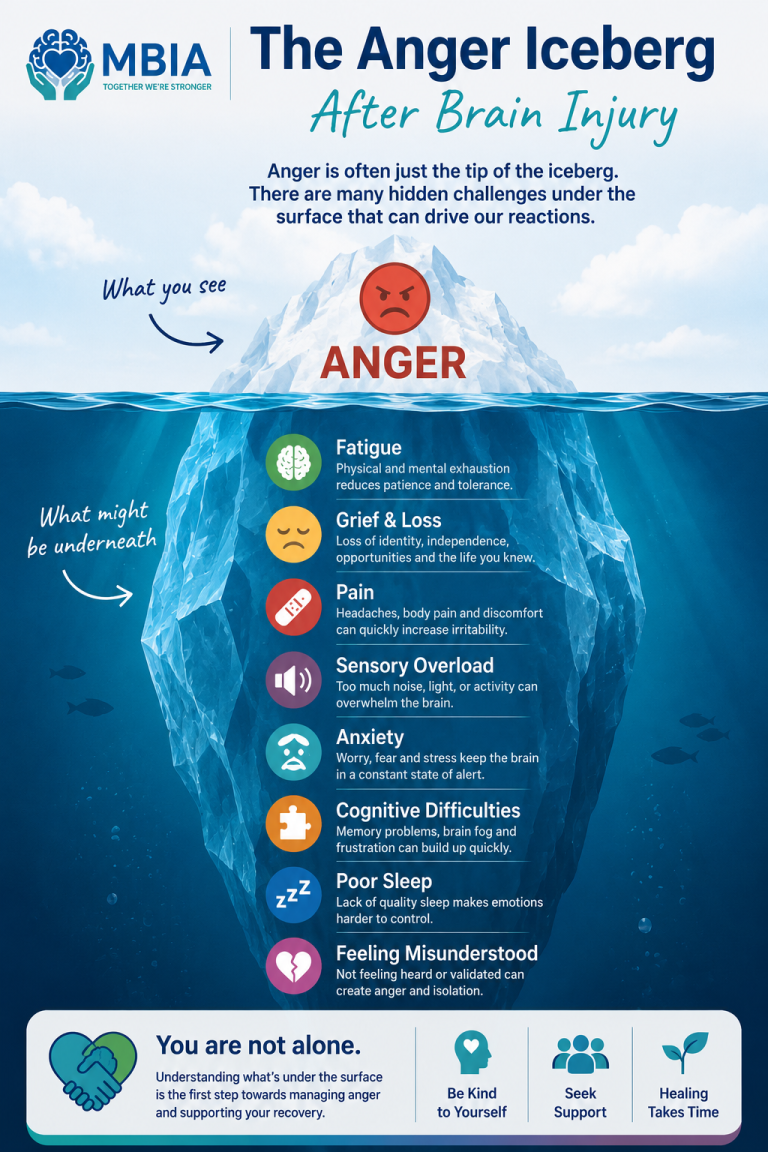
Frustration Builds Up
Imagine constantly struggling with:
- Memory problems
- Fatigue
- Headaches
- Sensory overload
- Loss of independence
- Difficulty communicating
Many people with brain injuries feel frustrated with their symptoms every day.
Sometimes anger is simply the emotion that sits on top of that frustration.
Fatigue Is One of the Biggest Triggers
One of the most common causes of irritability after brain injury
is fatigue.
When the brain is exhausted, it has fewer resources available for:
- Patience
- Emotional regulation
- Problem solving
- Coping with stress
Many families notice that their loved one becomes significantly more irritable later in the day or after busy activities.
Sensory Overload Can Look Like Anger
Busy environments can overwhelm an injured brain.
Common triggers include:
- Noise
- Crowds
- Bright lights
- Multiple conversations
- Busy family environments
When the brain becomes overloaded, irritability often increases.
What looks like anger may actually be overwhelm.
Emotional Distress Often Sits Beneath the Anger
Many people living with brain injury are also coping with:
- Grief
- Anxiety
- Depression
- Fear about the future
- Loss of identity
Sometimes anger is the most visible sign of deeper emotional pain.
What Can Help?
Learn the Triggers
Pay attention to patterns.
Does anger tend to appear when your loved one is:
- Tired?
- In pain?
- Overstimulated?
- Hungry?
- Stressed?
Recognising triggers can help prevent situations from escalating.
Don't Take Everything Personally
This can be difficult.
Sometimes the anger is directed at the nearest person rather than the actual cause.
That doesn't make hurtful behaviour acceptable, but understanding this distinction can sometimes help reduce conflict.
Give Space When Needed
Some people benefit from stepping away from a situation before it escalates.
A short break may help the brain recover from overload.
Reduce Sensory Overload
Simple changes can make a difference:
- Turning down the television
- Moving to a quieter room
- Reducing background noise
- Limiting busy environments
Choose Your Timing
Difficult conversations are usually best avoided when someone is:
- Fatigued
- Stressed
- Overwhelmed
- Already frustrated
Timing matters.
Encourage Healthy Habits
Sleep, exercise, pacing, stress management, and support can all contribute to better emotional regulation.
Celebrate Progress
Managing emotions after a brain injury can be incredibly difficult.
Recognising small improvements can help build confidence and motivation.
What Doesn't Help
Family members often respond with the best intentions, but certain approaches can unintentionally make situations worse.
Examples include:
❌ Arguing when emotions are already high
❌ Telling them to "calm down"
❌ Matching their anger
❌ Criticising or shaming them
❌ Continuing a discussion when they are clearly overwhelmed
Protecting Your Own Wellbeing
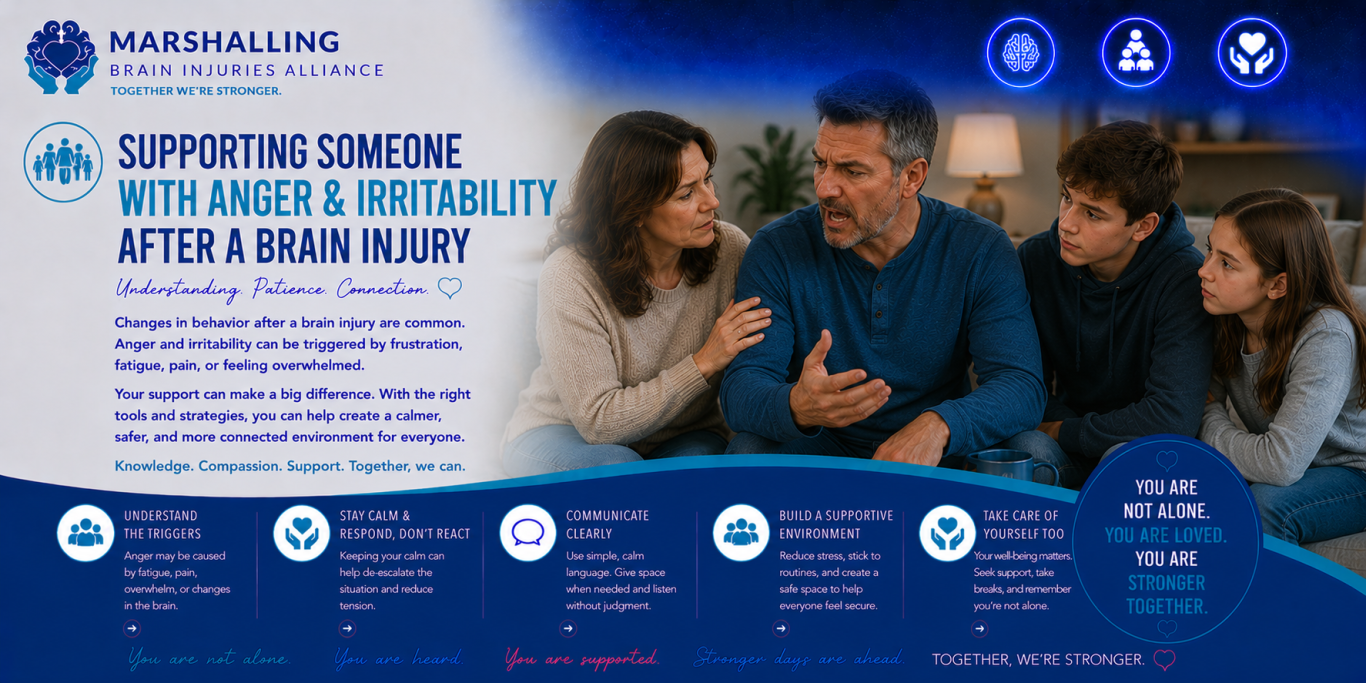
Supporting someone who struggles with anger can be exhausting.
Many carers describe:
- Walking on eggshells
- Constantly anticipating reactions
- Feeling emotionally drained
- Becoming anxious themselves
It is important to remember:
You matter too.
Your wellbeing is important.
Setting Healthy Boundaries
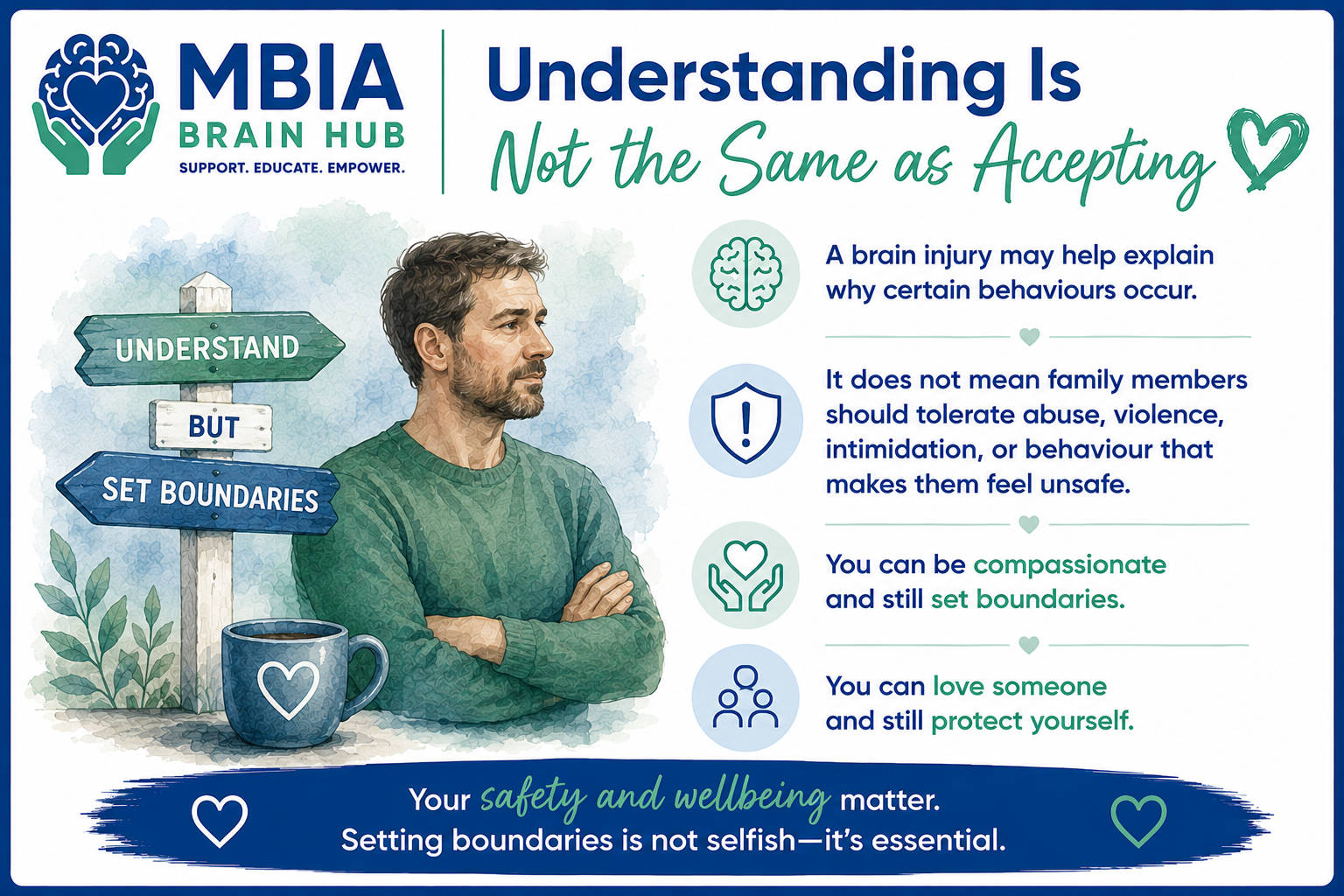
Understanding anger does not mean accepting harmful behaviour.
It is okay to say:
- "I want to continue this conversation when we're both calmer."
- "I'm going to step away for a few minutes."
- "I won't stay in a situation where I'm being shouted at."
Healthy boundaries protect both people.
Your Safety Matters
Most irritability and anger following brain injury does not lead to violence.
However, your safety must always come first.
If anger becomes:
- Threatening
- Intimidating
- Physically aggressive
- Emotionally abusive
- Controlling
it is important to seek support.
No medical condition or brain injury justifies abuse.
You can have compassion for someone's symptoms while also protecting yourself.
When to Seek Additional Help
A Message for Family Members
Additional support may be beneficial if anger is:
- Affecting relationships
- Escalating in frequency or intensity
- Causing distress for family members
- Leading to aggressive behaviour
- Affecting safety
Support is available for both the individual and their family.
Many carers tell us they feel guilty for becoming frustrated or exhausted.
These feelings are normal.
Supporting someone living with a brain injury can be challenging, especially when emotional regulation has been affected.
You do not need to be perfect.
You simply need to look after yourself while continuing to support your loved one in a way that is safe, sustainable, and compassionate.
Key Takeaways
- Anger and irritability are common symptoms after brain injury.
- They are often linked to changes in the brain, fatigue, frustration, sensory overload, and emotional distress.
- Understanding the cause can help reduce conflict and improve communication.
- Learning triggers and warning signs may help prevent escalation.
- Compassion and boundaries can exist together.
- Your wellbeing and safety are just as important as your loved one's.
- Abuse should never be tolerated, regardless of the cause.
Continue Exploring
Together We're Stronger