Why Do Emotional Changes Happen?
There is rarely one simple cause.
Emotional and personality changes are often the result of several factors working together.
Changes Within the Brain
The brain helps us manage emotions, think before we act, and control our responses.
Following an injury, some people may find it harder to:
- Control frustration
- Manage stress
- Regulate emotions
- Adapt to unexpected situations
This can result in stronger emotional reactions than before.
Living With Constant Symptoms
Imagine dealing every day with:
- Headaches
- Memory problems
- Fatigue
- Sleep difficulties
- Sensory overload
- Cognitive challenges
The emotional impact of these symptoms can be significant.
Many people become frustrated not because they want to, but because they are constantly battling challenges that others cannot see.
Fatigue
One of the biggest contributors to emotional changes is fatigue.
When the brain is exhausted, emotional control often becomes harder.
Many families notice that their loved one becomes:
- More irritable
- More emotional
- Less patient
- More withdrawn
when they are tired.
Grief and Loss
Many people living with brain injury experience grief.
They may be grieving:
- Their independence
- Their career
- Their confidence
- Their identity
- Their future plans
This grief often affects emotions and behaviour.
Families may also be grieving.
The loss may not be physical, but life may no longer look the way either of you expected.
Anxiety and Depression
Anxiety and depression are common after brain injury.
Sometimes emotional changes are driven by:
- Fear about the future
- Financial worries
- Loss of independence
- Social isolation
- Changes in self-esteem
These difficulties can affect relationships and family life.
What It Can Feel Like For Family Members
Many partners and carers describe feeling:
- Confused
- Hurt
- Frustrated
- Lonely
- Exhausted
- Guilty for feeling frustrated
These feelings are normal.
Brain injury affects everyone around the individual, not just the person who was injured.
Common Changes Family Members Notice
Every person is different, but common examples include:
Irritability
Becoming frustrated more easily.
Anger
Reacting more strongly than before.
Mood Swings
Emotions changing quickly and unexpectedly.
Withdrawal
Spending more time alone or avoiding social situations.
Increased Anxiety
Worrying more than they used to.
Reduced Confidence
Avoiding activities because they fear making mistakes.
Emotional Sensitivity
Becoming upset more easily.
Reduced Motivation
Struggling to start tasks or activities.
Emotional Outbursts
Tears, anger, or emotional reactions that seem disproportionate to the situation.
Can Brain Injury Change Someone's Personality?
Sometimes, yes.
A brain injury can affect the areas of the brain responsible for:
- Emotional regulation
- Impulse control
- Self-awareness
- Behaviour
- Decision making
- Social skills
As a result, the person may behave differently than they did before the injury.
However, it is important to remember:
The injury may change how emotions are expressed, but it does not erase the person underneath.
Many family members find it helpful to think of it as:
The same person, facing challenges with a brain that now works differently.
How You Can Help
You cannot remove the injury, but there are ways to support your loved one more effectively.
Understand That Symptoms Are Often Driving The Behaviour
This doesn't mean all behaviour should be excused.
However, understanding that symptoms such as fatigue, overload, anxiety, and frustration may be contributing can help you respond differently.
Learn Their Triggers
Many emotional reactions occur when someone is:
- Tired
- In pain
- Overwhelmed
- Stressed
- In a noisy environment
- Struggling cognitively
Recognising patterns can help prevent situations from escalating.
Don't Always Try To Fix It
Sometimes people simply need to feel heard.
Listening and acknowledging their experience can often be more helpful than trying to solve the problem immediately.
Give Them Time
Processing information and emotions may take longer than before.
Try to allow extra time for conversations and decision making.
Reduce Pressure Where Possible
Many people feel overwhelmed by:
- Too many choices
- Too much information
- Busy schedules
Simplifying things can reduce stress.
Encourage Support
Professional support, peer support groups, and trusted friends can all play a valuable role.
No one person should have to carry everything alone.
Remember The Person Behind The Symptoms
Try to separate the person from the injury.
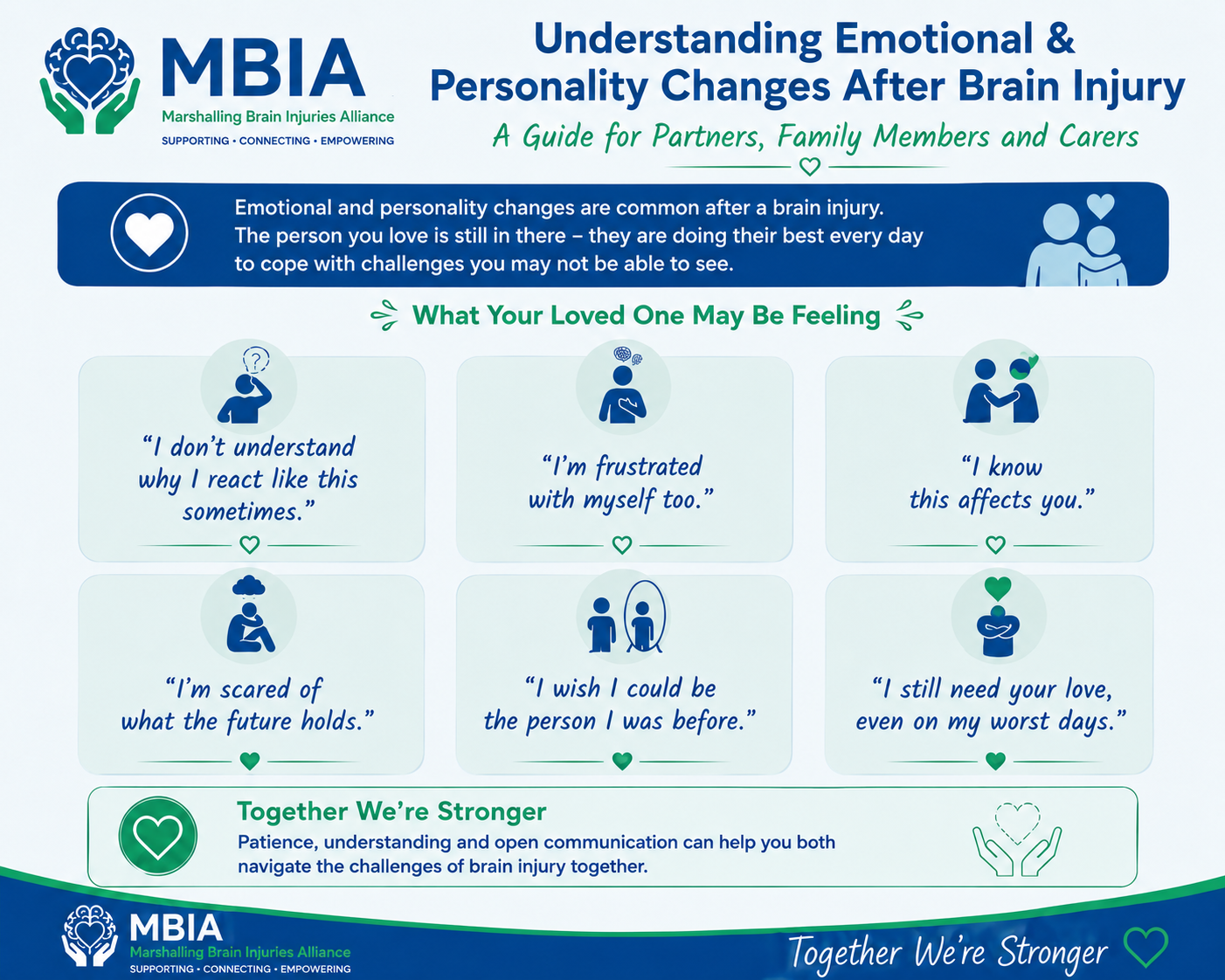
Your loved one may be struggling with changes they don't fully understand themselves.
Many people feel frightened, embarrassed, or ashamed of these emotional changes.
Healthy Boundaries Are Essential
Compassion and boundaries can exist together.
You can understand why a behaviour is happening while still saying:
- "I'm not willing to be shouted at."
- "Let's continue this conversation when we're calmer."
- "I need some time for myself."
Boundaries protect both people and help relationships remain healthy.
Many families worry that emotional and personality changes mean they have permanently lost the person they love.
While brain injury can bring significant challenges, many people continue to adapt, learn, and grow.
With understanding, support, patience, and healthy boundaries, relationships can remain strong and meaningful.
The journey may look different than expected, but many families discover new ways of connecting and supporting one another along the way.
Your Safety Comes First
Most emotional and personality changes following brain injury do not lead to violence.
However, if behaviour becomes:
- Threatening
- Intimidating
- Controlling
- Emotionally abusive
- Physically aggressive
it is important to seek support.
Brain injury may explain behaviour.
It does not excuse abuse.
You deserve to feel safe in your home and relationships.
Key Takeaways
- Emotional and personality changes are common after brain injury.
- They may be caused by changes within the brain, fatigue, grief, anxiety, pain, and ongoing symptoms.
- These changes can be difficult for both the individual and their family.
- Understanding the cause can improve communication and reduce conflict.
- Compassion and healthy boundaries are equally important.
- Your wellbeing matters too.
- Safety should always remain a priority.
- Many families adapt successfully and continue to build strong relationships.
Continue Exploring
Together We're Stronger