Why Do Cognitive Difficulties Happen After Brain Injury?
The brain controls every aspect of thinking and information processing.
After an injury, the brain may:
- Process information less efficiently
- Require more energy to complete tasks
- Struggle to filter distractions
- Find it harder to access information quickly
The result can be a wide range of cognitive symptoms.
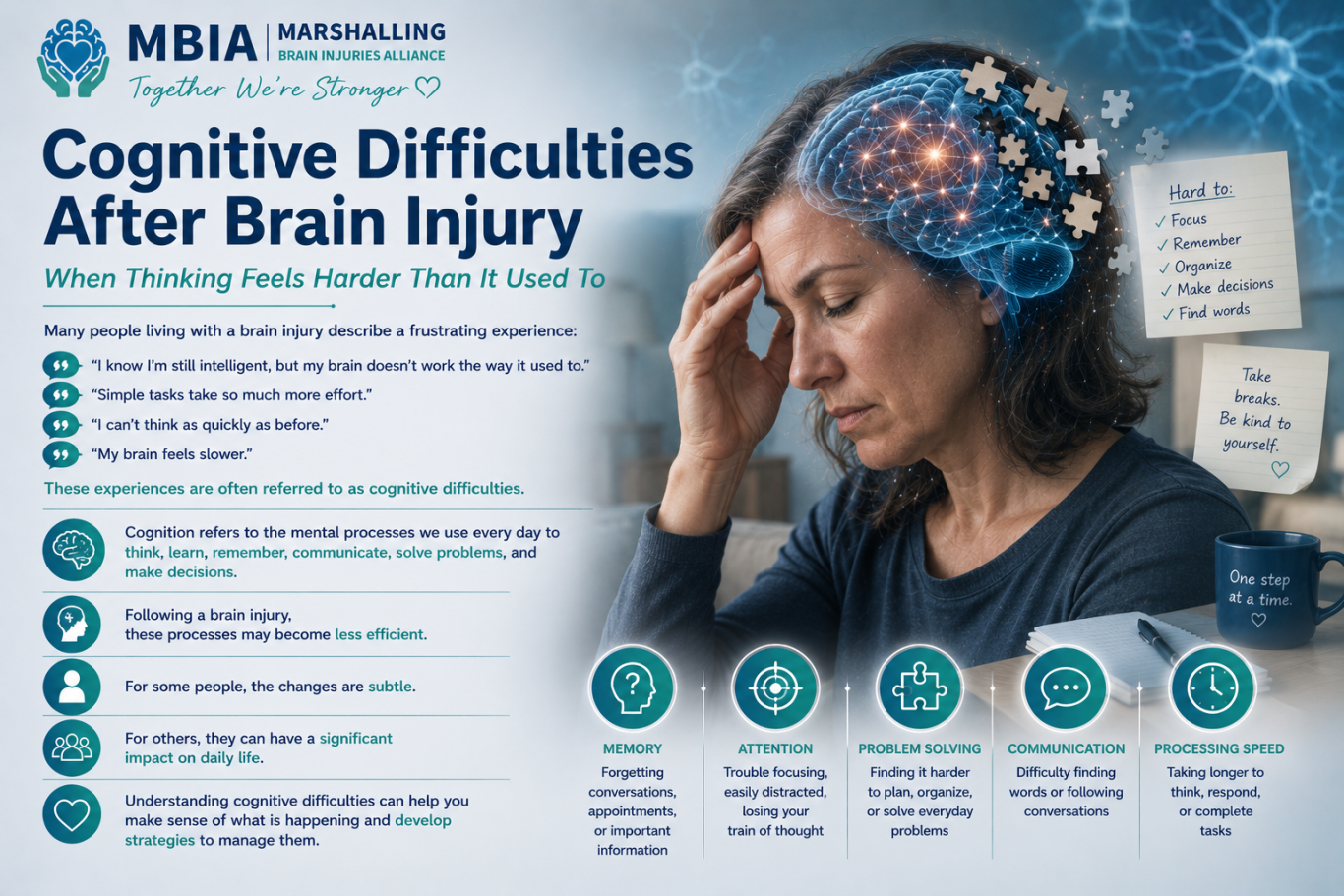
What Does "Cognitive" Mean?
Cognition refers to how the brain processes information.
It includes:
- Attention
- Concentration
- Memory
- Processing speed
- Communication
- Problem-solving
- Decision-making
- Planning and organisation
- Learning
- Reasoning
These skills help us navigate everyday life.
When cognition is affected, tasks that once felt automatic may require much more effort.
Problem-Solving Difficulties
Tasks that require reasoning or decision-making may feel more difficult.
Examples include:
- Managing finances
- Planning journeys
- Solving unexpected problems
- Making complex decisions
- Learning New Information
Some people find it harder to:
- Learn new skills
- Absorb information
- Remember instructions
Learning may still happen, but it often takes more repetition and more time.
Executive Function Difficulties
Executive functions are the brain's management skills.
These help us:
- Plan
- Organise
- Prioritise
- Start tasks
- Complete tasks
Executive dysfunction often overlaps with other cognitive difficulties.
Why Cognitive Difficulties Can Fluctuate
One of the most confusing things about cognitive symptoms is that they often vary from day to day.
You may feel relatively sharp one day and struggle significantly the next.
Common reasons include:
- Fatigue
- Poor sleep
- Stress
- Pain
- Illness
- Sensory overload
- Overdoing activities
This is normal after brain injury.
The Link Between Cognitive Difficulties and Fatigue
Cognitive symptoms and fatigue are closely connected.
The harder the brain has to work, the more energy it uses.
As fatigue increases, many people notice worsening:
- Memory
- Concentration
- Processing speed
- Decision-making
This is one reason why pacing is so important
Common Cognitive Difficulties
Everyone's experience is different.
Some people experience only a few symptoms.
Others experience many.
Attention Difficulties
Attention is the ability to focus on information.
After a brain injury you may find it harder to:
- Stay focused
- Follow conversations
- Read for long periods
- Watch television
- Complete tasks without distraction
You may find your mind wanders more easily than before.
Concentration Problems
Many people notice they can still concentrate, but not for as long.
Activities that once felt easy may become mentally exhausting.
Examples include:
- Working
- Studying
- Reading
- Driving
- Completing paperwork
Memory Difficulties
Memory problems are among the most common cognitive symptoms.
You may struggle with:
- Remembering conversations
- Learning new information
- Remembering names
- Remembering appointments
- Recalling words
Memory difficulties can be frustrating but are a recognised symptom of brain injury.
Slower Processing Speed
Processing speed refers to how quickly the brain takes in, understands, and responds to information.
Following a brain injury, many people feel mentally slower.
You may notice:
- Taking longer to answer questions
- Needing more time to think
- Difficulty keeping up with fast conversations
- Feeling overwhelmed by lots of information
This does not mean you are less intelligent.
It simply means your brain needs more time.
Word-Finding Difficulties
Many people know exactly what they want to say but cannot retrieve the word.
You may:
- Forget common words
- Use the wrong word
- Lose your train of thought mid-sentence
This can feel embarrassing but is extremely common.

In Relationships
Communication difficulties can sometimes lead to misunderstandings.
You may:
- Forget conversations
- Lose your train of thought
- Need information repeated
Emotionally
Many people experience:
- Frustration
- Reduced confidence
- Anxiety
- Self-doubt
because they feel their brain is not performing as it once did.
How Cognitive Difficulties Affect Daily Life
At Work
You may experience:
- Difficulty managing workloads
- Reduced productivity
- Trouble concentrating
- Challenges learning new tasks
At Home
Everyday activities may take longer.
Tasks such as:
- Paying bills
- Cooking
- Organising appointments
may require more effort than before.
Focus on One Task at a Time
Multitasking increases cognitive load.
Single-tasking is often more effective after brain injury.
Break Tasks Into Smaller Steps
Large tasks can feel overwhelming.
Breaking them down makes them more manageable.
Allow Extra Time
You may simply need longer than before.
That is okay.
Rushing often increases mistakes and frustration.
Exercise If Appropriate
Physical activity may support:
- Brain health
- Mood
- Sleep
- Cognitive function
Always work within your own abilities.
Be Patient With Yourself
Cognitive difficulties can be frustrating.
Try to remember:
- Your intelligence has not disappeared.
- Your brain is simply working harder than it used to.
Tips for Managing Cognitive Difficulties
While there is no quick fix, many people find these strategies helpful.
Pace Your Mental Activity
Your brain has limited energy reserves.
Balance mentally demanding activities with rest periods.
Prioritise Sleep
Good sleep supports:
- Memory
- Attention
- Learning
- Processing speed
Sleep problems often worsen cognitive symptoms.
Use Memory Aids
Examples include:
- Diaries
- Calendars
- Phone reminders
- Whiteboards
- Notes
- Voice recordings
These tools support the brain rather than replace it.
Reduce Distractions
Many people perform better in:
- Quiet environments
- Low-clutter spaces
- Areas with minimal interruptions
For many people, yes.
Improvement may occur through:
- Recovery
- Neuroplasticity
- Rehabilitation
- Symptom management
- Better sleep
- Reduced fatigue
Progress is often gradual rather than sudden.
Many people continue improving months and even years after injury.
What Family Members Should Know
Cognitive difficulties are often invisible.
Your loved one may look perfectly well while struggling to:
- Remember information
- Follow conversations
- Process instructions
- Stay focused
These difficulties are genuine symptoms of brain injury.
Patience and understanding can make a huge difference.
Can Cognitive Difficulties Improve?
Key Takeaways
- Cognitive difficulties are common after brain injury.
- They may affect attention, concentration, memory, processing speed, communication, learning, and problem-solving.
- Cognitive symptoms often fluctuate depending on fatigue, sleep, stress, and other factors.
- These difficulties are genuine neurological symptoms, not laziness or lack of effort.
- Pacing, sleep, memory aids, and reducing distractions can help.
- Many people experience improvements over time.
- Recovery is often gradual, but there is reason for hope.
Continue Exploring
Together We're Stronger