What Are You Grieving?
Many family members struggle because the person they love is still physically present.
This type of grief is sometimes called ambiguous loss.
The person is still here, but aspects of life, relationships, and expectations may have changed.
You may be grieving:
- The life you expected
- The relationship you once had
- Shared plans and dreams
- Financial security
- Independence
- Changes within your family
- The future you imagined
These losses are real.
Grieving Relationship Changes
Many partners describe feeling as though their relationship has changed significantly.
You may miss:
- Shared activities
- Spontaneity
- Deep conversations
- Emotional connection
- Physical intimacy
- Shared responsibilities
This does not mean you love your partner any less.
It means you are adjusting to a new reality that you never asked for.
Grieving Lost Independence
Brain injuries often change family roles.
You may have become:
- A carer
- An advocate
- A driver
- A medication manager
- A financial organiser
You may find yourself carrying responsibilities that once belonged to someone else.
That adjustment can be exhausting.
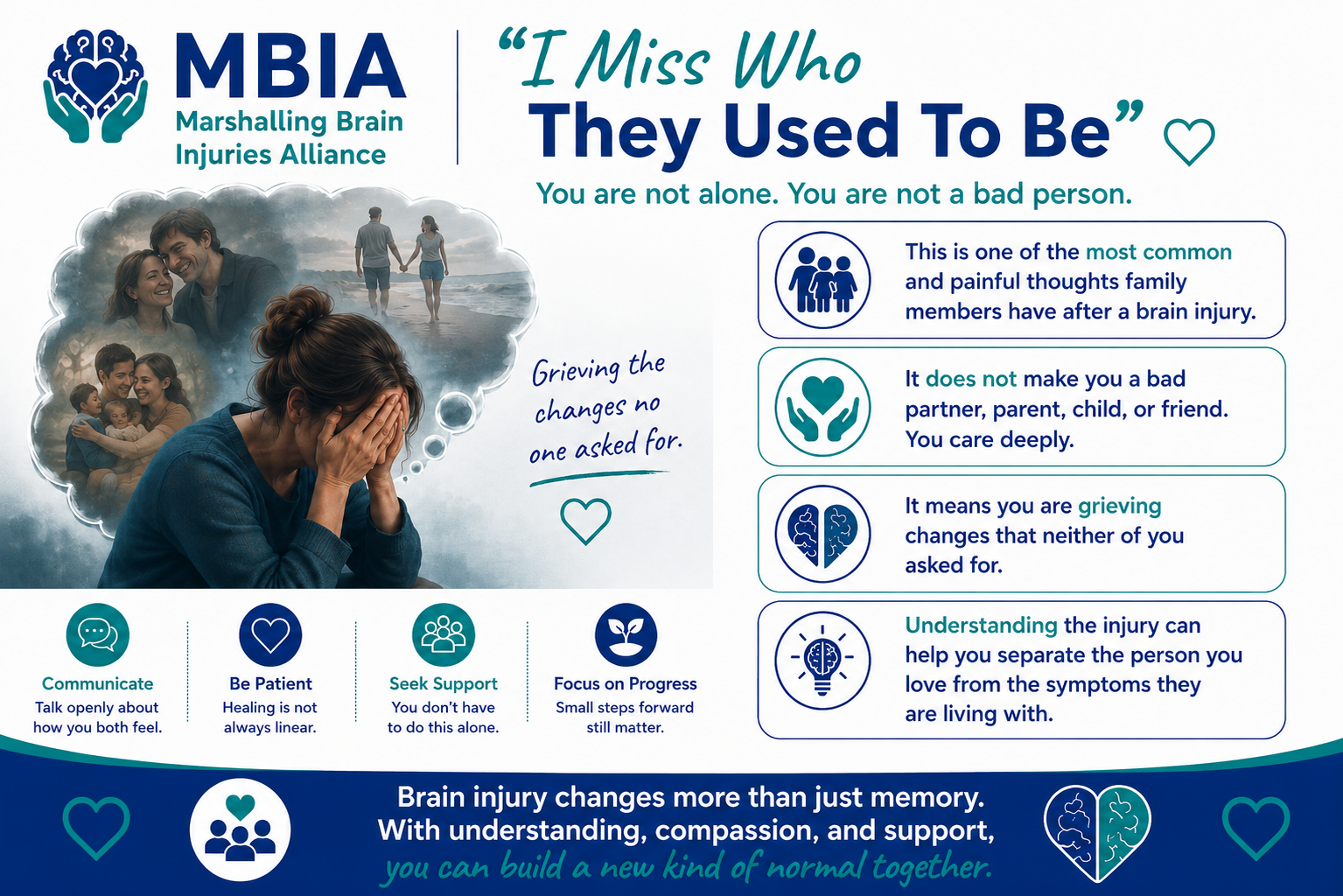
Grieving the Person They Used to Be
This is one of the hardest feelings to talk about.
Many family members quietly wonder:
- "Will they ever be the same again?"
- "I miss who they used to be."
- "I miss the way things were."
These thoughts often bring guilt.
But acknowledging these feelings does not mean you have given up on your loved one.
It simply means you are recognising the changes that have occurred.
Grief Can Show Up in Unexpected Ways
Grieving Future Plans
Many people expect grief to look like sadness.
In reality, it often appears as:
Anger
Feeling angry about what has happened.
Frustration
Feeling overwhelmed by ongoing challenges.
Guilt
Feeling guilty for struggling.
Anxiety
Worrying about the future.
Exhaustion
Emotional grief is tiring.
Loneliness
Feeling isolated from others who don't understand.
Resentment
Feeling resentful about responsibilities you never expected to carry.
This can be particularly difficult because resentment is often accompanied by guilt.
Many families grieve plans that have changed or disappeared altogether.
You may be grieving:
- Retirement plans
- Travel plans
- Career goals
- Family milestones
- Financial stability
- Hopes for the future
These losses are often invisible to others but can feel very significant.
It's Okay to Feel Conflicting Emotions
Many carers experience multiple emotions at the same time.
You might feel:
- Love and frustration
- Gratitude and sadness
- Hope and fear
- Compassion and exhaustion
This is normal.
Human emotions are complex.
You do not have to choose one feeling over another.
Your grief matters too.
Ignoring it often leads to burnout rather than resilience.
How to Cope With Grief and Loss
There is no quick fix for grief, but there are ways to support yourself through it.
1. Acknowledge Your Feelings
You don't have to pretend everything is fine.
Recognising your emotions is not weakness.
It is part of adapting.
2. Stop Judging Yourself
There is no "right" way to feel.
Whatever emotions you are experiencing, they deserve compassion rather than criticism.
3. Talk to Someone
Many carers carry their feelings alone.
Talking to:
- Friends
- Family members
- Support groups
- Counsellors
- Therapists
can help reduce the weight you are carrying.
4. Connect With Others Who Understand
One of the most powerful things many carers discover is that they are not alone.
Speaking with others who understand brain injury can provide validation, understanding, and practical support.
5. Make Space for Your Own Life
Many carers gradually lose themselves in the caring role.
Try to maintain:
- Friendships
- Hobbies
- Interests
- Activities that bring joy
Looking after yourself is not selfish.
It is necessary.
6. Focus on What Hasn't Been Lost
Grief naturally focuses on what has changed.
Sometimes it helps to notice what remains.
Many families still have:
- Love
- Shared memories
- Humour
- Friendship
- Connection
The relationship may look different, but it may still hold many valuable things.
7. Allow Yourself to Adapt
Acceptance does not mean liking what has happened.
It means recognising reality and gradually learning how to move forward within it.
Many families eventually create a new version of life that still contains meaning, connection, and joy.
Why Many Family Members Feel Guilty
Carers often tell themselves:
- "They are the one with the injury."
- "I shouldn't complain."
- "I need to stay strong."
But suppressing your own emotions doesn't make them disappear.
There Is No Timeline for Grief
Some people adjust quickly.
Others take years.
Some days may feel manageable.
Other days may feel overwhelming.
Both are normal.
Grief is not a straight line.
A Message of Hope
Many family members worry that acknowledging grief means giving up hope.
It doesn't.
You can grieve what has been lost while still building a meaningful future.
You can miss the life you had while still appreciating the life you have.
You can love the person your loved one was while also learning to embrace who they are today.
These things can exist together.
Be gentle with yourself.
You are navigating a journey that few people truly understand.
Key Takeaways
- Grief is a normal response to the changes caused by brain injury.
- Family members often grieve changes in relationships, roles, independence, and future plans.
- Grief can appear as sadness, anger, guilt, frustration, anxiety, or exhaustion.
- Conflicting emotions are normal.
- Looking after yourself is an essential part of coping.
- Support from others who understand can make a significant difference.
- Acceptance and hope can exist alongside grief.
- Life may look different, but it can still hold meaning, connection, and joy.
Continue Exploring
Together We're Stronger