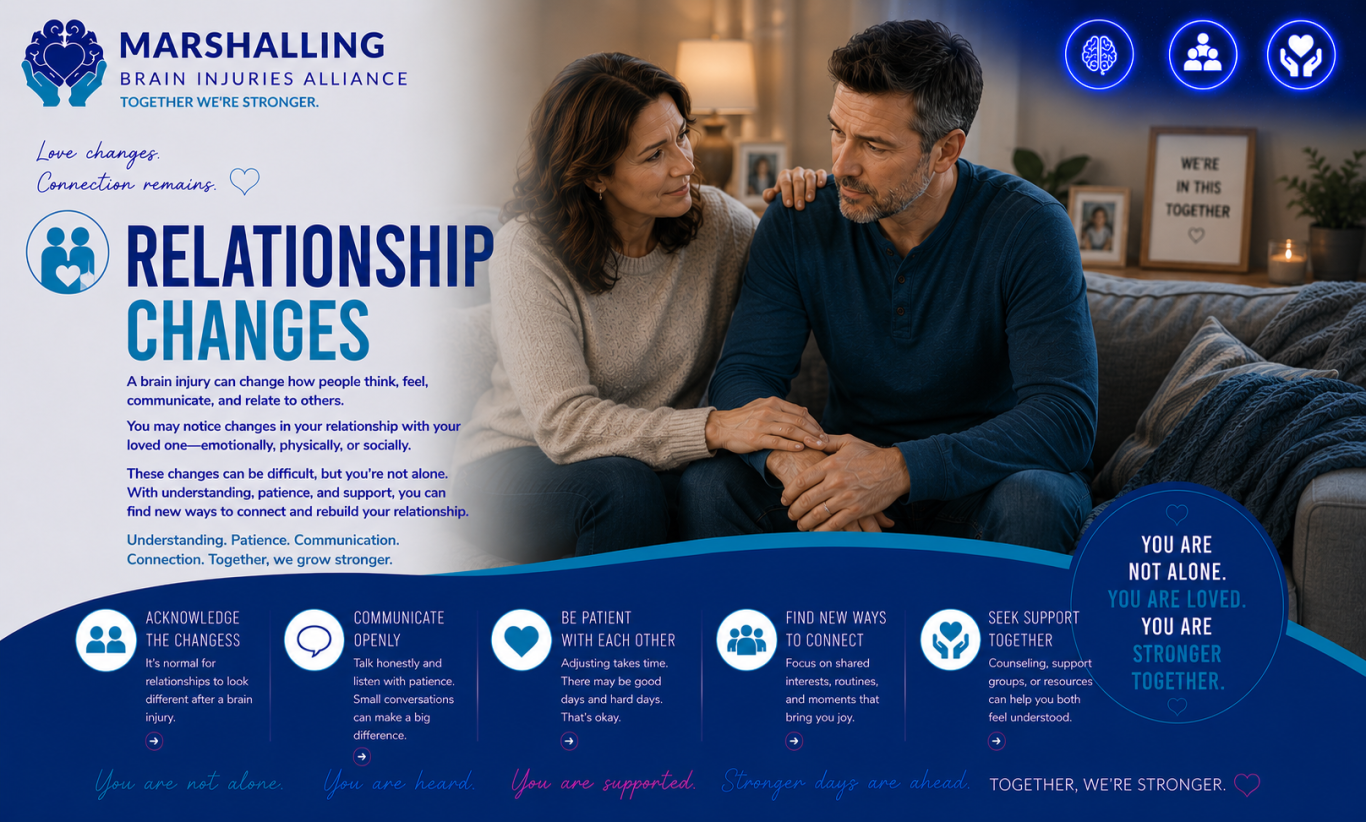
Why Do Relationships Change After Brain Injury?
Relationships are built on many skills that can be affected by brain injury.
These include:
- Communication
- Emotional regulation
- Memory
- Patience
- Problem solving
- Social interaction
- Energy levels
- Understanding emotions
When these areas become more challenging, relationships often feel the impact.
This doesn't mean the love or care has disappeared.
Often, both people are trying their best while dealing with challenges they never expected.
Your Loved One Is Likely Dealing With More Than You Can See
Many brain injury symptoms are invisible.
Your loved one may look physically well while struggling with:
- Fatigue
- Memory problems
- Headaches
- Sensory overload
- Anxiety
- Depression
- Brain fog
- Cognitive difficulties
Because these symptoms cannot be seen, misunderstandings can occur.
Memory Problems Can Be Hurtful
When your loved one forgets:
- Conversations
- Plans
- Birthdays
- Appointments
- Important discussions
it can feel personal.
You may wonder:
"Were they even listening?"
"Does this matter to them?"
Most of the time, memory difficulties are symptoms of the injury rather than a reflection of how much they care.
Fatigue Often Affects Relationships
One of the biggest causes of relationship difficulties after brain injury is fatigue.
When someone is exhausted, they may:
- Have less patience
- Withdraw socially
- Become more irritable
- Need more time alone
- Struggle to participate in family activities
This can sometimes be misinterpreted as:
- Lack of interest
- Laziness
- Not caring
In reality, they may simply be out of energy.
Emotional Changes Can Affect Relationships
Brain injuries can affect emotional regulation.
You may notice:
- Increased irritability
- Anger
- Mood swings
- Anxiety
- Emotional outbursts
- Withdrawal
These changes are often symptoms of the injury, not intentional behaviour.
Communication Becomes Harder
Many people with brain injuries struggle with:
- Finding words
- Following conversations
- Processing information
- Expressing emotions
This can create frustration for both people.
Sometimes your loved one may know exactly what they want to say but be unable to express it clearly.
Grief Affects Both People
Brain injury often brings loss.
Your loved one may be grieving:
- Their independence
- Their career
- Their identity
- Their future plans
But family members often experience grief too.
You may be grieving:
- Changes in your relationship
- Changes in family life
- Loss of shared activities
- Changes in future expectations
Recognising this shared grief can help create understanding.
Common Relationship Challenges
Many families report:
- Increased Arguments
- Often linked to fatigue, frustration, and misunderstandings.
- Feeling More Like a Carer Than a Partner
Many spouses struggle with changing roles and responsibilities.
Reduced Social Life
Activities that were once enjoyable may become overwhelming.
Feeling Lonely
Both people can feel isolated despite living under the same roof.
Changes in Intimacy
Physical, emotional, and cognitive changes can affect intimacy and connection.
Feeling Unappreciated
Family members often take on additional responsibilities and may feel exhausted themselves.
How You Can Help
You cannot remove your loved one's brain injury, but there are many ways to support them while protecting your own wellbeing.
Learn About Brain Injury
Understanding symptoms often reduces frustration.
When you understand why something is happening, it becomes easier to respond with compassion.
Education is one of the most powerful tools available.
Don't Assume They Are Being Difficult
Sometimes behaviours that appear rude, dismissive, or uncaring are actually symptoms such as:
- Fatigue
- Memory problems
- Cognitive overload
- Sensory overload
Looking beneath the behaviour often provides a different perspective.
Communicate Clearly
Helpful strategies include:
- Short, clear sentences
- One topic at a time
- Written reminders
- Allowing extra time for responses
Avoid rushing conversations whenever possible.
Pick the Right Time
Avoid important conversations when your loved one is:
- Exhausted
- Overwhelmed
- In pain
- Already frustrated
Timing can make a huge difference.
Encourage Breaks
Many arguments happen when someone is already overloaded.
Sometimes a break is far more effective than continuing a difficult conversation.
Focus on Teamwork
Try shifting from:
"Me versus you"
to
"Us versus the problem."
The brain injury is the challenge—not each other.
Celebrate Small Wins
Progress after brain injury is often slow.
Recognising small improvements can help both people maintain hope and motivation.
Encourage Support Outside the Relationship
It is difficult for one person to meet every emotional need.
Support groups, friends, family members, and professional support can all help reduce pressure on the relationship.
Looking After Yourself Matters Too
One of the biggest mistakes family members make is forgetting their own needs.
Supporting someone with a brain injury can be emotionally and physically exhausting.
You may experience:
- Stress
- Anxiety
- Frustration
- Burnout
- Loneliness
- Compassion fatigue
These feelings do not make you a bad person.
They make you human.
Healthy Boundaries Are Important
Relationships Can Still Thrive
Supporting someone does not mean sacrificing your own wellbeing.
It is okay to:
- Take breaks
- Ask for help
- Maintain your own interests
- Prioritise your mental health
- Say no when necessary
Healthy boundaries help relationships survive long term.
Many people fear that a brain injury means the end of a healthy relationship.
While relationships often change, change does not always mean something is lost.
Many couples and families develop:
- Better communication
- Greater empathy
- Stronger emotional connections
- A deeper understanding of one another
The relationship may look different, but it can still be meaningful, supportive, and fulfilling.
Key Takeaways
- Relationship difficulties are common after brain injury.
- Fatigue, memory problems, communication difficulties, and emotional changes often contribute.
- Most relationship challenges are symptoms of the injury rather than a lack of love or effort.
- Understanding symptoms can reduce frustration and conflict.
- Clear communication, patience, and teamwork can help strengthen relationships.
- Family members need support too.
- Looking after yourself is not selfish—it is essential.
Continue Exploring
Together We're Stronger