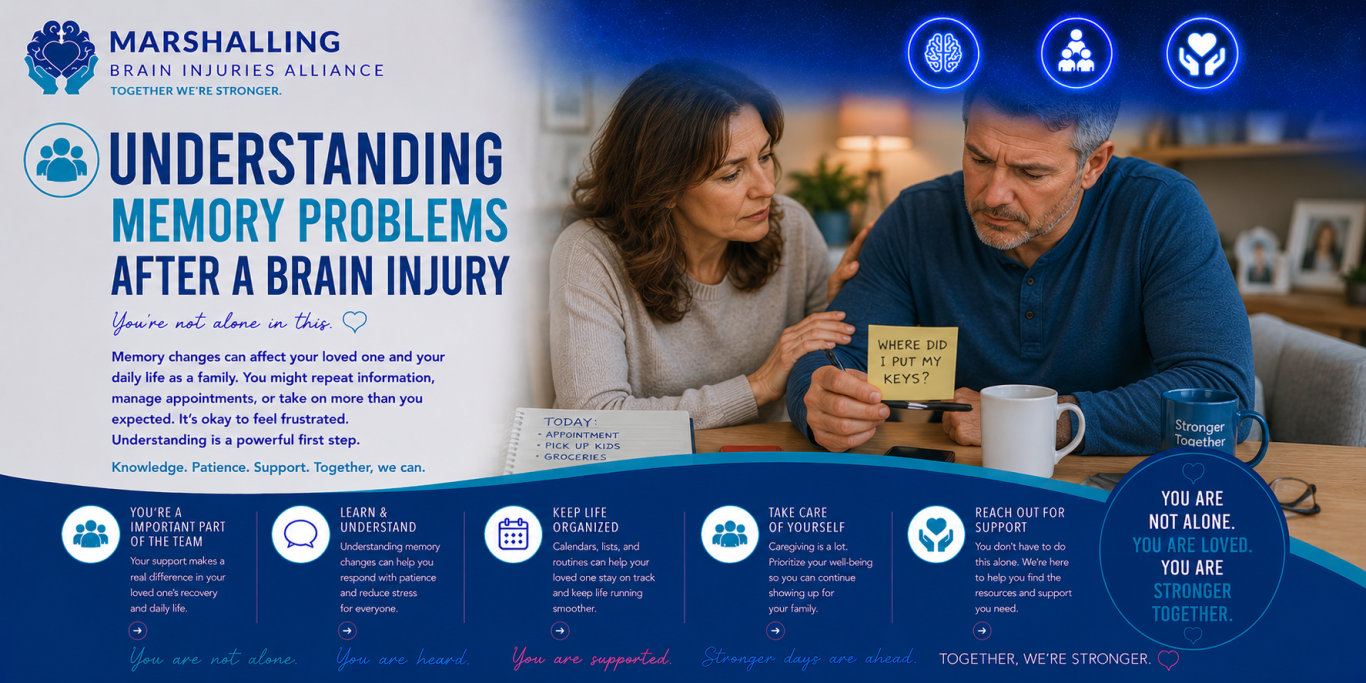
Why Does Brain Injury Affect Memory?
Memory is a complex process involving several areas of the brain working together.
A brain injury can affect the brain's ability to:
- Take in information
- Process information
- Store information
- Retrieve information later
In some cases, the memory itself isn't the main problem.
Your loved one may be struggling with:
- Concentration
- Attention
- Fatigue
- Information processing
- Sensory overload
If the brain doesn't properly process information in the first place, it becomes much harder to remember later.
What Memory Problems Might Look Like?
Every person is different, but common examples include:
Forgetting Conversations
You may find yourself repeating information multiple times.
Forgetting Appointments
Medical appointments, family events, or daily plans may be missed.
Losing Items
Keys, phones, glasses, wallets, and paperwork are often misplaced.
Repeating Questions
The same question may be asked several times because the previous conversation wasn't retained.
Difficulty Following Instructions
Complex information may be forgotten quickly.
Forgetting Recent Events
Some people remember events from years ago clearly but struggle to recall something that happened yesterday.
Losing Their Train of Thought
Conversations may suddenly stop because they can no longer remember what they were saying.
Memory problems are often far more upsetting for the person experiencing them than for those around them.
Many people describe feeling:
- Embarrassed
- Frustrated
- Ashamed
- Anxious
- Dependent on others
- Afraid of getting worse
Some begin avoiding social situations because they worry about forgetting things or repeating themselves.
What may look like forgetfulness on the outside can be emotionally exhausting on the inside.
What It Can Feel Like for Your Loved One
Things That Can Make Memory Worse
Memory difficulties often fluctuate.
You may notice they worsen when your loved one is experiencing:
Fatigue
Mental exhaustion is one of the biggest triggers.
Stress
An overwhelmed brain struggles to process and store information.
Poor Sleep
Sleep plays a crucial role in memory formation.
Pain
Pain consumes mental energy and can affect concentration.
Busy Environments
Noise, crowds, and sensory overload can overwhelm the brain's ability to process information.
How You Can Help
Small adjustments can make a significant difference.
Be Patient
Your loved one is not forgetting things on purpose.
Try to remind yourself that memory problems are a symptom, not a choice.
Avoid Saying
❌ "I've already told you that."
❌ "You never listen."
❌ "You'd remember if it was important."
These comments can increase feelings of guilt and frustration.
Try Saying
✅ "That's okay, let's go through it again."
✅ "I'll write that down for you."
✅ "Let's check the calendar together."
Simple reassurance often helps reduce anxiety.
Encourage Memory Aids
Many people benefit from:
- Phone reminders
- Calendars
- Whiteboards
- Sticky notes
- Diaries
- Shared family calendars
Think of these tools as external memory supports rather than signs of weakness.
Keep Important Items in the Same Place
Consistency helps reduce frustration.
For example:
- Keys in the same bowl
- Medication in the same location
- Glasses in a designated spot
Break Information Into Smaller Steps
Too much information at once can be overwhelming.
Try:
- Short sentences
- One instruction at a time
- Written reminders
Reduce Distractions
If you're sharing important information:
- Turn off the TV
- Reduce background noise
- Choose a quiet environment
This gives the brain the best chance to process information.
Support Good Sleep
Sleep difficulties are common after brain injury and can worsen memory problems.
Encouraging healthy sleep habits may help improve day-to-day functioning.
Understand That Good Days and Bad Days Happen
Brain injury symptoms often fluctuate.
Your loved one may remember something perfectly one day and struggle with it the next.
This doesn't necessarily mean they are getting worse.
It is often part of living with a brain injury.
A Different Way of Thinking About Memory
Instead of asking:
"Why can't they remember?"
Try asking:
"What support might help them remember?"
This small shift in perspective can reduce frustration and help both of you work together as a team.
Looking After Yourself
Supporting someone with memory difficulties can be exhausting.
You may find yourself:
- Repeating information frequently
- Managing appointments
- Taking on additional responsibilities
- Feeling frustrated or overwhelmed
These feelings are normal.
Remember that you also need support, rest, and understanding.
You cannot pour from an empty cup.
Key Takeaways
- Memory difficulties are a common symptom of brain injury.
- Problems are often linked to attention, fatigue, stress, and information processing.
- Forgetfulness is usually not deliberate.
- Patience, reassurance, and practical supports can make a significant difference.
- Good sleep, reduced stress, and memory aids may help improve day-to-day functioning.
- Supporting someone with memory problems can be challenging, so don't forget to look after yourself too.
Continue Exploring
Together We're Stronger