What Does "Overwhelmed" Mean?
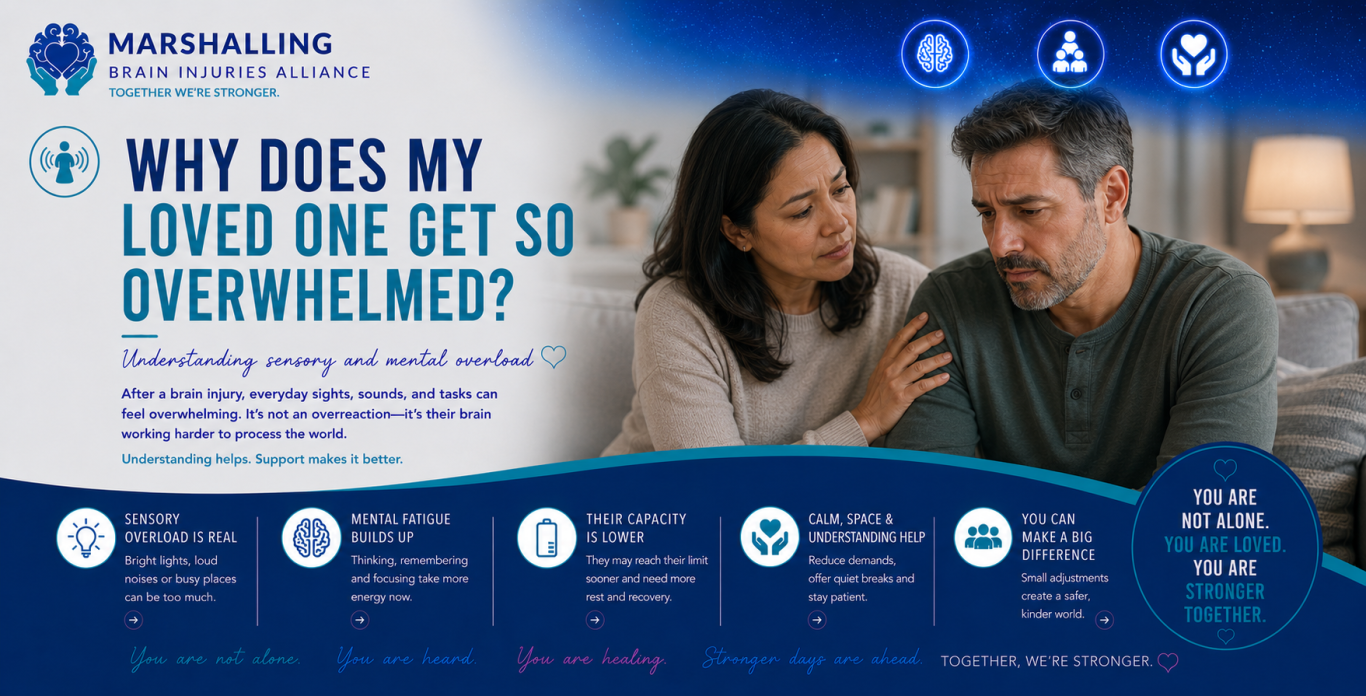
When we talk about overwhelm after brain injury, we are not simply talking about feeling stressed.
For many people, overwhelm occurs when the brain receives more information than it can comfortably process.
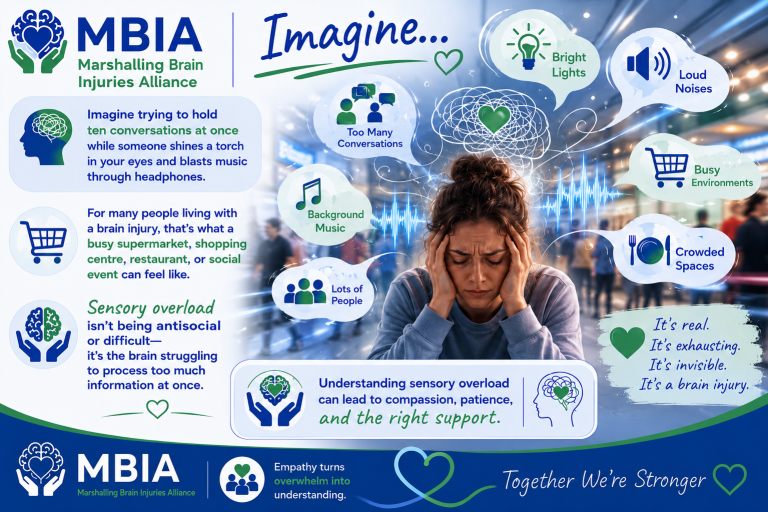
Imagine trying to:
- Listen to several conversations at once
- Focus on bright lights
- Ignore background noise
- Remember what someone just said
- Control your emotions
- Manage fatigue
all at the same time.
For an injured brain, this can quickly become exhausting.
The Brain's Filtering System
A healthy brain constantly filters information.
It decides:
- What is important
- What can be ignored
- What needs attention
Most of this happens automatically.
After a brain injury, this filtering system may not work as efficiently.
The result is that the brain may attempt to process everything at once.
This can quickly become overwhelming.
Sensory Overload
One of the most common causes of overwhelm is sensory overload.
This happens when the brain struggles to process sensory information.
Examples include:
Noise
- Multiple conversations
- Children's voices
- Television
- Music
- Traffic
Light
- Bright sunlight
- Fluorescent lighting
- Flashing lights
Visual Information
- Busy environments
- Crowded shops
- Cluttered spaces
Movement
- Crowds
- Busy streets
- Sporting events
Why Brain Injury Makes Overwhelm More Likely
Following a brain injury, the brain often has to work harder to perform everyday tasks.
This means:
- More effort
- More energy use
- Less spare capacity
As a result, situations that once felt easy may now feel exhausting.
Cognitive Overload
The brain can also become overwhelmed by thinking demands.
Examples include:
- Following complex conversations
- Making decisions
- Completing paperwork
- Multitasking
- Learning new information
Even enjoyable activities can become mentally exhausting.
Emotional Overload
Brain injury often affects emotional regulation.
Strong emotions may become harder to process and manage.
Situations involving:
- Conflict
- Stress
- Unexpected changes
- Emotional conversations
can sometimes trigger overwhelm.
Neuro Fatigue Makes Everything Worse
One of the strongest predictors of overwhelm is fatigue.
When the brain becomes tired:
- Processing slows down
- Concentration decreases
- Emotional control becomes harder
- Sensory tolerance reduces
Many people notice they cope much better in the morning than later in the day.
What Overwhelm Looks Like
Every person is different.
Common signs include:
- Irritability
- Frustration
- Anxiety
- Restlessness
- Emotional outbursts
- Becoming quiet
- Difficulty speaking
- Difficulty concentrating
- Forgetfulness
- Increased fatigue
- Headaches
- Withdrawal
Some people become visibly distressed.
Others simply go quiet.
It Is Normal to Grieve
Many family members feel guilty for grieving.
But grief is a natural response to loss and change.
You may grieve:
- The relationship you once had
- Shared plans
- Future expectations
- The person they used to be
These feelings do not mean you love them any less.
They mean you are adapting to a difficult reality.
Why Family Gatherings Can Be Difficult
Many families struggle to understand why someone can no longer tolerate gatherings they once enjoyed.
Family events often involve:
- Multiple conversations
- Noise
- Movement
- Emotional interaction
- Decision-making
- Long periods of concentration
For an injured brain, this can be incredibly demanding.
Your loved one may genuinely want to be there while simultaneously struggling to cope.
What Overwhelm Feels Like
People living with brain injury often describe overwhelm as:
"Everything is too much."
"My brain can't process any more information."
"I need to get out of here."
"It's like my brain crashes."
"I just need silence."
These experiences are very real.
The Shutdown Response
When overwhelm becomes severe, some people experience what is often called a shutdown.
They may:
- Stop engaging in conversation
- Withdraw from social interaction
- Need to leave an environment
- Seek a quiet space
- Appear distant or disconnected
This is often the brain's way of protecting itself from further overload.
Why They Sometimes Cancel Plans
One of the most difficult aspects for family members is when plans are cancelled at the last minute.
This is often not because they do not want to attend.
Instead, they may be experiencing:
- Fatigue
- Brain fog
- Anxiety
- Sensory overload
- Reduced cognitive capacity
Many people feel guilty when they cancel plans.
What Families Can Do to Help
Recognise Early Warning Signs
Everyone has different warning signs.
Examples may include:
- Becoming quieter
- Increased irritability
- Difficulty concentrating
- Restlessness
- Headaches
Intervening early is often easier than waiting until the person is overwhelmed.
Reduce Stimulation
When possible:
- Lower background noise
- Reduce distractions
- Move to quieter spaces
- Limit competing demands
Sometimes small changes can make a big difference.
Allow Breaks
Many people need regular breaks to prevent overload.
Breaks are not a sign of weakness.
They are a symptom management strategy.
Plan Ahead
Before events, discuss:
- How long they may stay
- Quiet areas available
- Exit plans if needed
Having a plan can reduce anxiety.
Don't Take It Personally
If your loved one leaves early, becomes quiet, or declines an invitation, it is rarely a reflection of how they feel about you.
More often, it reflects the limits of their brain's energy and processing capacity.
Respect Their Limits
One of the most supportive things family members can do is accept that limits are real.
Pushing someone beyond those limits often results in:
- Increased symptoms
- More fatigue
- Longer recovery periods
Help Them Pace
Many people with brain injuries benefit from balancing:
- Activity
- Rest
- Social interaction
- Recovery time
Pacing often reduces overwhelm and improves quality of life.
A Message of Hope
Overwhelm after brain injury can be frustrating for both the individual and their family.
It may change how you socialise, travel, work, and spend time together.
But understanding why it happens can transform how families respond.
When families recognise overwhelm as a neurological symptom rather than a personal choice, blame often gives way to compassion.
Many people learn strategies that help them manage sensory and cognitive overload more effectively.
Life may need to be approached differently, but meaningful experiences, relationships, and enjoyment are still possible.
Key Takeaways
- Brain injury can make people more vulnerable to sensory, cognitive, and emotional overload.
- The brain may struggle to filter information efficiently.
- Noise, crowds, conversations, fatigue, and stress are common triggers.
- Overwhelm is a neurological symptom, not a lack of effort.
- Family gatherings and busy environments can be particularly challenging.
- Recognising early warning signs and allowing breaks can help.
- Respecting limits often prevents symptom flare-ups.
- Understanding overwhelm can reduce conflict and improve family relationships.
Continue Exploring
Together We're Stronger