What Is Brain Injury Fatigue?
Fatigue after brain injury is more than simply feeling tired.
It is often described as:
- Physical exhaustion
- Mental exhaustion
- Emotional exhaustion
- A complete lack of energy
- Feeling overwhelmed by everyday tasks
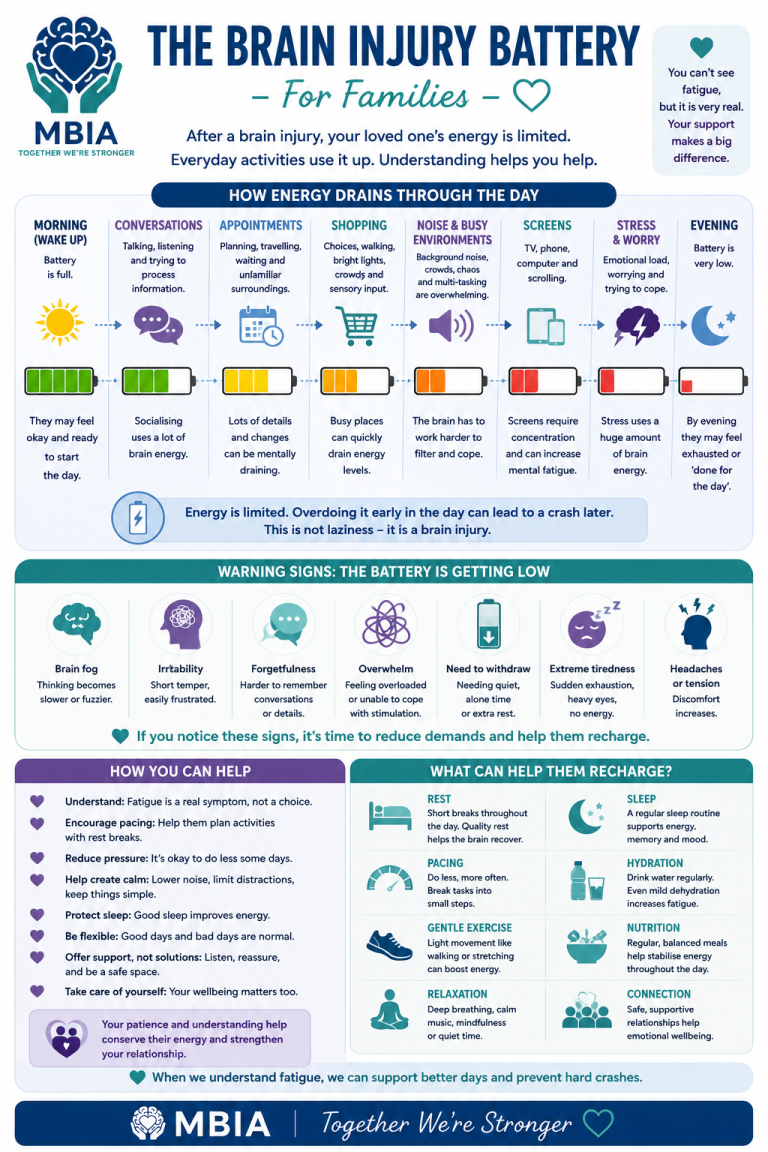
Many people with brain injuries describe it as feeling as though
their battery drains much faster than it used to.
Why Does it Happen?
There are several reasons why fatigue is so common after brain injury.
The Brain Is Working Harder
After an injury, the brain may need to use alternative pathways to complete tasks.
Imagine driving somewhere familiar and suddenly finding your usual route closed.
You can still get there, but it takes more effort, concentration, and fuel.
The injured brain often works in a similar way.
Information Processing Takes More Energy
The brain may need longer to:
- Understand information
- Make decisions
- Process conversations
- Respond to situations
This extra effort uses energy throughout the day.
Sleep Problems Are Common
Many people with brain injuries struggle with:
- Falling asleep
- Staying asleep
- Poor-quality sleep
Because the brain relies on sleep for recovery and repair, sleep difficulties often worsen fatigue.
Pain Consumes Energy
Headaches, migraines, neck pain, and chronic pain are common after brain injury.
Pain places additional demands on the nervous system and can leave someone feeling exhausted.
Sensory Overload Is Draining
Busy environments require the brain to process large amounts of information.
Things such as:
- Noise
- Crowds
- Bright lights
- Multiple conversations
can quickly drain energy reserves.
Emotional Strain Uses Energy Too
Living with a brain injury can be emotionally challenging.
Managing:
- Anxiety
- Frustration
- Depression
- Worry
- Stress
requires energy and can contribute significantly to fatigue.
What Is Neuro Fatigue?
Neuro fatigue, sometimes called neurological or cognitive
fatigue, occurs because the injured brain often has to work
much harder to perform everyday activities.
Tasks that once happened automatically may now require
significantly more effort.
For example:
- Holding a conversation
- Following instructions
- Shopping
- Driving
- Watching television
- Attending family gatherings
may all place greater demands on the brain than they did
before the injury.
The result is that the brain uses more energy and becomes
fatigued more quickly.
What Fatigue Might Look Like
Fatigue doesn't always look like someone falling asleep.
You may notice:
Increased Irritability
People often become less patient when mentally exhausted.
Difficulty Concentrating
Conversations may become harder to follow.
Forgetfulness
Memory often worsens when fatigue increases.
Emotional Outbursts
Your loved one may become tearful, frustrated, or overwhelmed more easily.
Needing Time Alone
Many people need quiet periods to recover after social interaction.
Cancelling Plans
What may look like a lack of interest is often a lack of energy.
"Good Days" and "Bad Days"
Fatigue often fluctuates.
Someone may appear fine one day and struggle significantly the next.
The Hidden Nature of Fatigue
One of the hardest aspects of brain injury fatigue is that it is largely invisible.
Your loved one may look physically well while feeling completely exhausted.
Because others cannot see the symptom, people are often told:
- "You look fine."
- "You're just tired."
- "Everyone gets tired."
These comments can feel invalidating and frustrating.
How You Can Help
Small adjustments can make a significant difference.
Understand That Fatigue Is Real
The first and most important step is recognising that fatigue is a genuine neurological symptom.
Your loved one is not lazy.
They are not lacking motivation.
Their brain is working harder than most people realise.
Encourage Pacing
Many people with brain injuries benefit from pacing activities.
This means:
- Taking breaks before exhaustion hits
- Spreading activities throughout the day
- Avoiding the temptation to do everything at once
Pacing often prevents symptom crashes later.
Help Identify Triggers
Fatigue is often worsened by:
- Noise
- Crowds
- Stress
- Poor sleep
- Long conversations
- Busy schedules
Recognising patterns can help everyone plan more effectively.
Be Flexible With Plans
Some days will be better than others.
Flexibility can reduce pressure and frustration.
Sometimes your loved one may genuinely want to attend an event but simply not have the energy.
Encourage Rest Without Guilt
Many people with brain injuries feel guilty about resting.
Remind them that:
- Rest is part of managing the condition.
- Rest is not failure.
- Rest is not laziness.
Help Reduce Overload
You can often help by:
- Turning down background noise
- Reducing distractions
- Breaking information into smaller pieces
- Simplifying busy schedules
Small changes can significantly reduce mental demand.
Support Good Sleep Habits
Sleep and fatigue are closely connected.
Encouraging healthy sleep routines may help improve energy levels.
Take Care of Yourself Too
Supporting someone living with fatigue can be challenging.
You may find yourself:
- Taking on additional responsibilities
- Adjusting family plans
- Feeling frustrated
- Feeling isolated
These feelings are normal.
Looking after yourself is not selfish—it is essential.
A Different Way of Thinking About Fatigue
Instead of asking:
"Why can't they just push through?"
Try asking:
"How much energy has their brain already used today?"
This simple shift can completely change how fatigue is understood.
Key Takeaways
- Fatigue is one of the most common symptoms of brain injury.
- Neuro fatigue occurs because the brain often has to work harder to perform everyday tasks.
- Fatigue can affect thinking, memory, mood, and behaviour.
- It is often invisible to others.
- Pacing, rest, sleep, and reducing overload can help manage symptoms.
- Understanding fatigue can reduce frustration and improve relationships.
- Supporting someone with fatigue can be demanding, so remember to care for yourself too.
Continue Exploring
Together We're Stronger