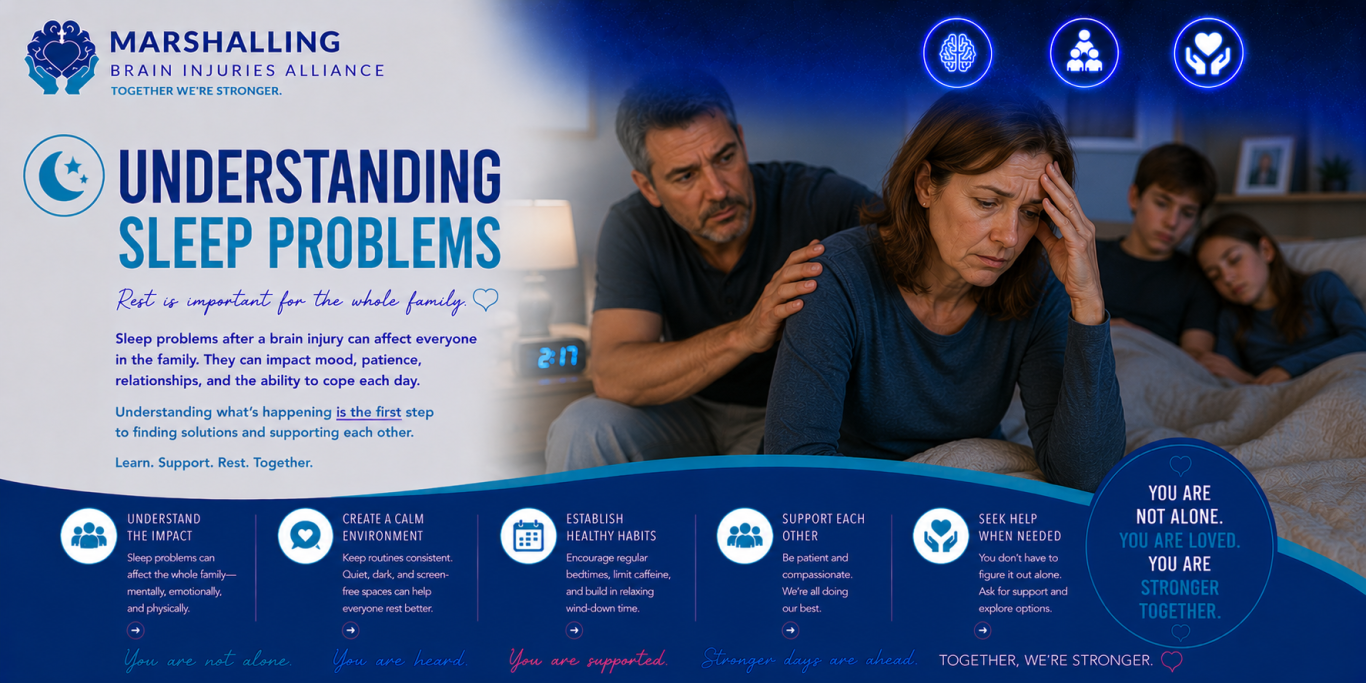
Why Is Sleep So Important?
Sleep plays a vital role in brain health.
While we sleep, the brain is busy:
- Processing information
- Storing memories
- Regulating emotions
- Repairing cells
- Clearing waste products
- Restoring energy
When sleep is disrupted, many other brain injury symptoms often become worse.
Poor sleep can affect:
- Memory
- Concentration
- Fatigue
- Mood
- Emotional regulation
- Headaches
- Physical health
This is why sleep is often one of the first areas healthcare professionals look at when symptoms worsen.
Why Do Sleep Problems Happen After Brain Injury?
Several factors may contribute.
Changes Within the Brain
Brain injuries can affect areas responsible for regulating sleep and wakefulness.
The brain may struggle to maintain normal sleep patterns, making it harder to:
- Fall asleep
- Stay asleep
- Wake feeling refreshed
Fatigue and Sleep Are Different
One of the most confusing things for families to understand is that someone can feel exhausted but still struggle to sleep.
Fatigue is a lack of energy.
Sleep is a biological process.
Although they are connected, they are not the same thing.
Pain and Physical Symptoms
Headaches, neck pain, dizziness, and discomfort can all interfere with sleep quality.
Anxiety and Stress
Many people experience increased anxiety, depression, worry, or emotional distress following a brain injury.
These can make it difficult to relax and fall asleep.
Sleep Disorders May Develop
Some people develop sleep disorders that may require medical assessment and treatment.
Sleep problems can look different from person to person.
Insomnia
Your loved one may:
- Struggle to fall asleep
- Wake repeatedly
- Lie awake for long periods
This can be frustrating and exhausting.
Excessive Sleepiness
Some individuals sleep far more than they used to.
You may notice:
- Frequent naps
- Long periods in bed
- Constant tiredness
This is not necessarily laziness or a lack of motivation.
The brain may genuinely require more recovery time.
Fragmented Sleep
Sleep may be interrupted multiple times throughout the night, leaving someone feeling exhausted despite spending many hours in bed.
Sleep Apnoea
Sleep apnoea is surprisingly common among people living with brain injury.
It occurs when breathing repeatedly stops or becomes restricted during sleep.
Signs may include:
- Loud snoring
- Pauses in breathing
- Gasping or choking during sleep
- Morning headaches
- Poor concentration
- Excessive daytime fatigue
Many people are completely unaware they have sleep apnoea until a partner notices it.
Vivid Dreams and Nightmares
Many people report experiencing:
- More intense dreams
- Frequent nightmares
- Extremely realistic dreams
Poor sleep quality often follows.
Acting Out Dreams
Some individuals:
- Talk in their sleep
- Shout
- Kick
- Punch
- Thrash around
- Fall out of bed
This can sometimes occur as part of REM Sleep Behaviour Disorder (RBD), a condition where the body does not fully switch off movement during dreaming.
If you notice these symptoms, it is worth discussing them with a healthcare professional.
Common Sleep Problems You May Notice
Why Poor Sleep Can Affect Behaviour
Many family members notice that sleep problems make other symptoms worse.
When someone is sleep deprived, you may see:
- More Memory Problems
- More Fatigue
- Increased Irritability
- Reduced Patience
- More Emotional Reactions
- Increased Anxiety
- Greater Difficulty Concentrating
Sometimes what appears to be a worsening of the brain injury is actually a result of poor sleep.
A Different Way of Thinking About Sleep Problems
Instead of asking:
"Why can't they just get more sleep?"
Try asking:
"What might be preventing their brain from getting the restorative sleep it needs?"
This shift in perspective often leads to greater understanding and compassion.
How You Can Help
You cannot "fix" sleep problems for your loved one, but there are many ways you can help support healthier sleep.
Understand That Sleep Problems Are Real
Many people with brain injuries hear:
- "Just go to bed earlier."
- "Everyone gets tired."
- "You sleep enough already."
Sleep difficulties are often neurological symptoms and deserve to be taken seriously.
Encourage Consistent Sleep Routines
Regular bedtimes and wake times can help support healthy sleep patterns.
Try to keep routines as predictable as possible.
Create a Sleep-Friendly Environment
A bedroom that is:
- Quiet
- Dark
- Comfortable
- Cool
may help improve sleep quality.
Help Reduce Evening Stimulation
Some people benefit from:
- Less screen time before bed
- Reduced noise
- Relaxing evening routines
The goal is to help the brain wind down.
Watch for Signs of Sleep Apnoea
You may be the first person to notice:
- Snoring
- Breathing pauses
- Choking sounds
- Restless sleep
If you notice these signs, encourage medical assessment.
Sleep apnoea is treatable and addressing it can significantly improve quality of life.
Encourage Medical Support When Needed
Persistent sleep problems should not simply be accepted as "part of the injury."
There may be treatments or interventions that can help.
Be Patient on Difficult Days
A poor night's sleep can have a major impact on functioning the following day.
If your loved one seems:
- More forgetful
- More emotional
- More fatigued
- Less tolerant
sleep may be playing a role.
Key Takeaways
- Sleep problems are extremely common after brain injury.
- Poor sleep can worsen memory, fatigue, mood, concentration, and behaviour.
- Common issues include insomnia, sleep apnoea, vivid dreams, REM sleep disorders, and excessive sleepiness.
- Sleep difficulties are neurological symptoms, not a lack of effort.
- Family members often play an important role in recognising sleep disorders.
- Supporting healthy sleep habits and seeking medical advice when needed can make a significant difference.
- Carers should also prioritise their own sleep and wellbeing.
Continue Exploring
Together We're Stronger